The source as structure
Long before any architect set a chisel to stone here, the Malvern Hills had already done the engineering. Straddling the border of Herefordshire and Worcestershire, the hills are among the oldest and hardest rocks in Britain — Precambrian igneous and metamorphic stone, some of it about 670 million years old. Rainwater and snowmelt percolate through fissures opened by tectonic pressures some 300 million years ago, emerging clean at the fault lines as springs. The flow has never been known to cease, averaging around 60 litres a minute. The rock’s hardness leaves the water almost without mineral trace, while its fine cracks act as a natural filter — purity that won official EU natural-mineral-water status in 1987.
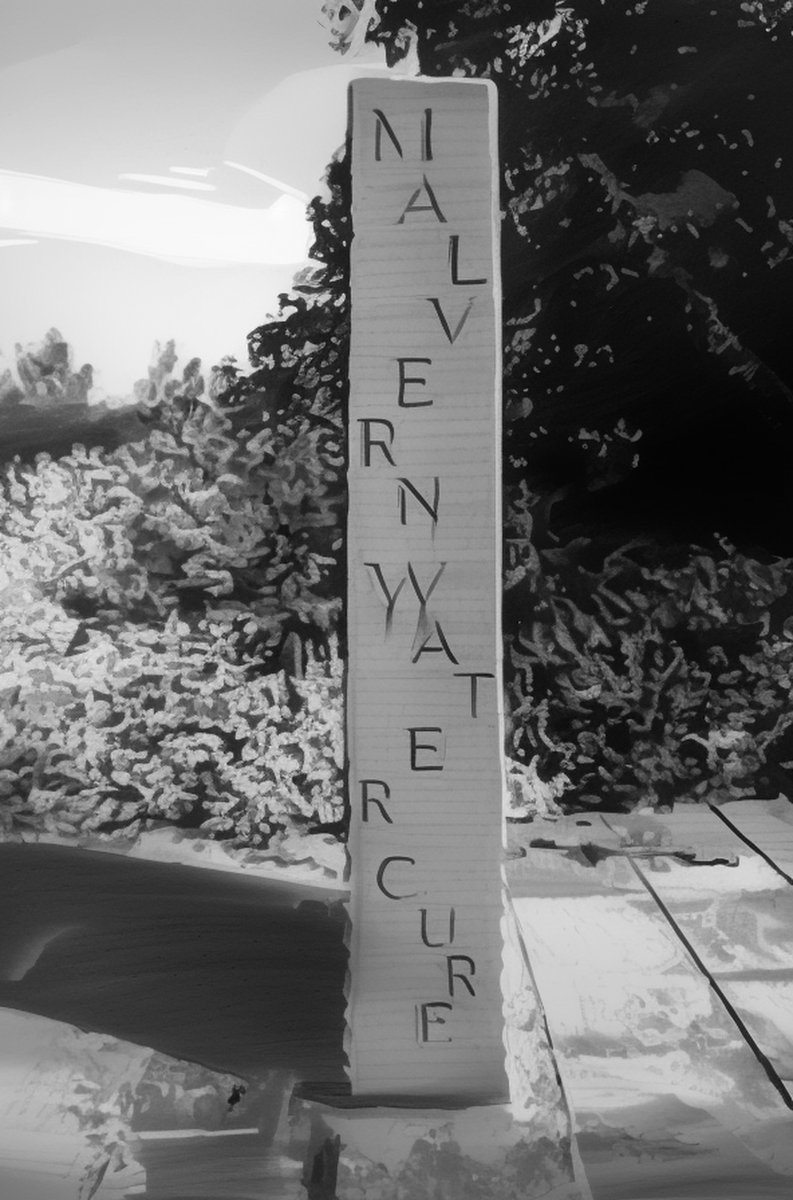
A landscape of small built incidents. Rather than one monument, Malvern water is expressed through some 70 sites scattered across the hills, where residents still fill containers free of charge. These range from the modest to the ceremonial: the Beauchamp Fountain on Cowleigh Road, the Hayslad and Evendine springs, the Holy Well at Malvern Wells, the Jubilee Fountain, and St Ann’s Well at Great Malvern, housed in a building dating from 1815. The Walms Well, documented from around 250 BC, is among the earliest recorded. Each is a small piece of civic architecture answering the same brief: to give the spring a threshold and a face.
The water-cure town
The deeper architectural story is what the water built above ground. Beneficial properties had been reported for over 400 years — Dr John Wall tested the water in 1756 and famously praised it for “containing just nothing at all.” When James Manby Gully and James Wilson opened their water-cure clinics in 1842, they raised Britain’s first purpose-built hydropathic establishment, and the village swelled into a town of large Victorian and Edwardian hotels. Patients included Florence Nightingale, Tennyson and Lord Lytton; Queen Victoria refused to travel without the water.
Living ornament. Twentieth-century sculpture renewed the tradition: Rose Garrard’s Malvhina spout (1998) and her Enigma Fountain (2000) set water beside music at the town’s heart. Local legend traces the cures to mediaeval times, and a well-dressing tradition said to date from the 12th and 13th centuries — tribute once paid to St Oswald — still opens the dressing season each spring.

United Kingdom