Feel free to use my photos, but please mention me as the author and send me a message.
This image is not in the public domain. Please respect the copyright protection. It may only be used according to the rules mentioned here. This specifically excludes use in social media, if applicable terms of the licenses listed here not appropriate.
Please do not upload an updated image here without consultation with the Author. The author would like to make corrections only at his own source. This ensures that the changes are preserved.Please if you think that any changes should be required, please inform the author.Otherwise you can upload a new image with a new name. Please use one of the templates derivative or extract. (CC BY-SA 3.0)
A theater in the round
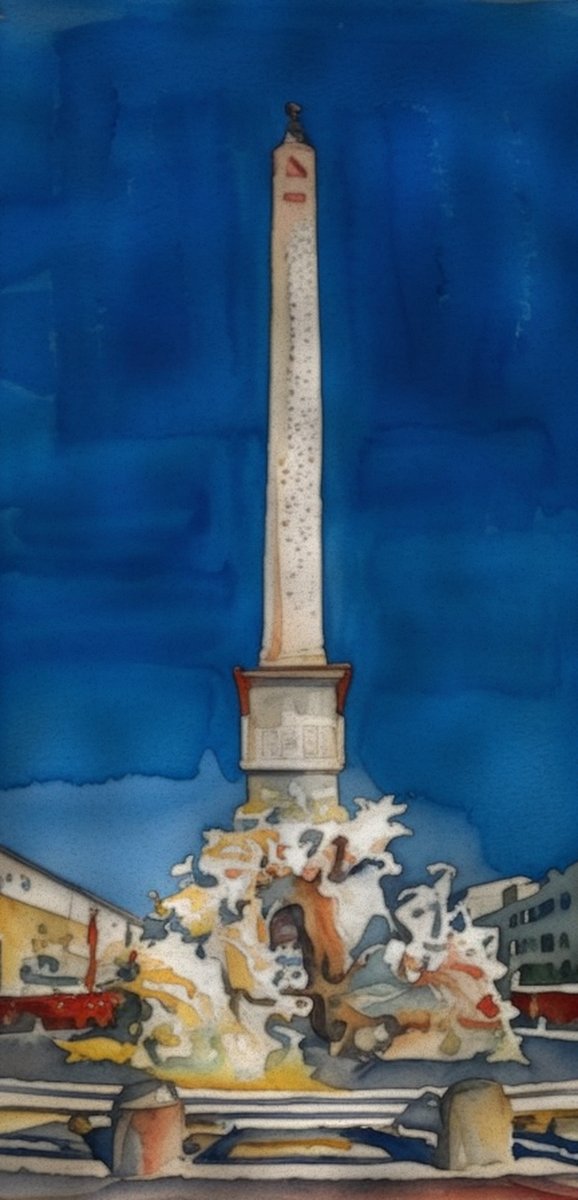
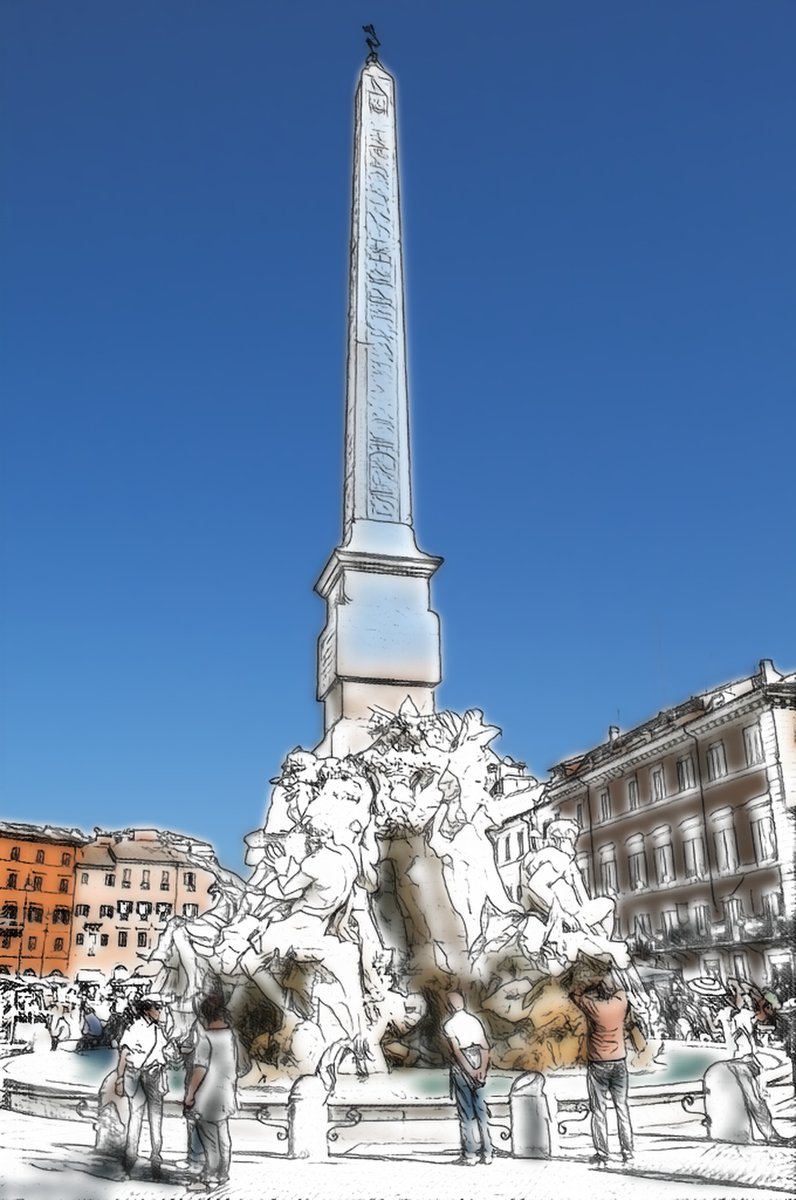
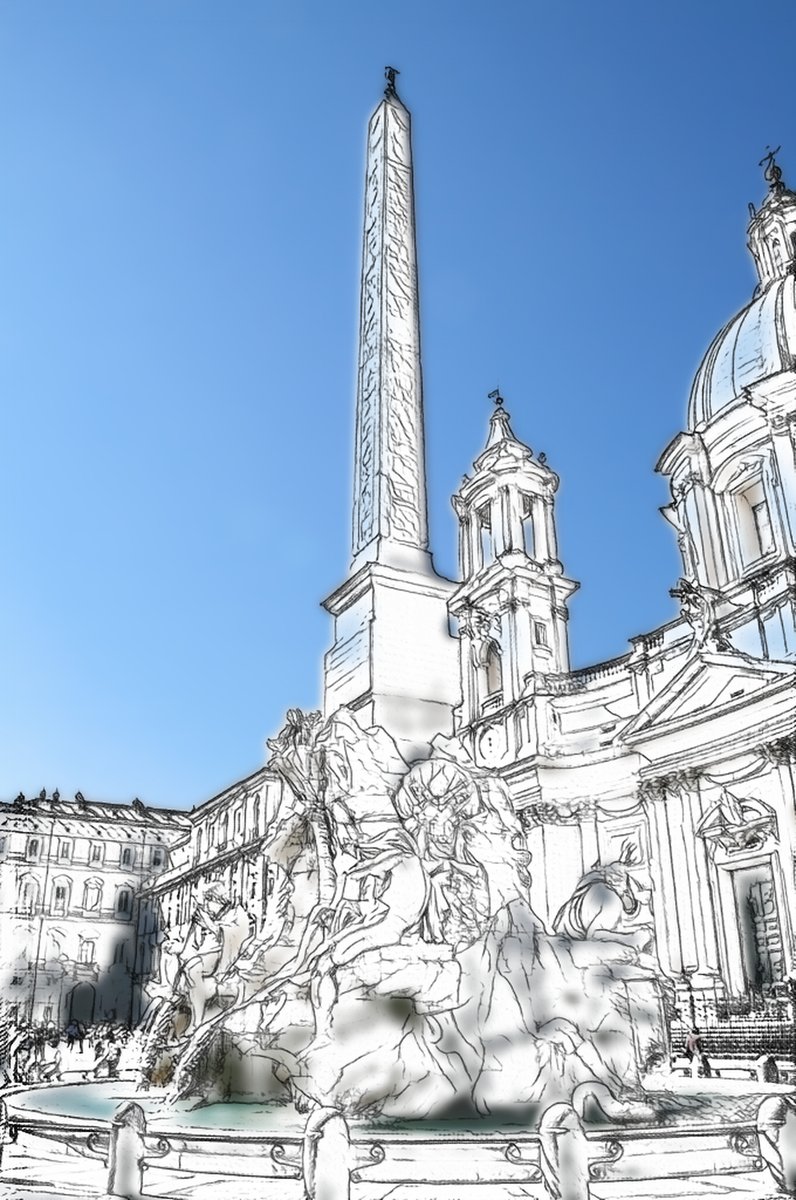
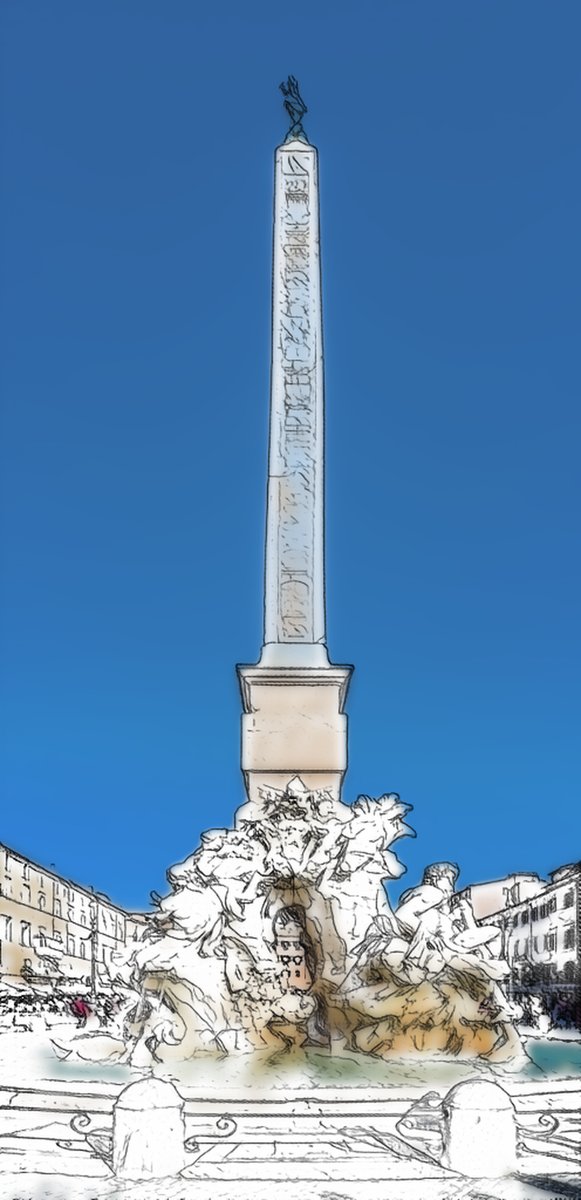
Stand anywhere on the Piazza Navona and the Fontana dei Quattro Fiumi refuses to give you a single front. Gian Lorenzo Bernini designed it as “a theater in the round, a spectacle of action, that can be strolled around,” and that intention governs everything. There is no privileged facade, no axis to obey. You move, and the composition rearranges itself.
The base and the rock. From a low basin, travertine rises not as masonry but as a “jagged and pierced mountainous disorder,” water flowing and splashing through its openings. This is the Baroque sleight of hand: structural rock that behaves like landscape. The pierced mass lets you see daylight straight through the center, so the heavy travertine reads as something light, almost hollowed by the water it carries.
The four river gods. Four colossal figures occupy the rock, each semi-prostrate, in awe of the central tower. They personify rivers of the four continents through which papal authority had spread: the Nile for Africa, the Danube for Europe, the Ganges for Asia, and the Río de la Plata for the Americas. Bernini loads each with legible detail. The Ganges holds a long oar for the river’s navigability; the Nile’s head is draped in loose cloth because no one then knew its source; the Danube touches the Pope’s coat of arms as the great river nearest Rome; and the Río de la Plata sits on a pile of coins, the silver wealth of America, recoiling as if startled by a snake.
The obelisk. Above the river gods stands a Roman copy of an Egyptian obelisk, the Obelisco Agonale, crowned by the Pamphili dove with its olive twig. Vertically it is the keystone of the whole scheme: the gods bow, the rock cracks open, and the slender shaft carries the eye and the symbolism of papal power skyward.
History
Bernini won the commission in competition, his model reportedly smuggled into the Palazzo Pamphili so Pope Innocent X could not help but see it. Built at public expense during the famine of 1646–48, the fountain drew pasquinade protests demanding “Bread, Bread, Bread!” It was finally unveiled to the people of Rome on 12 June 1651, a Pamphili-funded spectacle that left onlookers, by one account, with “enraptured souls.” The dynamic fusion of architecture and sculpture made it revolutionary against the stilted geometric basins that came before.
Feel free to use my photos, but please mention me as the author and send me a message.
This image is not in the public domain. Please respect the copyright protection. It may only be used according to the rules mentioned here. This specifically excludes use in social media, if applicable terms of the licenses listed here not appropriate.
Please do not upload an updated image here without consultation with the Author. The author would like to make corrections only at his own source. This ensures that the changes are preserved.Please if you think that any changes should be required, please inform the author.Otherwise you can upload a new image with a new name. Please use one of the templates derivative or extract. (CC BY-SA 3.0)
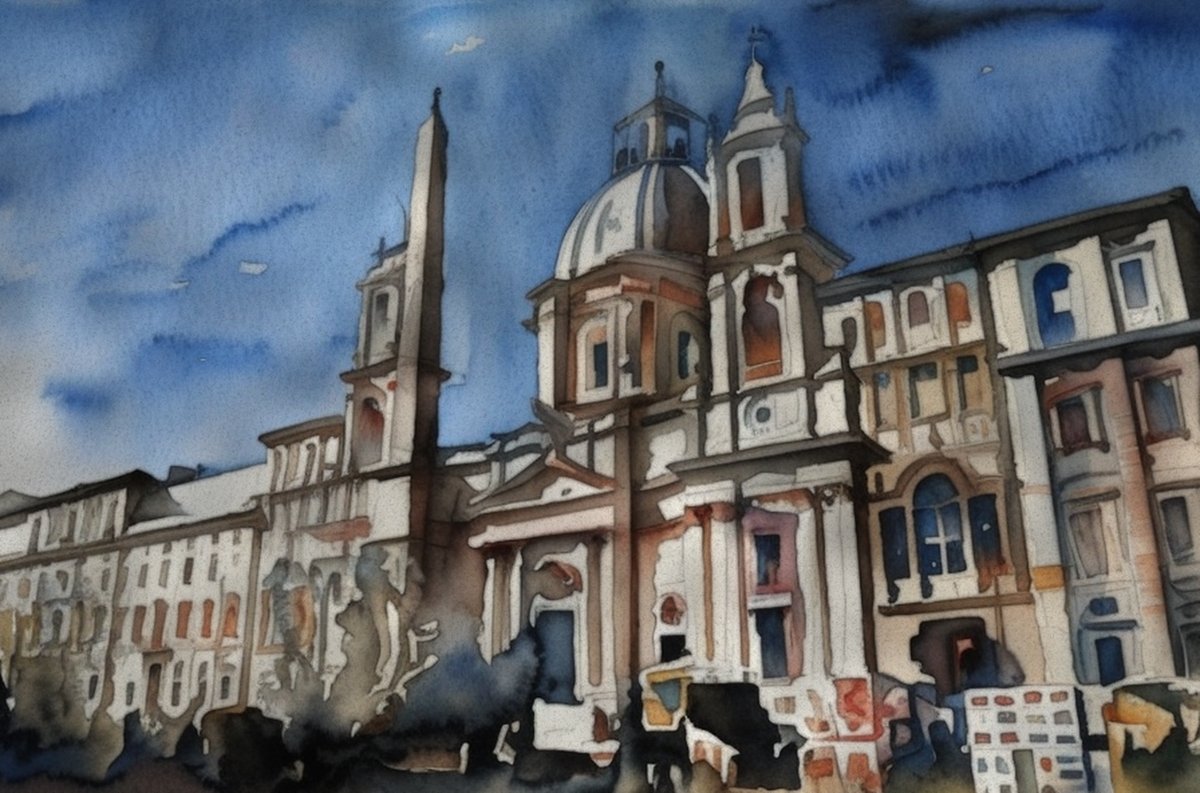
Rome, Italy · Architect: Gian Lorenzo Bernini · Built: 1640