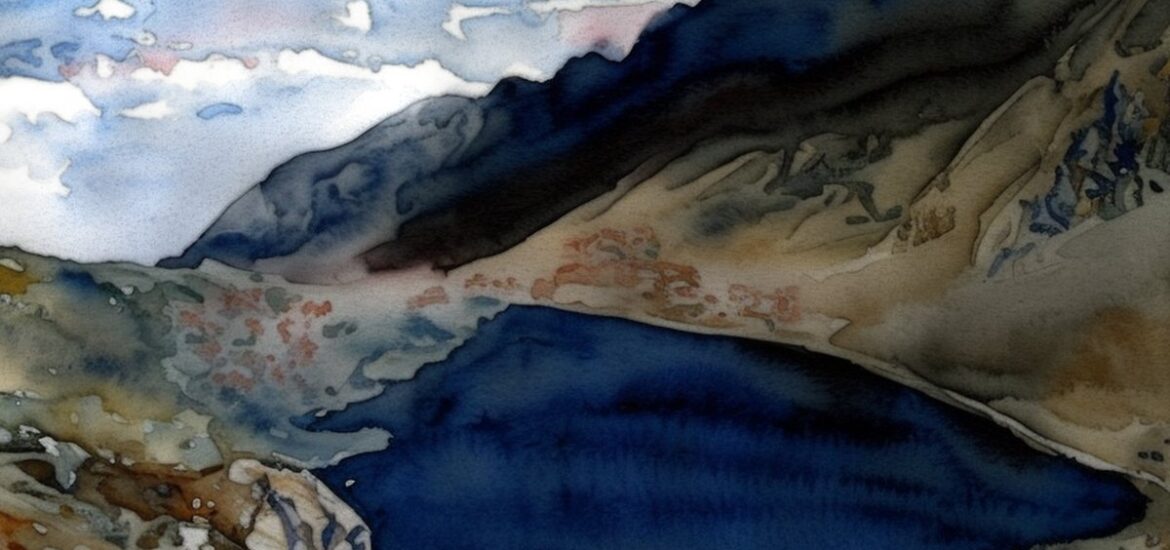
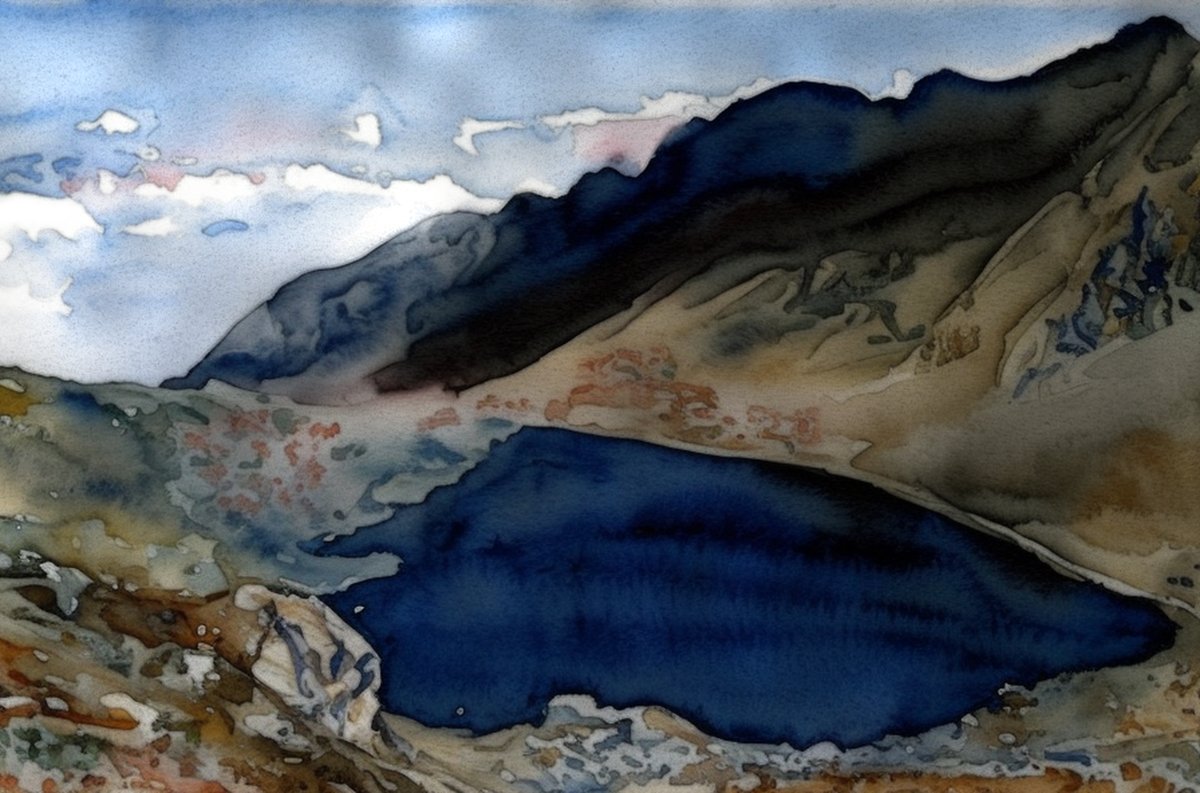
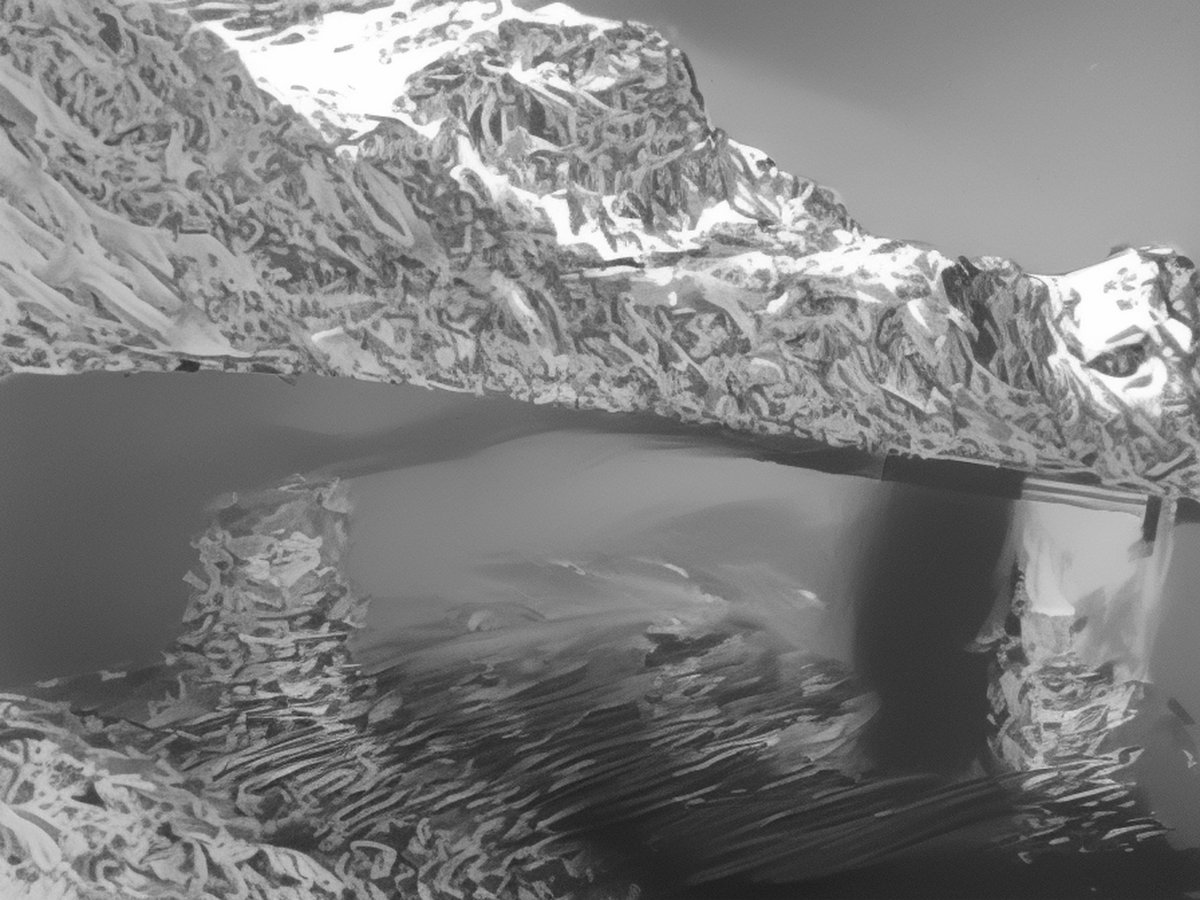
In the north where I was trained, we learn early that emptiness is a material. A still surface of water, a wall left bare, a room cooled by silence — these are not absences but presences we have learned to hold. So when I read of Gosaikunda, also spelled Gosainkunda, I recognise something already familiar: a body of water set at 4,380 m in Nepal’s Langtang National Park, in the Rasuwa District, frozen for six months from October to June. A held void in the rock.
The lake as figure
The numbers are spare, and I trust spare numbers. A surface of 13.8 ha. A wider complex of associated lakes reaching 1,030 ha, designated a Ramsar site on 29 September 2007. There are said to be 108 lakes in the vicinity, and above them the Lauribina La pass at 4,610 m. From this frozen vessel the melt becomes the Trishuli River — water given a direction, a beginning. An architect would call this a source. The pilgrims, I think, call it the same thing.
Origin as form
What I cannot draw, I can only receive. The lake’s origin is told as the Samudra Manthana, the churning of the ocean. When Lord Shiva swallowed poison, he is said to have pierced his trishul — his trident — into the ground to draw water that would soothe his stinging throat. Gosaikunda was created in this manner, and is revered by Hindus. I find in this no metaphor for building, but a truth older than building: that water is struck from stone by need, and the place where it appears is made sacred by that need.
Reach without distance
There is a humility in the way the sacred is made portable here. A spring feeding the pond at the Kumbheshwar temple complex in Patan is said, by legend, to be connected to Gosaikunda. Those who cannot make the long journey to the lake visit Kumbheshwar Pokhari instead. The high cold void answers down in the city — one water, two thresholds.
The held name
Among the Newars the lake is known as Silu, the subject of a song and of a 1987 film drawn from it. A lake that is also a melody; a void that sings. My tradition seeks silence; this one fills the silence and reveres it equally. Between the two, the same still surface — waiting, reflecting, holding the light.
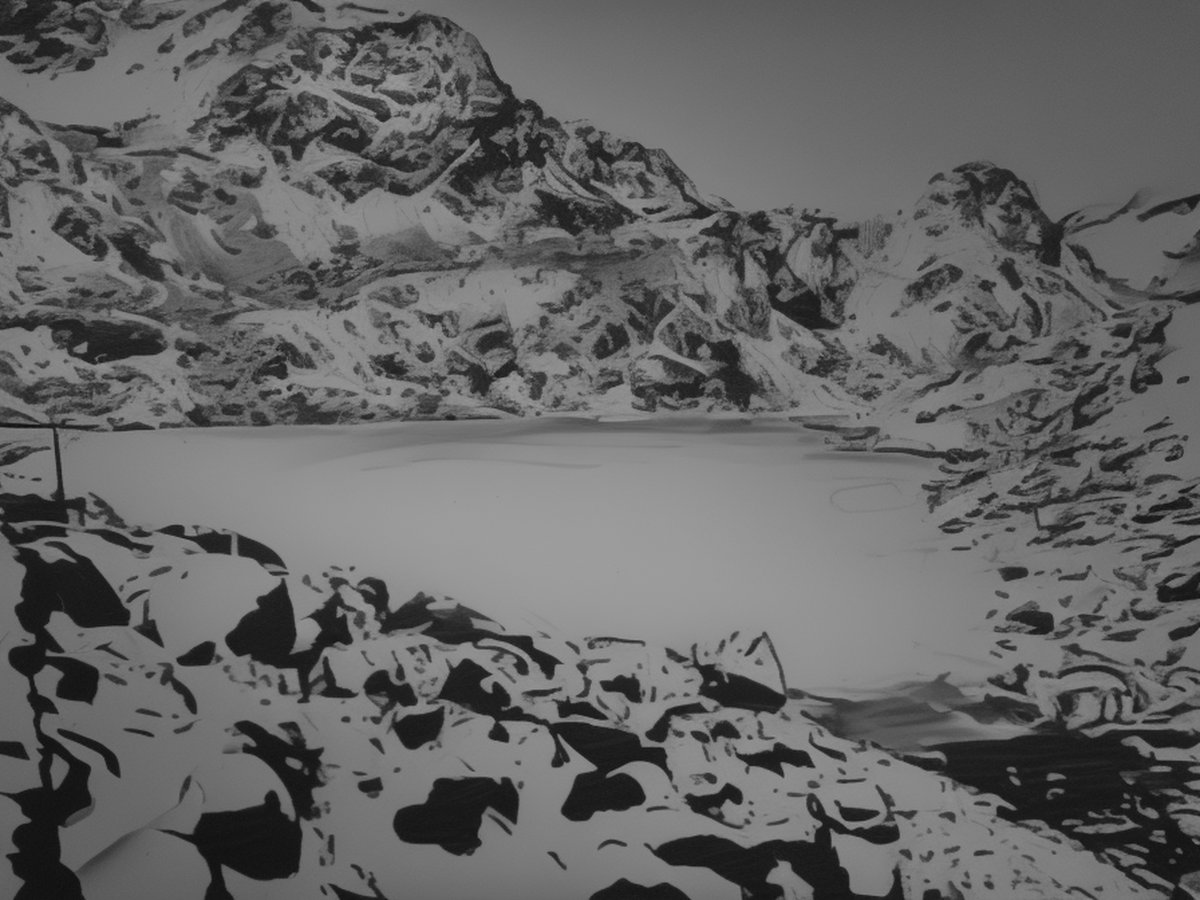
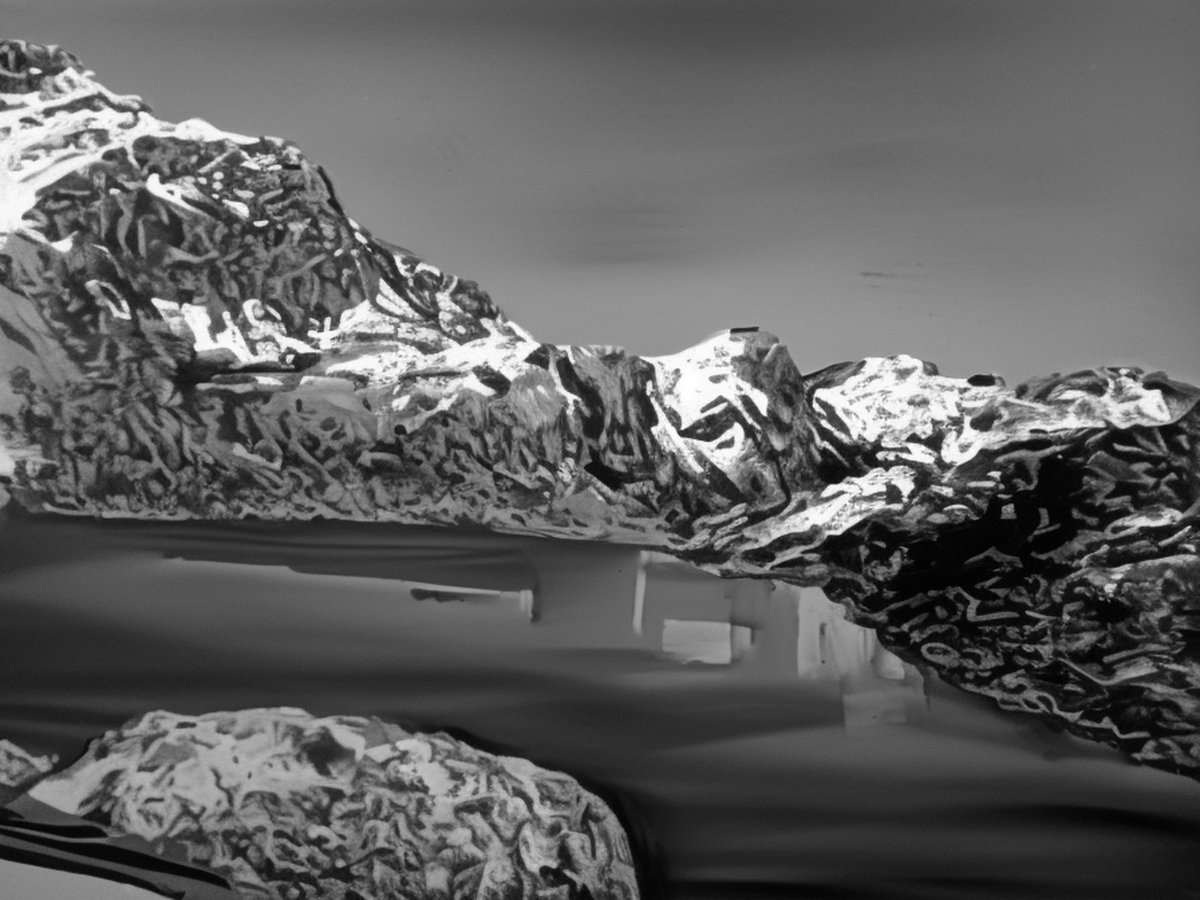
Nepal · Built: 2007