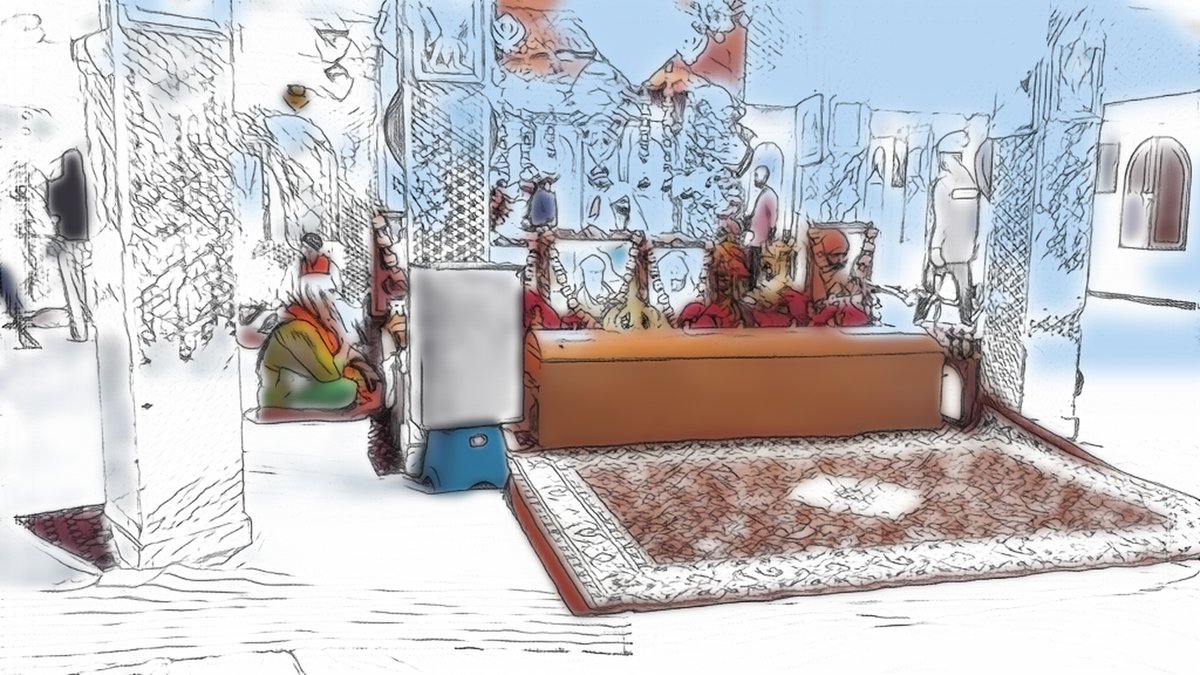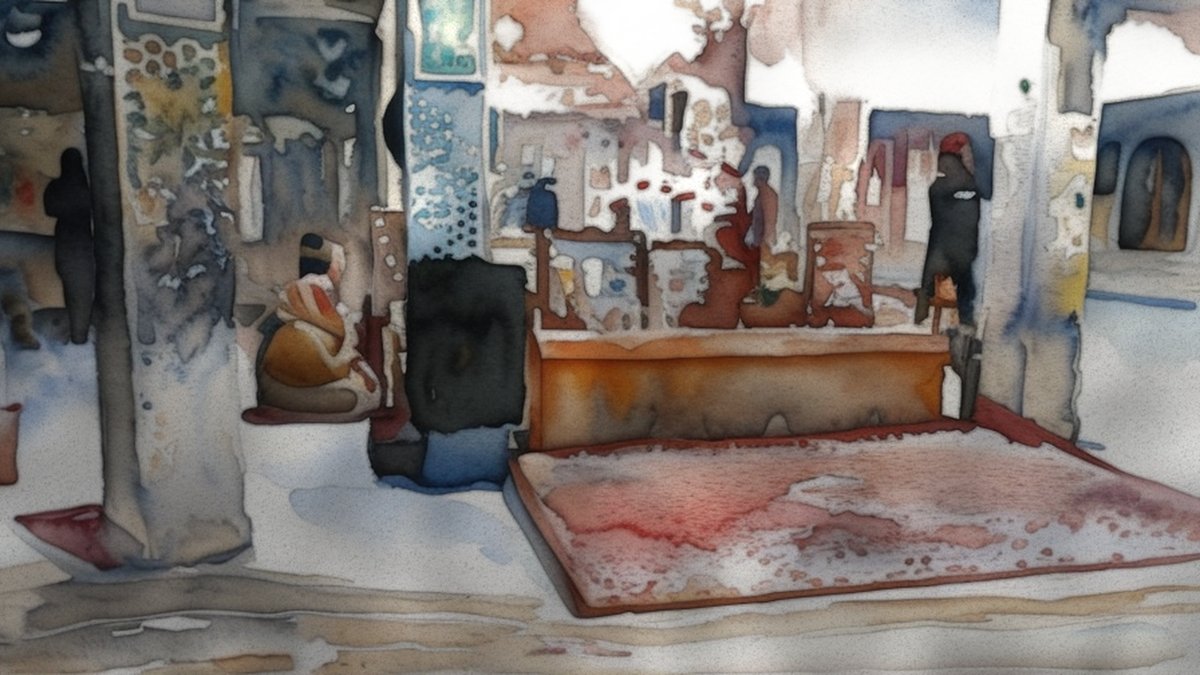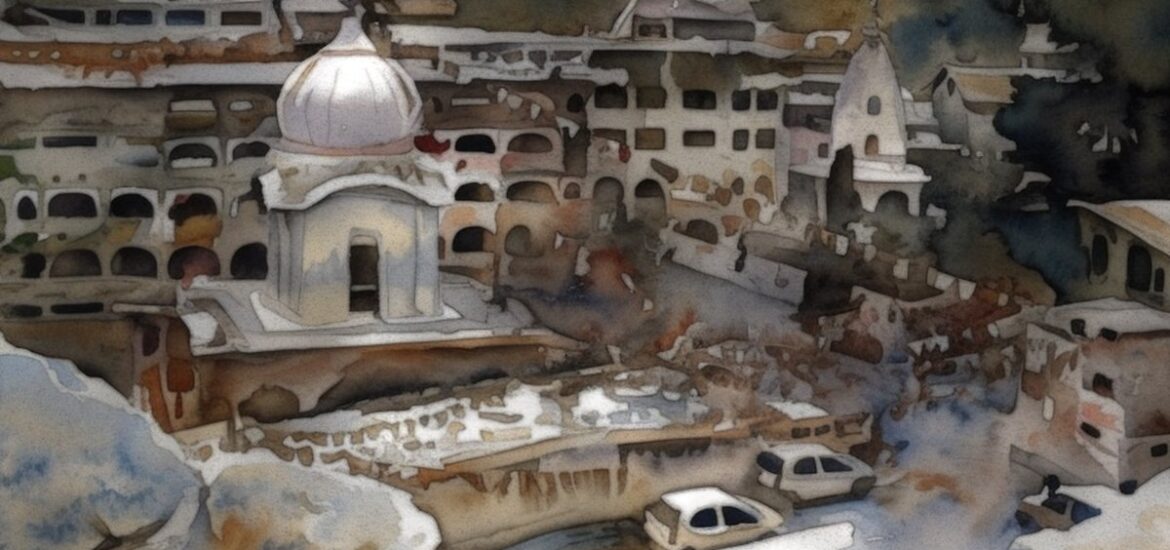
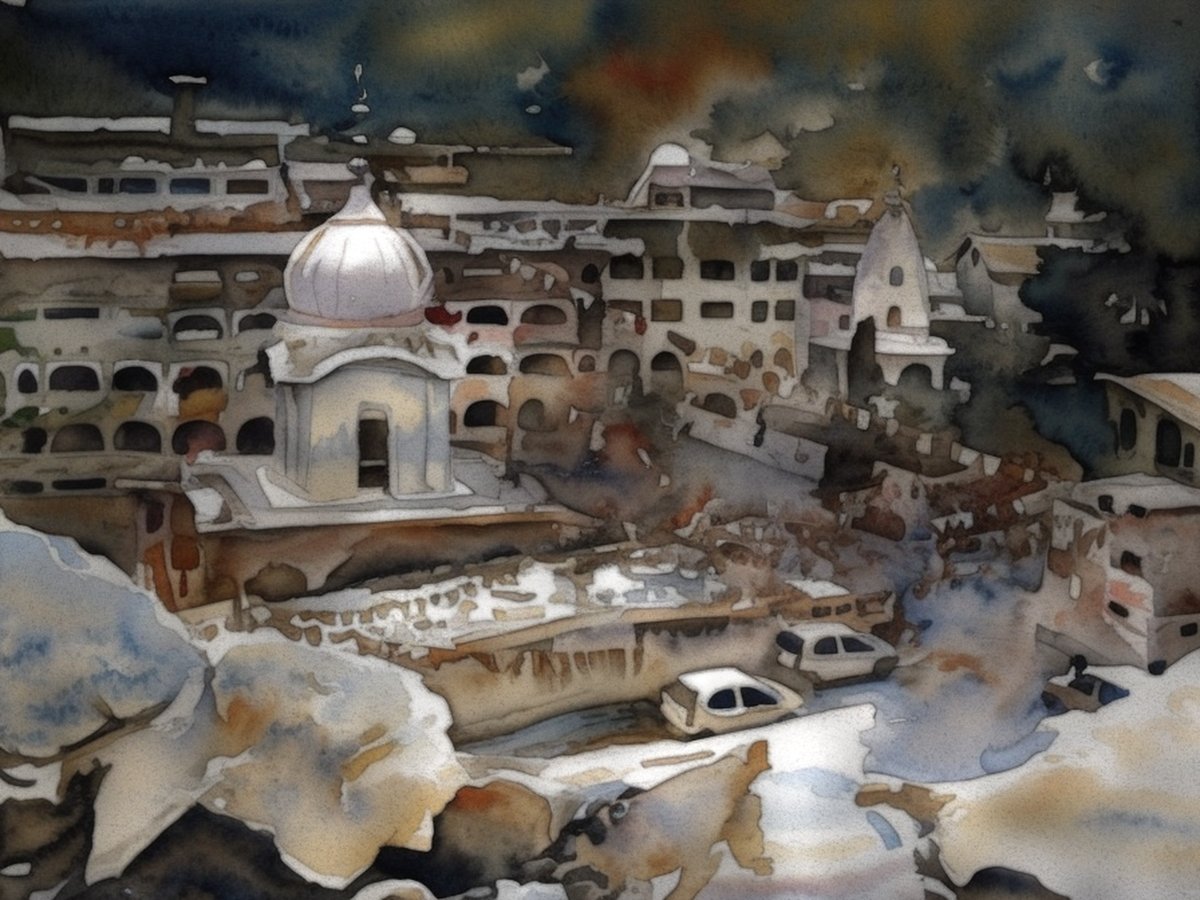
In Nordic building we are taught to court emptiness — the long silence of a Lewerentz nave, the single shaft of light that does the work of an entire wall. Manikaran teaches the opposite lesson, and teaches it through water that is not still and cold but boiling. It sits at 1,760 metres in the Parvati Valley, on the river Parvati in the Kullu District of Himachal Pradesh, and it is known above all for its hot springs.
A descent toward water. Every sacred architecture I trust organises a movement downward, toward the element. Here the spring temperatures run from 64 to 80 °C; the source records no sulphur. Food is cooked directly in these springs, and bathing is held to be a balm for arthritis. The ground itself does the heating — an experimental geothermal plant has been set up nearby — so the building task is not to warm the body but to gather the steam, the pilgrims, and the gods who arrive. It is, the source notes, a pilgrimage centre for both Hindus and Sikhs: many temples and a gurdwara, sharing one rising heat.
The earring and the serpent
The myth is precise about material. Walking in the valley, Shiva and Parvati found a green place ringed by mountains and stayed, it is believed, eleven hundred years. Parvati lost an earring in the waters of a stream. When the attendants failed to retrieve it, Shiva opened his third eye — an inauspicious event that disturbed the universe. The serpent god Shesha was appealed to; Sheshnag hissed, giving rise to a flow of boiling water, and from it emerged precious stones of the kind Parvati had lost. Mani — jewel. The water does not merely hold the offering; it returns it, transformed. The source records that jewels continued to be thrown up in the waters until the 1905 Kangra earthquake.
Water that judges the gift. The Sikh account turns on the same trust in the spring. Guru Nanak, on his third Udasi, had Mardana lift a stone, and a hot spring appeared; chapatis placed in it sank, then floated back baked once a donation in God’s name was vowed. Whoever gives in His name, Nanak said, finds his drowned things float back. Two faiths, one votive logic: the offering goes down into the heat and rises sanctified.
The Lord Ram Chandra Ji Temple was built by Raja Jagat Singh in the 15th century; the Shiva temple still leans, tilted by 1905. We Nordics empty a room to make a god audible. Manikaran fills the water, and lets it answer.