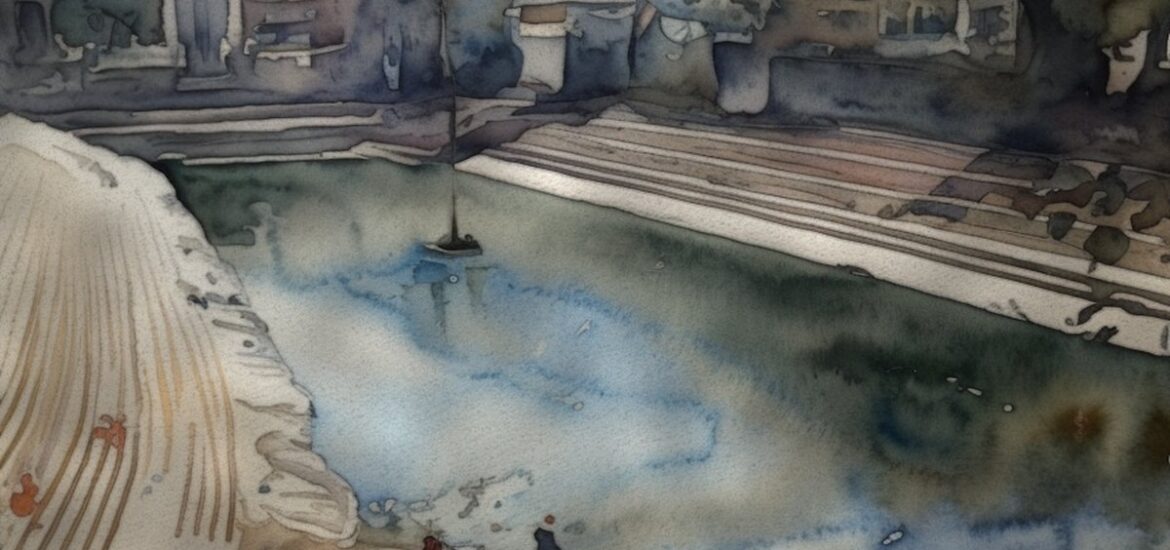
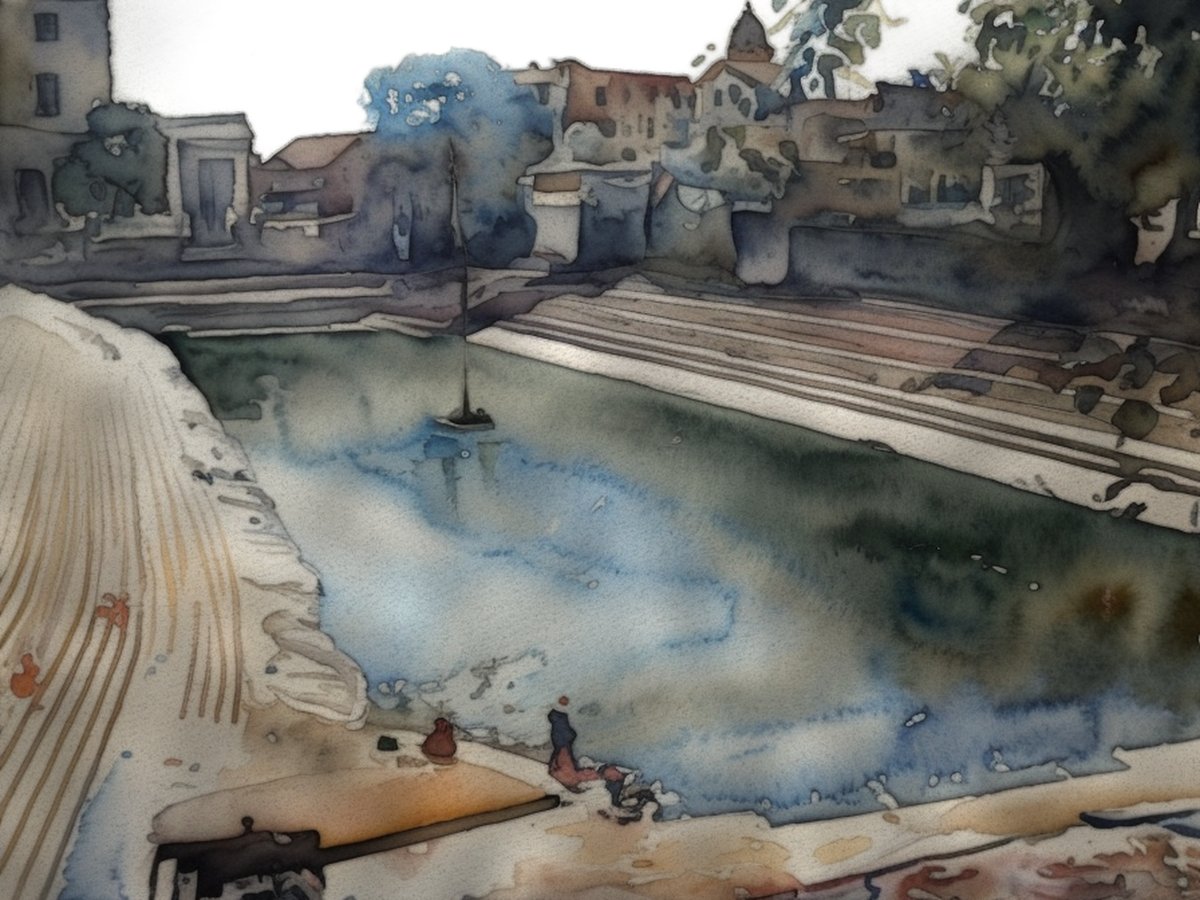
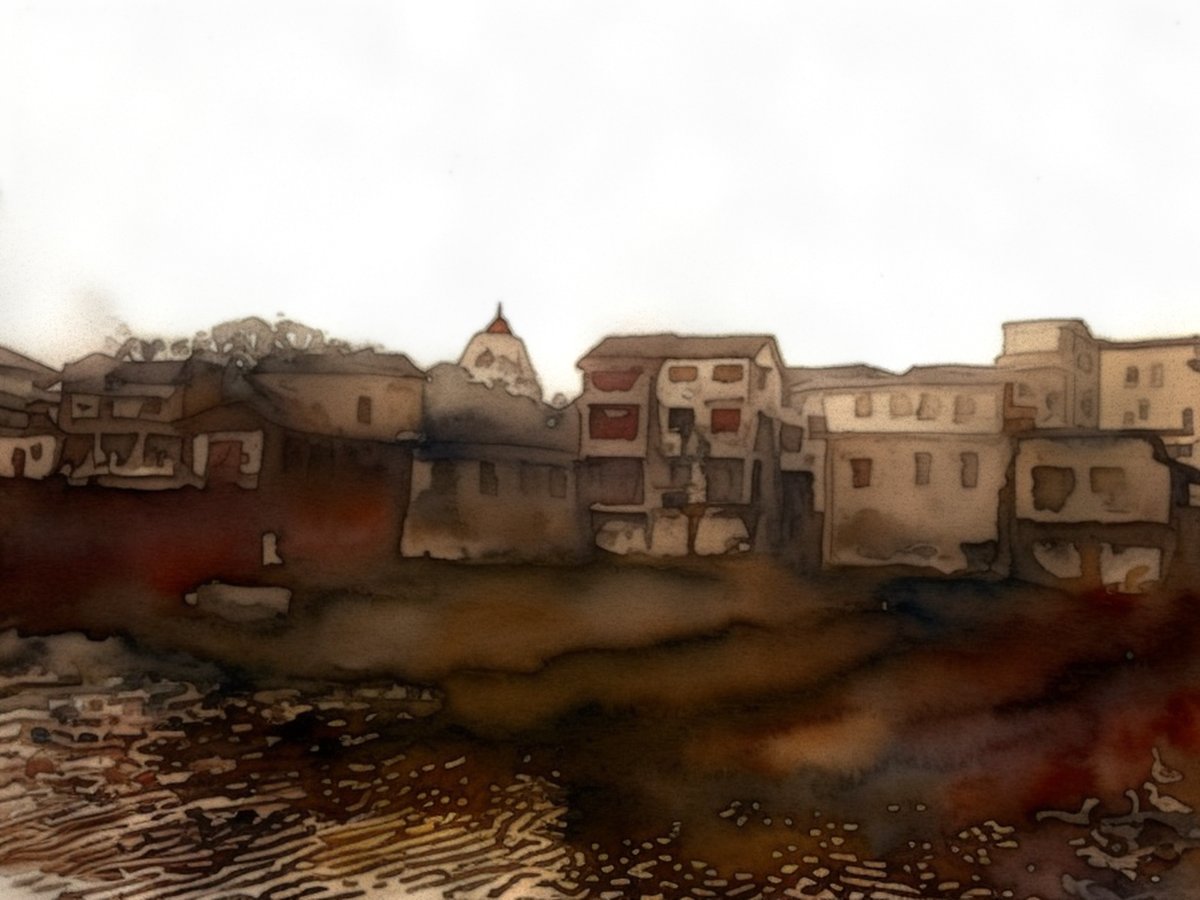
In the North I was taught that water should be approached slowly. You descend toward it; the building withholds, then releases. Standing in drawings of the Banganga Tank in Mumbai’s Malabar Hill, I recognise that grammar at once — and then feel it overflow its banks.
The descent
The tank is a rectangular pool surrounded by steps on all four sides. To me this is the most honest of forms: not a basin you look at but one you walk into, the threshold dissolved into a stair. Where a Nordic court would offer a single, considered approach and a great silence, here the geometry opens on every side. Every edge is an entrance. The restraint I would prize is replaced by invitation.
Light kept by hand
At the entrance stand two pillars in which, the record says, diyas — oil lamps — were lit in ancient times. I think of Lewerentz and his careful, deliberate light. But the light here is not architectural; it is held in the hand and renewed nightly. In November, during Dev Diwali, a huge crowd lights lamps at the tank, placing diyas around its edge amid bhajans, chants, and dance. The building does not make the light. The people do.
Material and myth
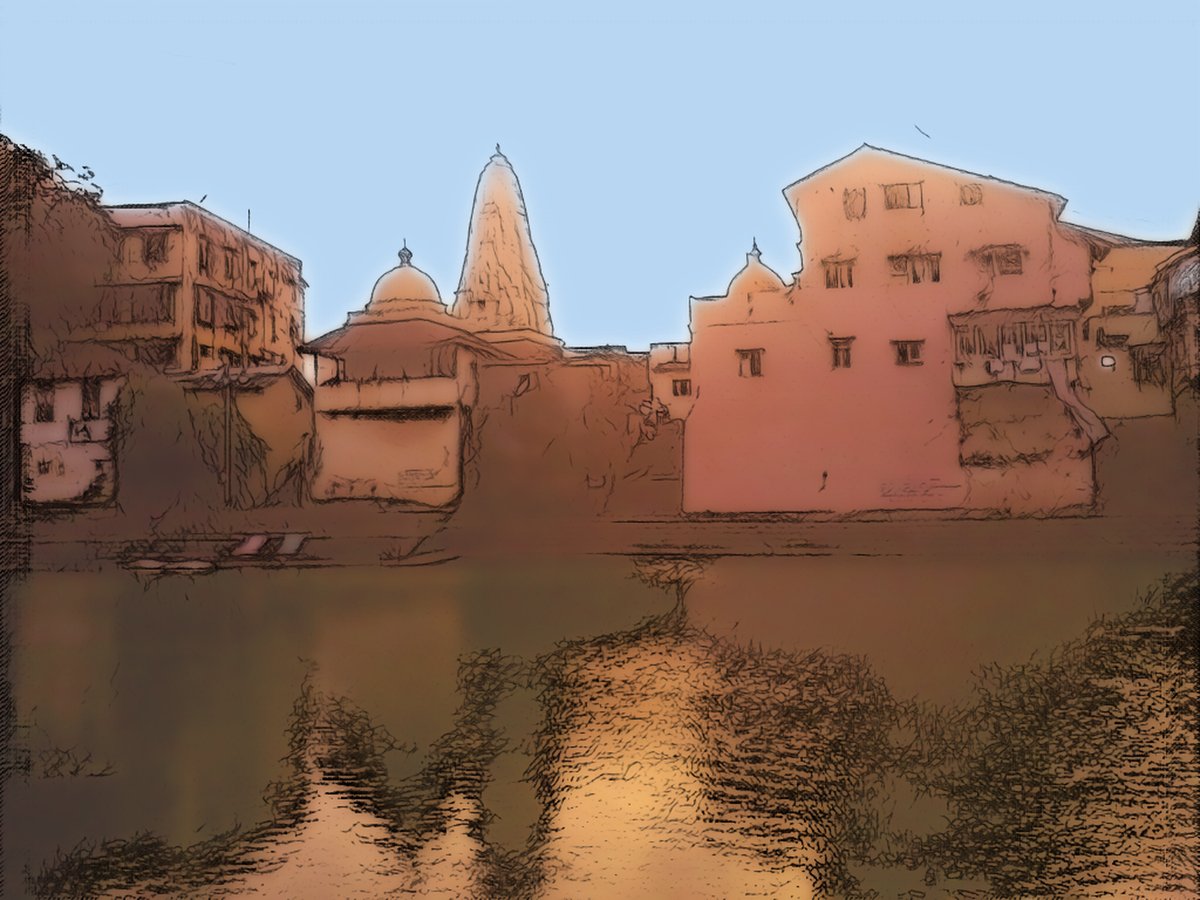
The main temple is now reinforced concrete of recent construction, candid about its own age. But the older claim is mythic. Local legend holds that the spring sprang forth when Rama, searching for his abducted wife Sita, grew thirsty; his brother Lakshmana shot an arrow into the ground and water gushed up — a tributary of the distant Ganges. Hence Banganga: the Ganga made by a baan, an arrow. A spring summoned by violence, then made sacred.
Sweet water by the sea
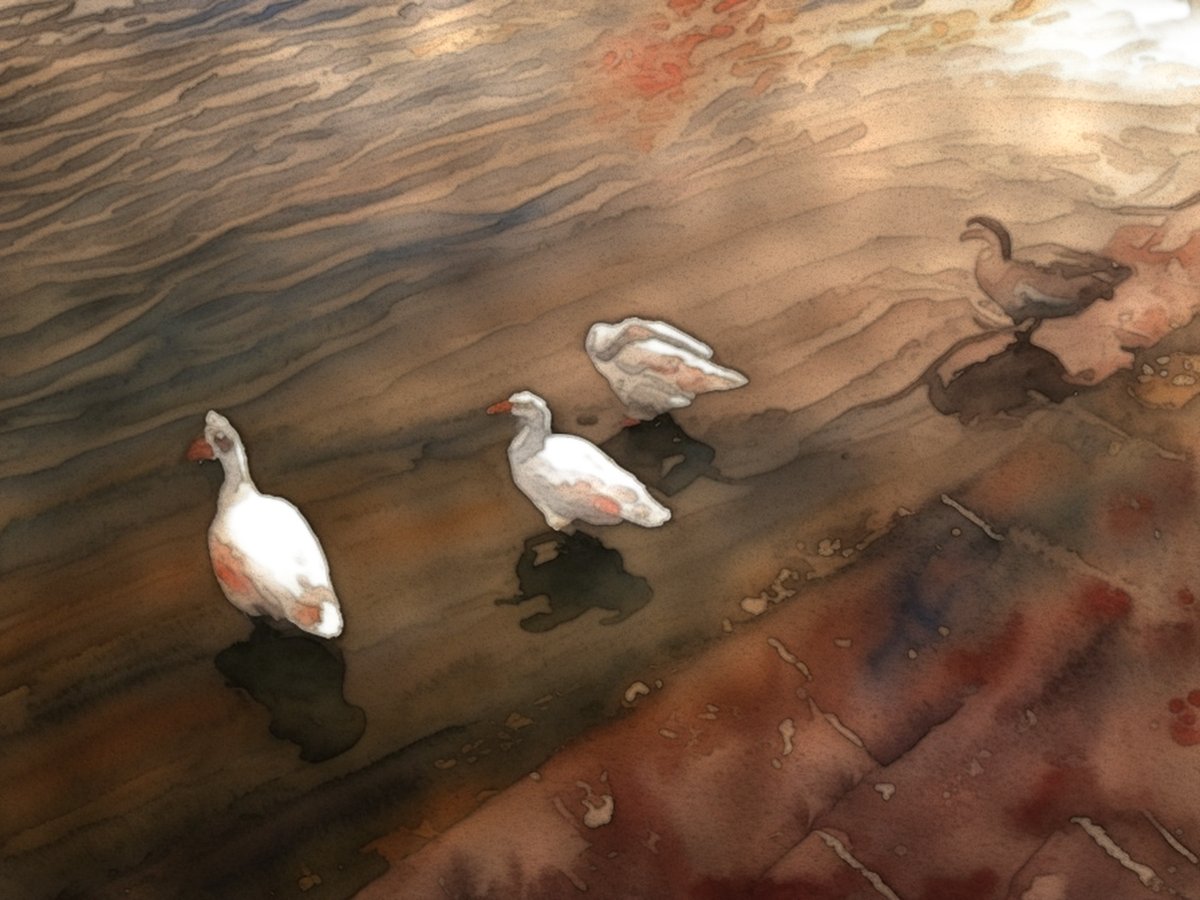
The tank is spring-fed, and so its water stays sweet though the sea lies only a few dozen metres off. To a Northerner this is the quiet miracle — fresh water held distinct from salt by nothing but its source.
On offerings. The source speaks not of thrown coins but of lamps set upon the water and the dead remembered nearby — samadhi shrines of past gurus along the banks. The votive act here is light, not metal: a flame placed at the edge, a wish entrusted to water that the legend says was never ordinary.
Mumbai City district, India