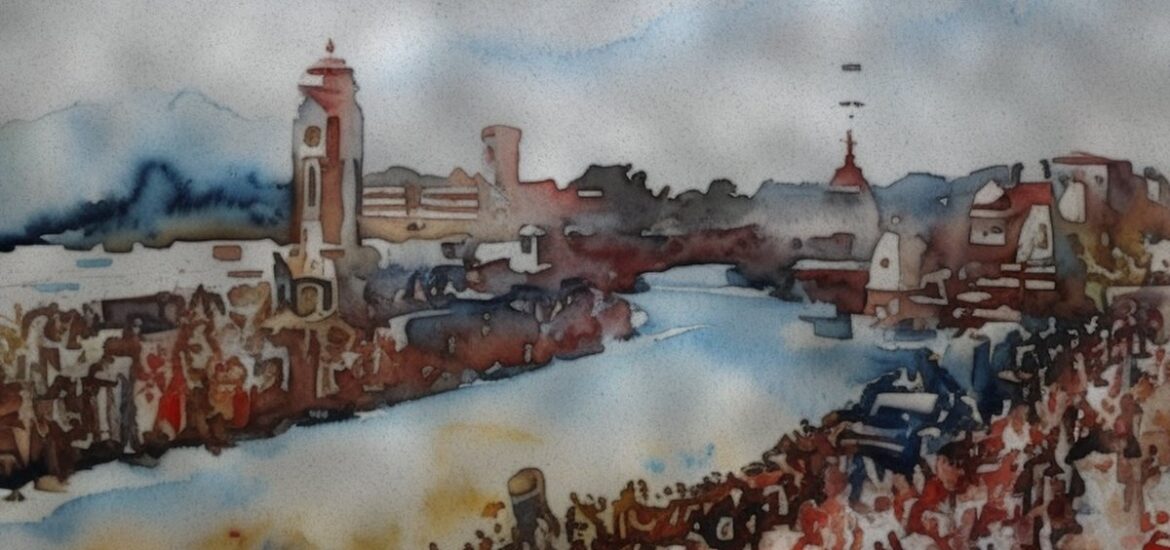
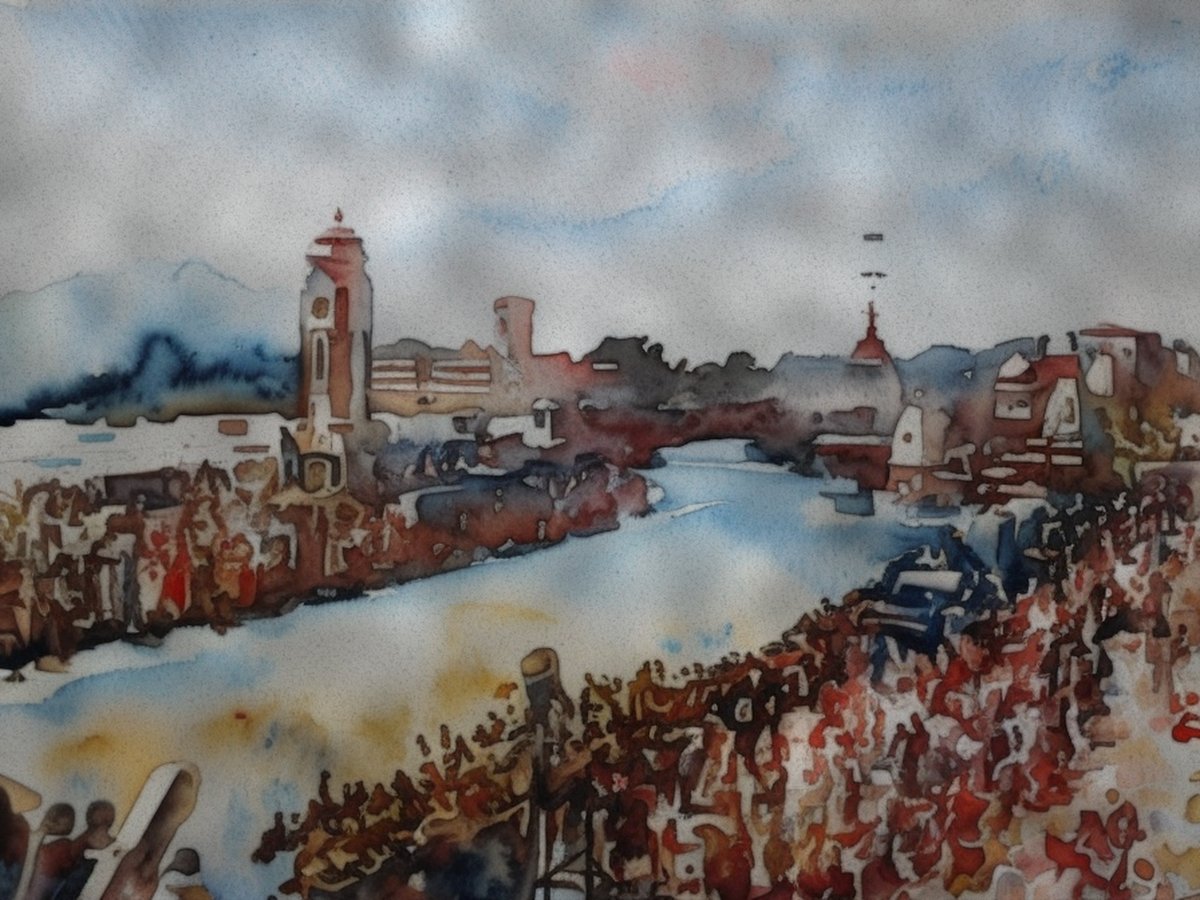
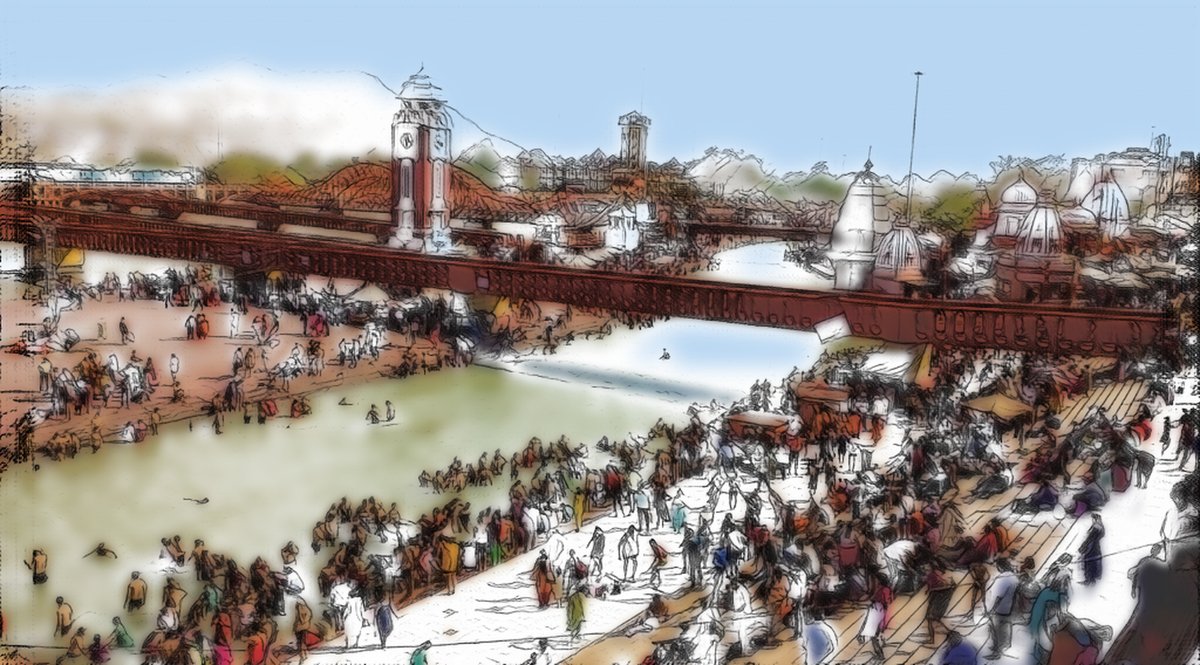
A threshold, not a building. In the North we learn to revere the door, the sill, the moment of crossing from cold into shelter. Har Ki Pauri is a threshold of another kind: the ghat at Haridwar where, it is believed, the Ganges leaves the mountains and enters the plains. There is no roof here, no enclosure to defend. The architecture is the descent itself — sixty steps, widened by the British after a crush in 1819 killed 430 people, the narrow passage opened to a hundred feet so the river could be reached. I think of Lewerentz, who knew that a step toward water is never neutral.
The honesty of going down
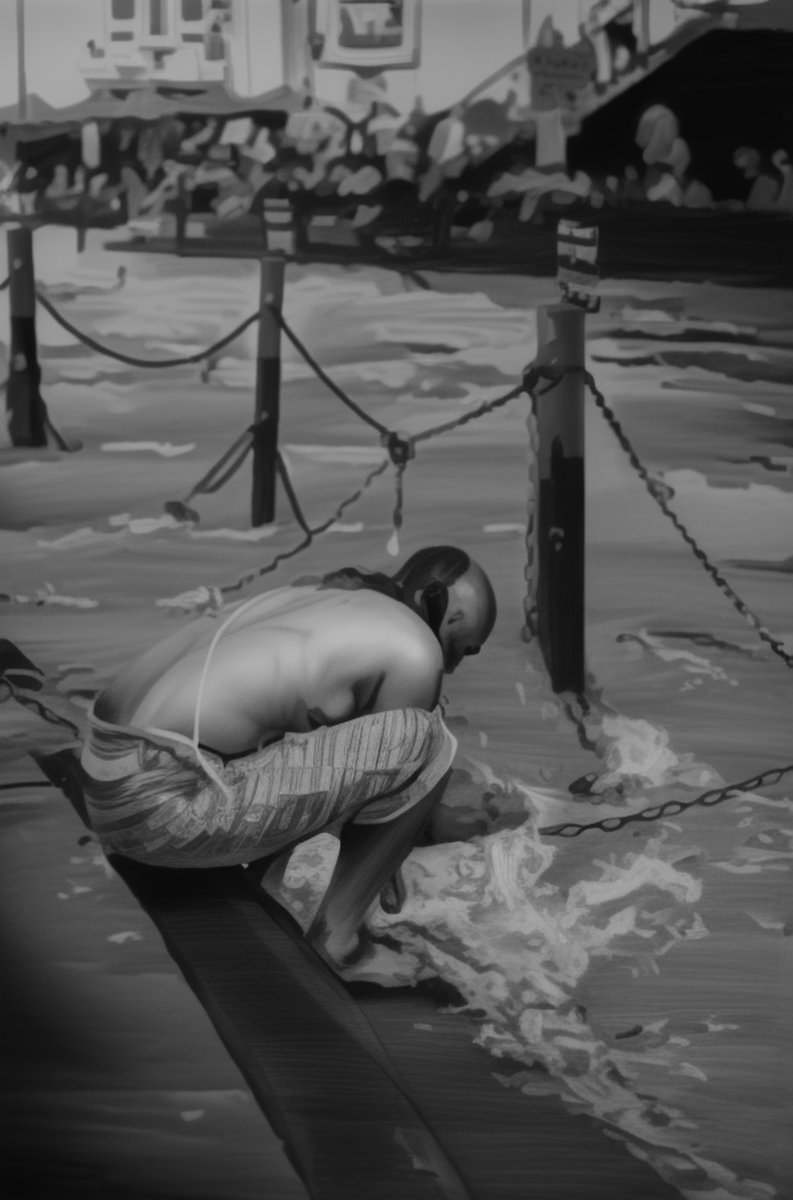
We Scandinavians prize material honesty: let stone be stone, let light fall as it will. Here the honest material is water, and the work of design is restraint — to bring a body down to the river and no further. The name itself, Har Ki Pauri, means “the feet of Vishnu.” Har is God; Pauri is feet. To build at someone’s feet is the most humble brief an architect could receive.
Where the drops fell
The most sacred ground is Brahmakund — said to be the spot where drops of Amrit fell from the sky, carried in a pitcher by the celestial bird Garuda after the Samudra Manthan. Vishnu is believed to have come here in Vedic times. King Vikramaditya is said to have raised the ghat in the 1st century BC, in memory of his brother Bharthari, who came to meditate on this bank. The clock tower, by contrast, is recent — 1938 — a small mark of measured time beside an immeasurable myth.
The offering, not the coin
In my own tradition, water and silence go together; a still lake asks for nothing. Here the river asks for everything, and is given it. Each evening at sunset the priests perform the Ganga Aarti — fire bowls in hand, temple bells ringing, chants rising — and lights are set on the water to drift downstream. People flick a diya, made of leaves and flowers, into the Ganges as a symbol of their hopes and wishes. No coin sinks here; the offering floats, lit and biodegradable, and is carried away. That is the wish: not buried in the water but released onto it.
What endures. Against Nordic emptiness, this is ritual abundance — and yet both are forms of attention to water. The ghat teaches that to wish is simply to let something go downstream, toward the plains.
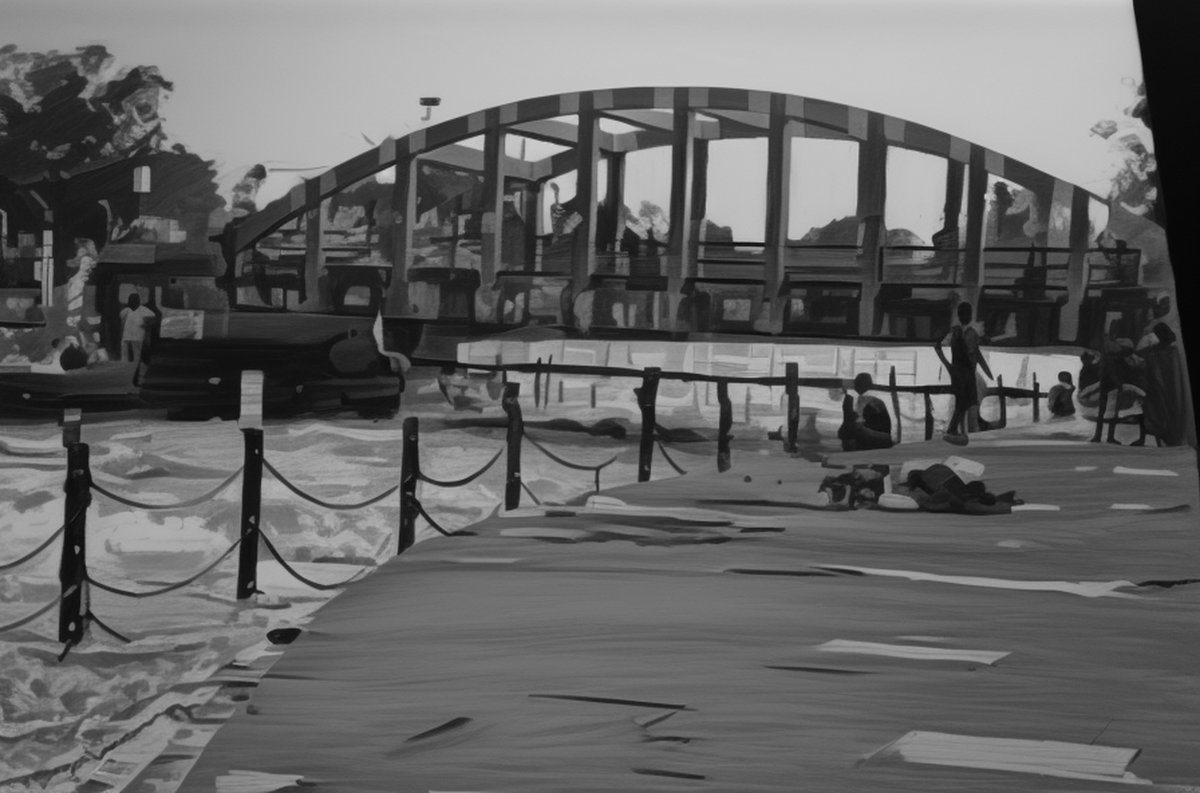
Haridwar, India