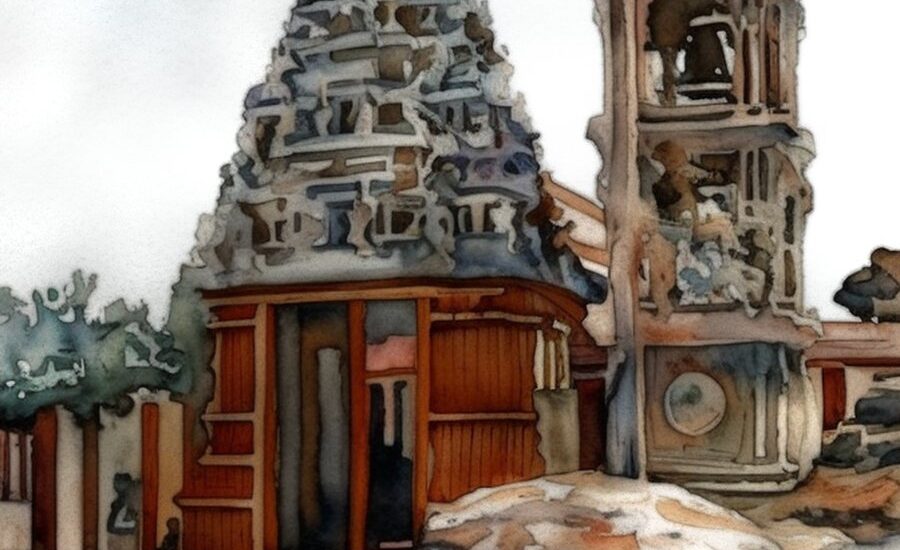
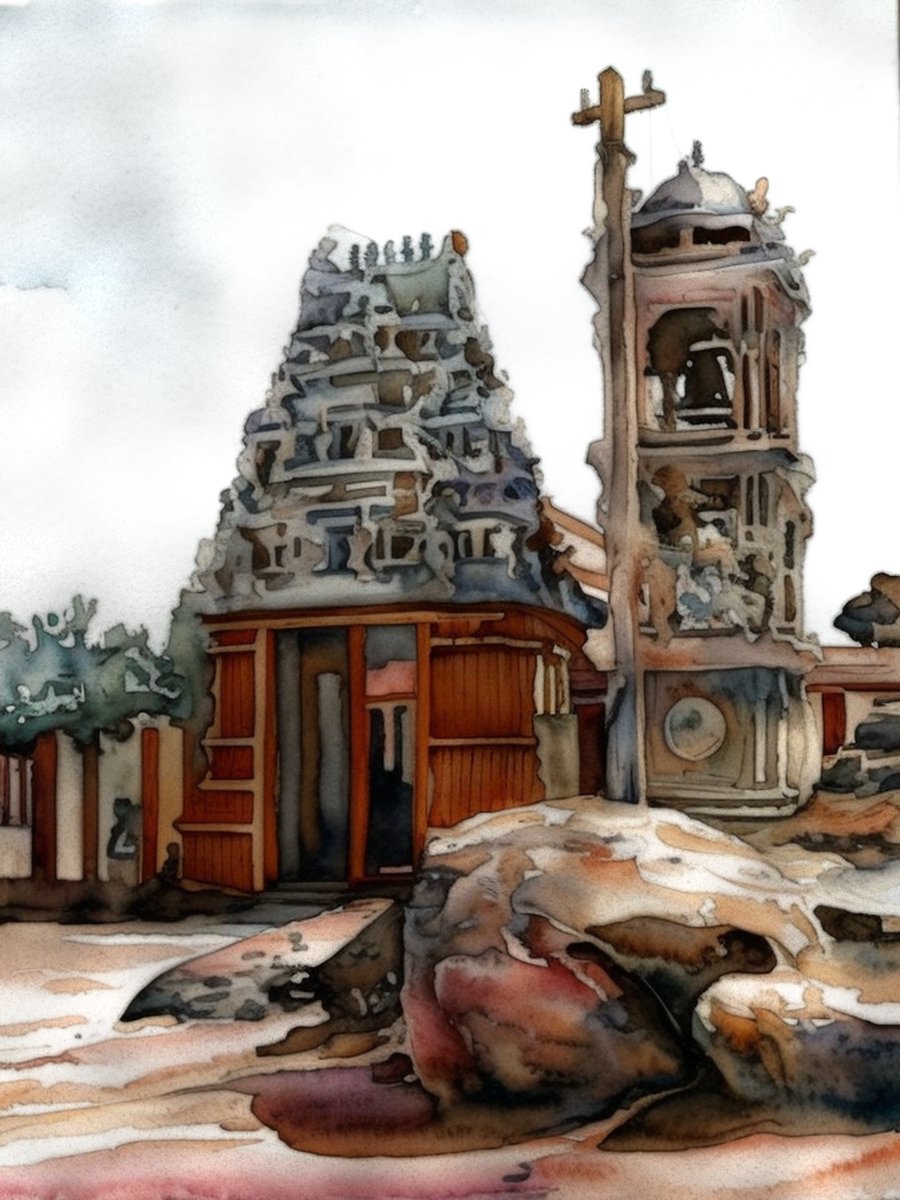
A building that meets the sea
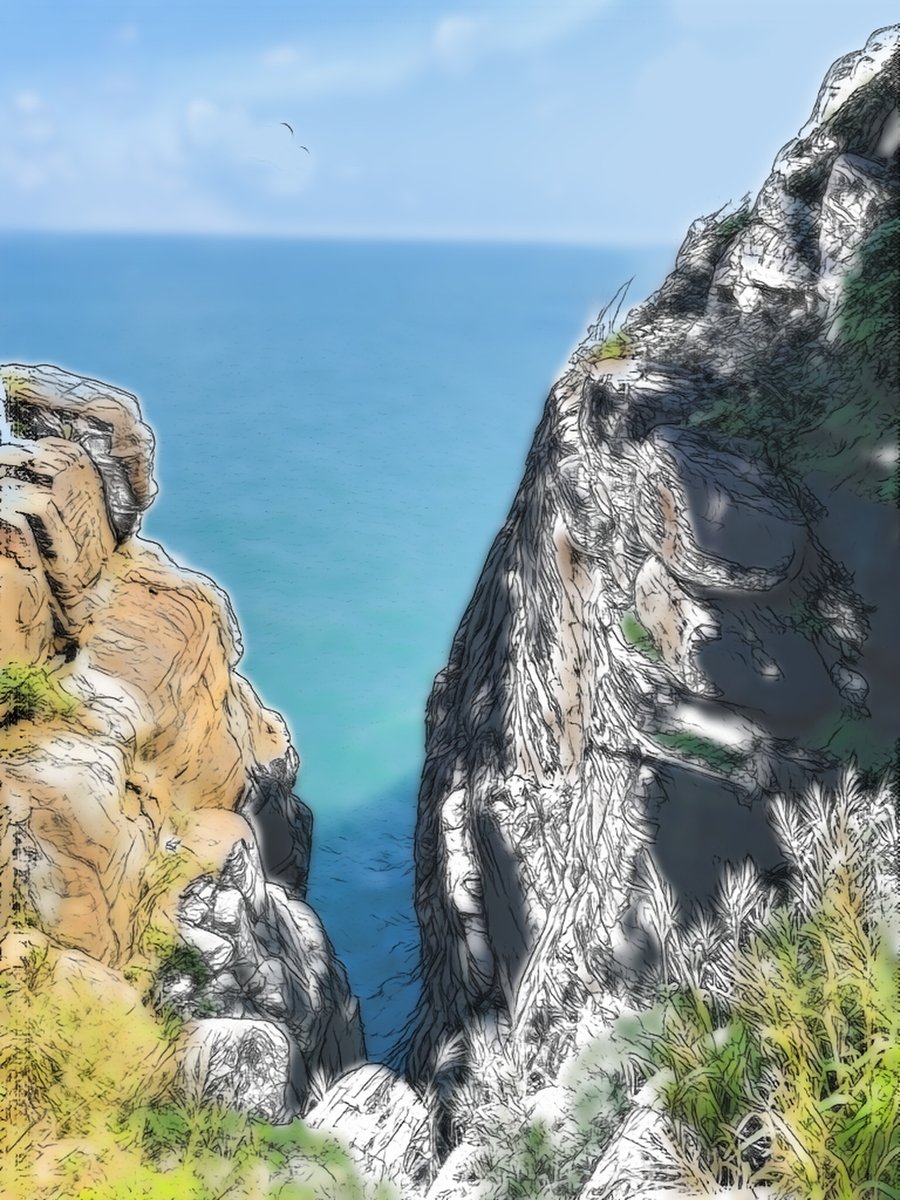
I come to Koneswaram, on Konesar Malai at Trincomalee, the way I would approach a Lewerentz chapel — looking first for the threshold, the light, the honesty of stone. The temple stood on Swami Rock, a cliff that drops 400 feet (120 metres) directly into the sea. In the North we prize emptiness, the single window holding the silence. Here, instead, is abundance: a thousand-pillared hall, the Aayiram Kaal Mandapam, bas-relief cut into black granite, gopuram towers once gold-plated. Different grammar, same instinct — to place a building exactly where land, height and water meet.
Material honesty. The source is plain about the stone: blackish granite, “constructed with wonderful skill,” as a Jesuit wrote in 1613, “on a rock projecting into the sea.” Pallava and Chola hands worked here over centuries. I admire that the rock and the building seem to share one substance — the promontory itself called a fragment of a golden mountain in the old Puranas.
Offerings into the sea
What holds me, as it should hold any archive of wishing, is what people gave to the water. The source records that pilgrims “leaped from the last temple into the ocean in sacrifice to their idols,” and that by the mid-19th century sailors and priests “broke a coconut and said prayers,” with “fruits and other offerings often cast over the edge of the cliff, falling to the ruins below.” Not coins, then — the texts say offerings, fruit, coconut, the body itself. I keep to that. The gesture is the same one we make at any threshold: to give something to the depth and ask the depth to remember.
The well above the sea. There is also the Papanasachunai holy well on Swami Rock, where, during the Ther festival, the deity and sacred objects are bathed and devotees sprayed with the water. Water drawn up, water cast down — the cliff works in both directions.
Myth carried in the cliff
Folklore saturates this rock. Ravana of the Ramayana is believed to have worshipped Shiva here and, straining to lift the rock, made the cleft now called Ravana’s Cleft — later renamed Lover’s Leap for the Dutch legend of Francina van Reede, said to have flung herself from the edge for a departing officer. Ravana is held to have carried here a swayambhu lingam, one of sixty-nine from Mount Kailash; it was retrieved from the sea floor in 1956 and reinstalled.
A Scandinavian eye reads restraint into a cliff and a window. Koneswaram asks me to read it into a thousand pillars, a falling offering, and a sea that keeps everything.
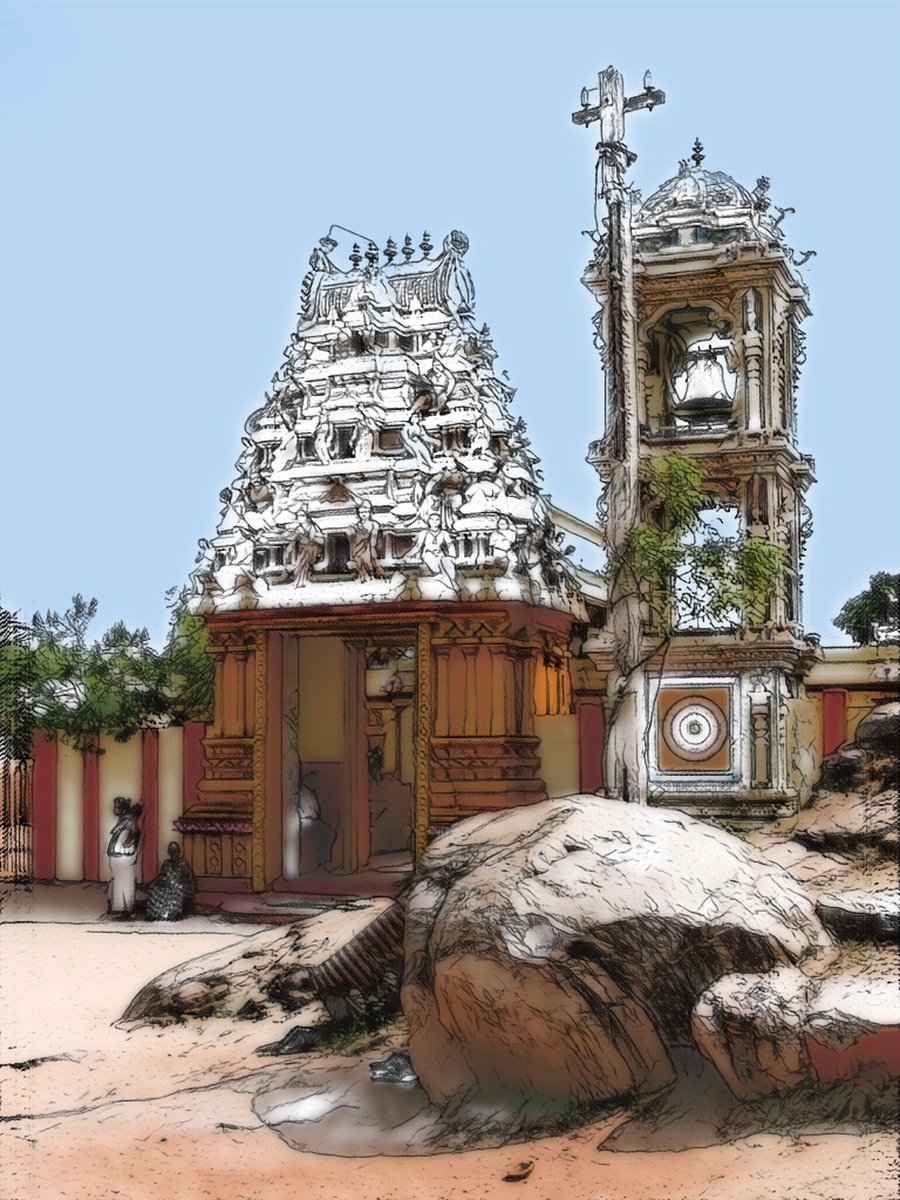
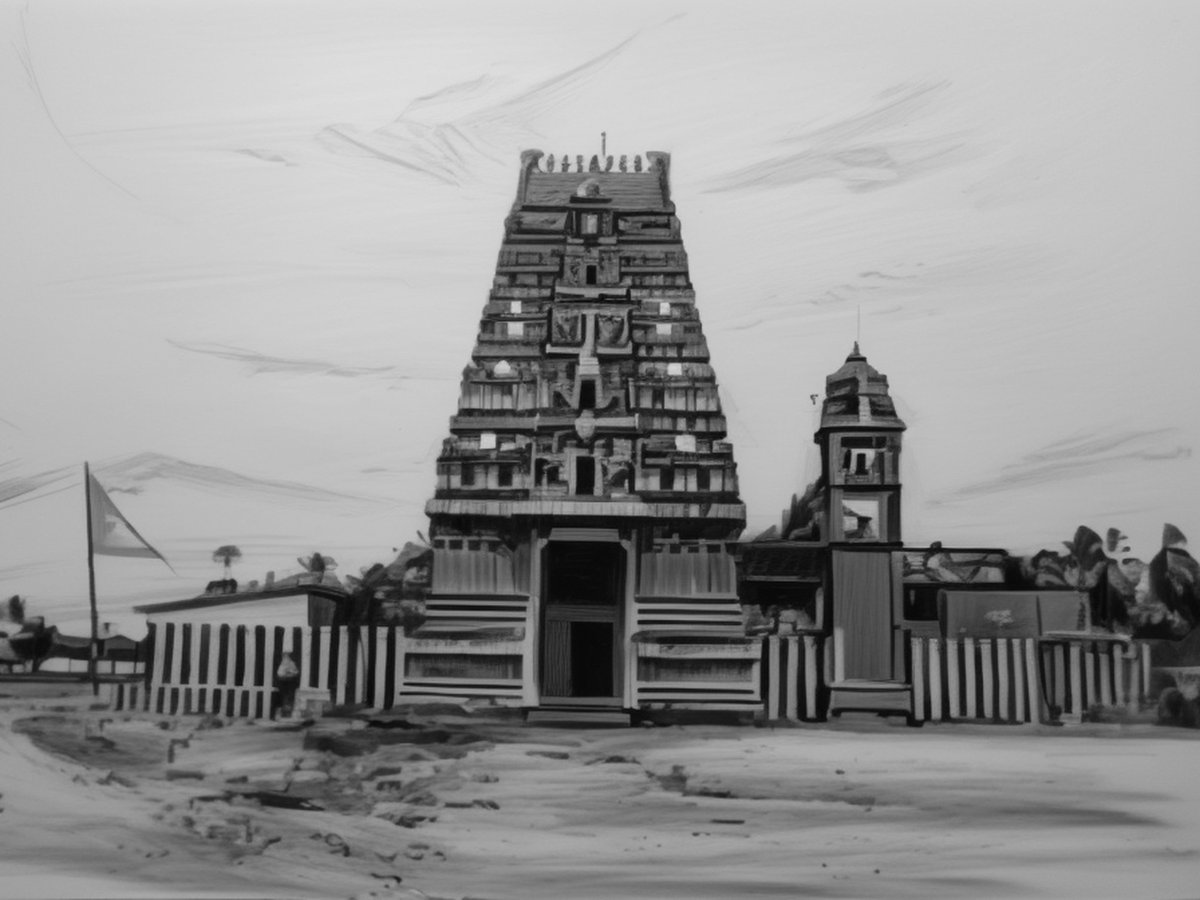
Trincomalee District, Sri Lanka