The Holy Cave, Hunterston
There are buildings shaped by hand, and there are spaces shaped by water and then claimed by hand. The Holy Cave at Hunterston, in the Parish of West Kilbride, belongs firmly to the second kind.
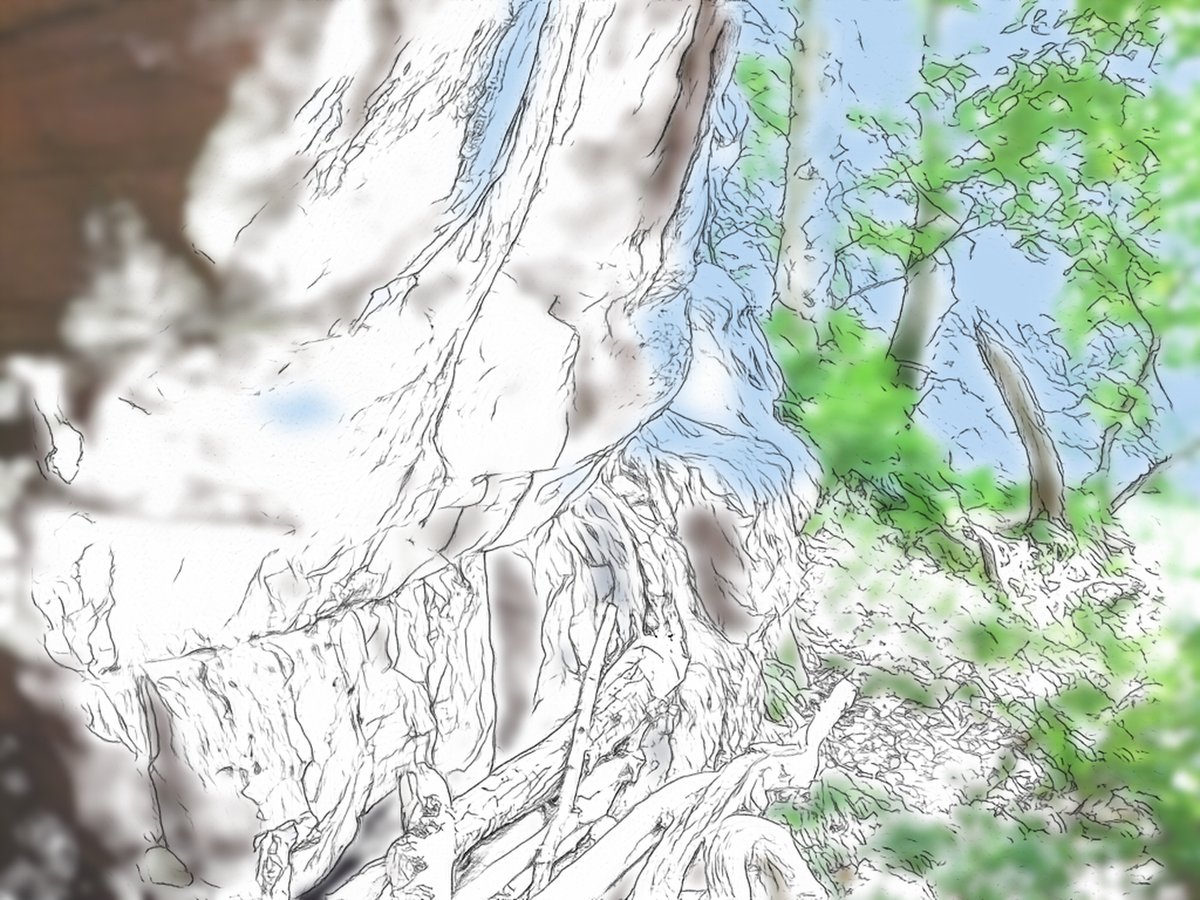
A void cut by the sea. The cave was formed by wave action working at a weak point, a fissure, at the base of the red sandstone cliffs that run from Brigurd Point to Portencross. It now stands about 10 feet above the level of the old raised beach that runs down to the sea, a record of a coastline that has since retreated. The chamber itself is modest: roughly 6 feet high, 6 feet wide, and about 27 feet long. As architecture, it reads as a single deep slot in the rock, its proportions narrow and tunnel-like rather than hall-like.
Setting and approach
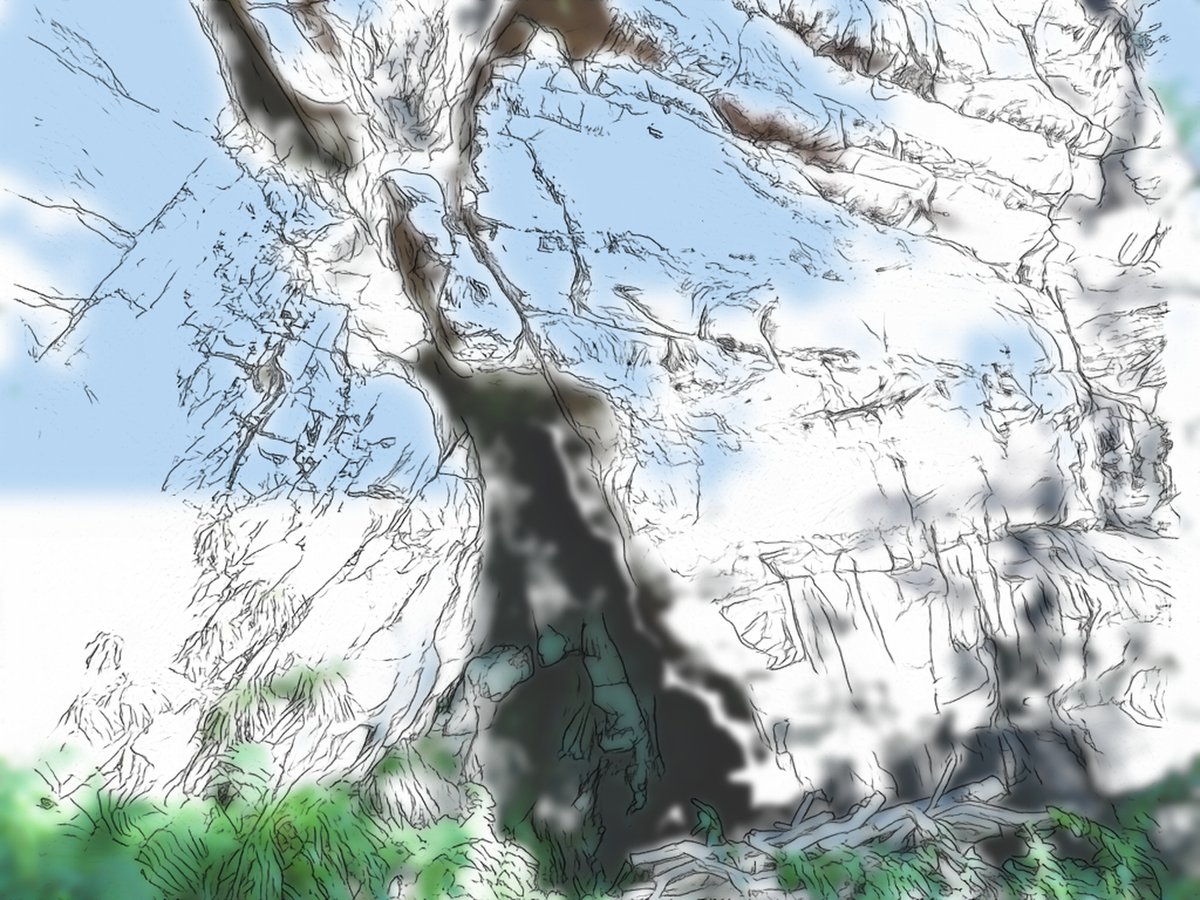
The cave sits about 300 yards from the northern end of the cliffs. Today it is best reached by entering the Hawking Craig Wood near the ‘Three Sisters’ cliffs and walking carefully along the base of the escarpment. A second cave, Smith’s Cave, better described as a rock shelter, lies a short distance to the south. The setting is one of woodland meeting a sheer red sandstone face, the soft stone easily eroded by rain and wind.
A threshold now lost. A shelter would most likely once have stood at the cave mouth, though no recognisable concavities or fixings survive to confirm it. Some apparent man-made workings exist on the rock face nearby, but there is a notable absence of religious symbols or graffiti of any kind, possibly because the soft sandstone has erased them.
Layers of occupation
Excavation in 1879 read the floor like stratigraphy. Digging went down 6 feet to bedrock and revealed three levels, each of well-trodden ashes and seashells, at depths of 18, 30, and 39 inches. Bones of deer, cat, pig, horse, sheep, goat, ox, and rabbit were recovered, along with a bone object pierced at one end, a flint, an object of slate, and pottery fragments, some coarse and unglazed, one with a green-brown glaze akin to Scottish Medieval ware. The National Museum of Scotland holds the bone implements and some sherds.
Water and wishes. A spring, the ‘Wishing Well’, lay near or within the cave. The name has been read as Saxon for the “Wise man’s Well”. Visited most on the first Sunday in May for its curative water, and used at times to baptise children, it drew the old practice of casting in coins and offerings, fitting for a void the sea itself first hollowed.
North Ayrshire, United Kingdom