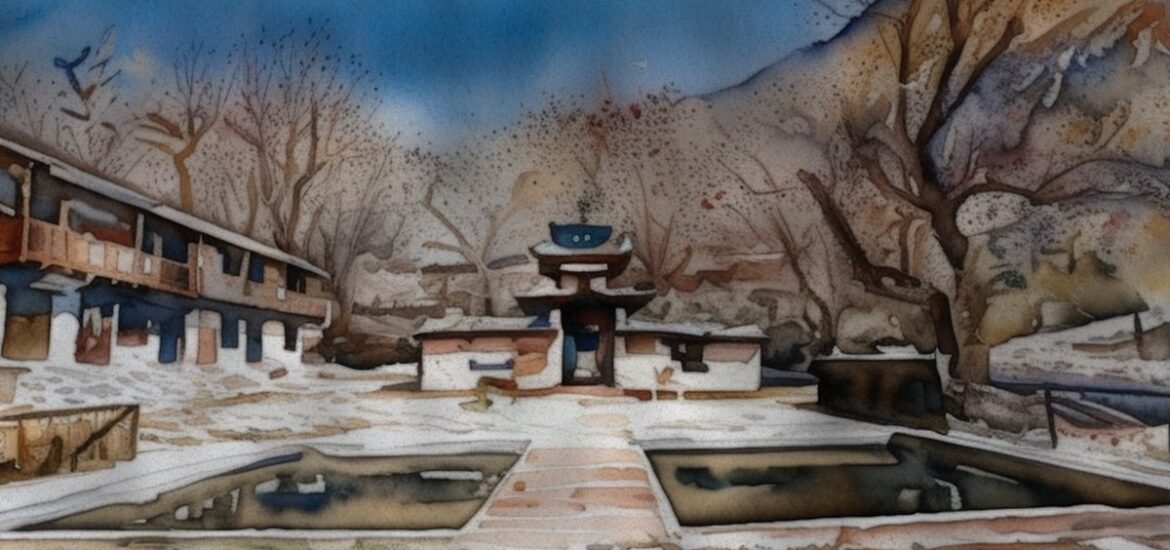
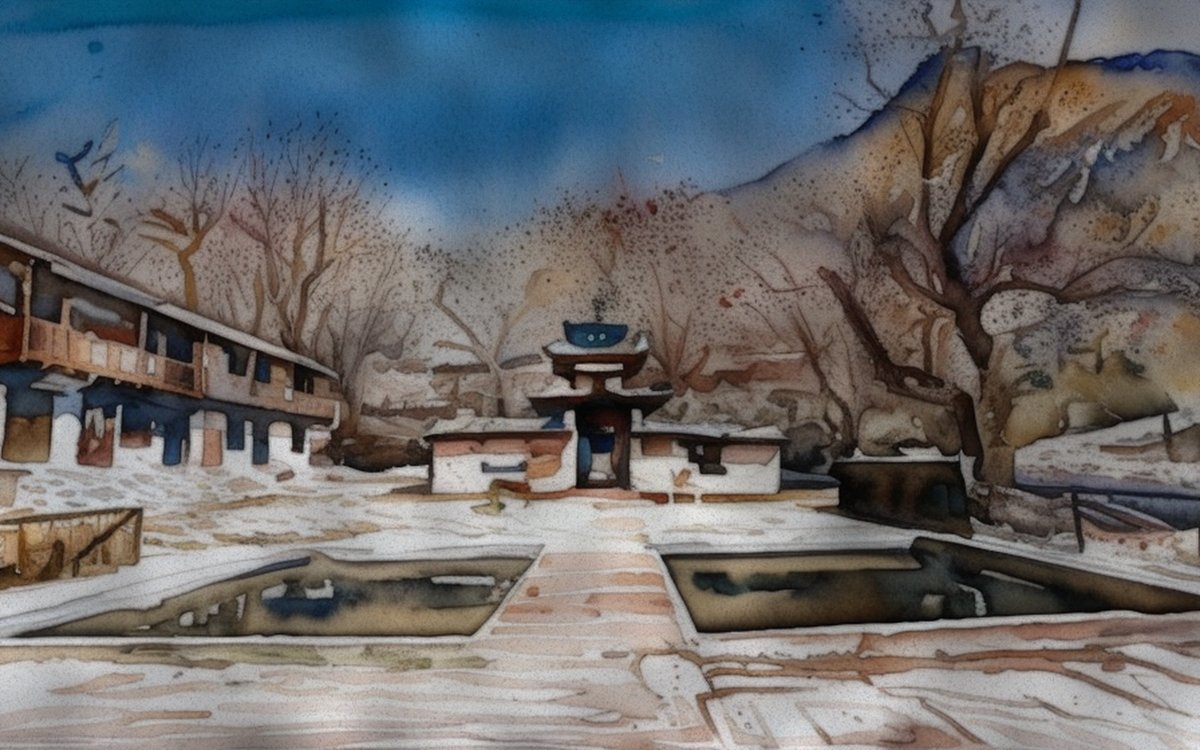
I have spent my working life with light, cold, and water — the materials of the North. So I come to Muktinath not as a pilgrim but as someone trained to read a place by what it asks the body to do. And here, at 3,800 metres at the foot of the Thorong La pass, one of the highest temples on earth, the place asks for water.
A threshold held in common
What moves me first is not form but agreement. Muktinath, “the lord of liberation,” is sacred to both Hindus and Buddhists. Hindus revere it as an abode of Vishnu; Buddhists as an abode of Avalokiteśvara, who embodies the compassion of all Buddhas. The source calls it “a symbol of religious harmony,” a single spot worshipped by both, “mutually respecting and including each other.” In the North we prize emptiness and silence as the medium of the sacred. Here the medium is shared occupancy — the same threshold crossed by two faiths.
The 108 waters
The detail an architect cannot let go of: the prakaram, the outer courtyard, carries 108 bull faces through which water is poured. They are called mukti dharas, and they represent the sacred waters of the 108 Divya Desams of Sri Vaishnavism. Muktinath is itself one of those 108 — the only one outside India. The Tibetan name, Chumig Gyatsa, means “Hundred Waters,” or “the Hundred Springs.” Two traditions, one count of water.
I think of Lewerentz’s grudging fonts, of ablution as architecture’s oldest program. To pass beneath 108 spouts is to make the body the instrument of passage. Restraint, repetition, cold — the rite is the building.
Stone, gold, and the river below
The murti within is made of gold, the size of a man. Below runs the Gandaki, considered the only source of the shaligrama shila, the non-anthropomorphic stone-form of Vishnu — white, black, green, blue, golden, found bearing the patterns of conch and chakra. Material honesty here is literal: god read directly in the grain of a river stone. Adjacent, the Jwala Mai shrine keeps a flame fed by natural gas from the earth, so the complex is revered as holding all five elements — fire, water, sky, earth, air.
What the legends keep
The Vishnu Purana’s Gandaki Mahatmya records its Hindu importance. Tibetan tradition holds that Padmasambhava, founder of Tibetan Buddhism, meditated here on his way to Tibet, leaving a self-image now tended by nuns regarded as dakinis, the Sky Dancers. The source speaks of offerings and devotion, not of coins. The wish made here is moksha — liberation. The currency is water.
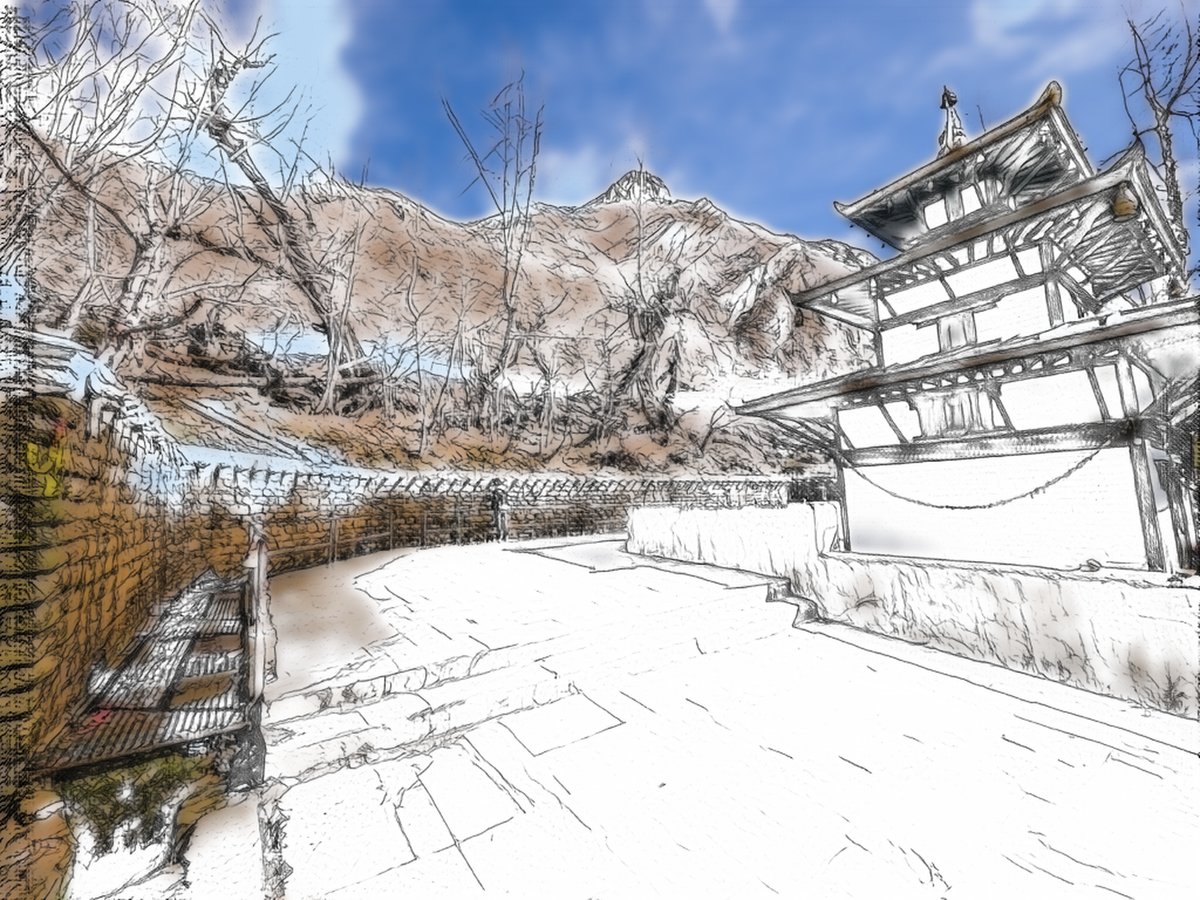
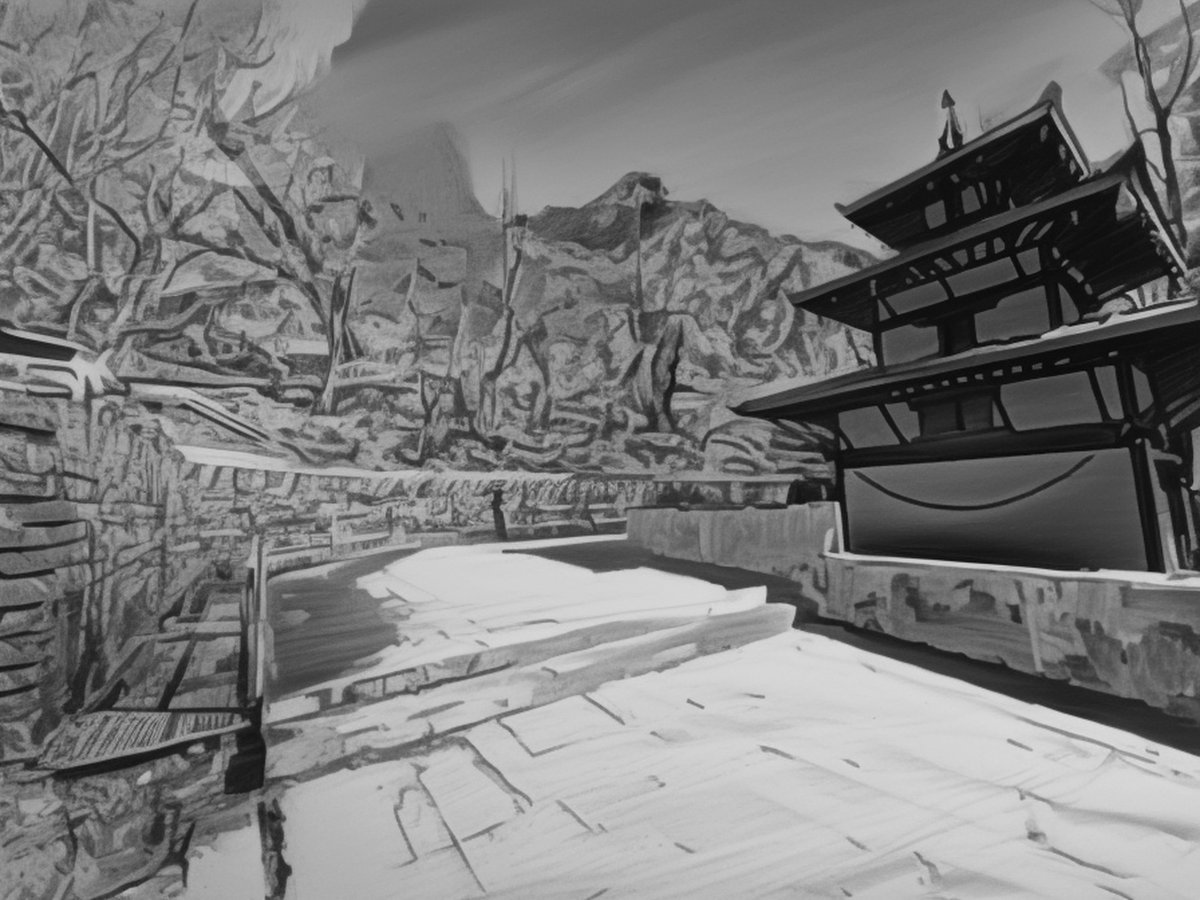
Varagung Muktichhetra Rural Municipality, Nepal