Chalice Well: The Red Spring of Glastonbury
A spring made architecture. The Chalice Well, also called the Red Spring, sits near the summit of Chalice Hill, a small rise beside Glastonbury Tor in Glastonbury, Somerset, England. What the visitor reads as a designed place is, at root, a natural spring — one that issues water at 25,000 imperial gallons (110,000 litres) a day and has never failed, even in drought. The site and its surrounding gardens are held by the Chalice Well Trust, founded by Wellesley Tudor Pole in 1959.
The wellhead
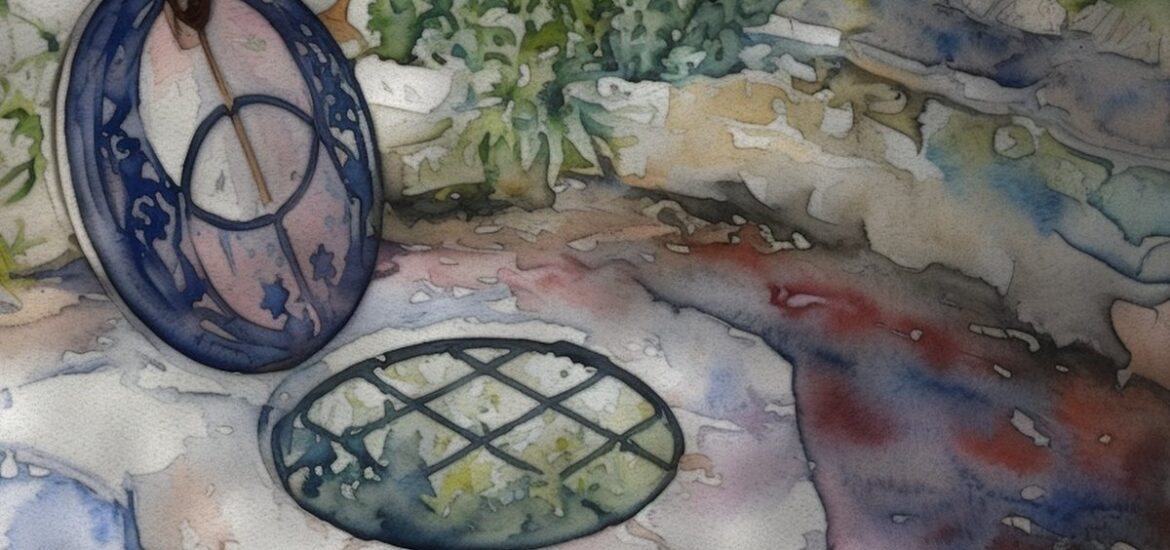
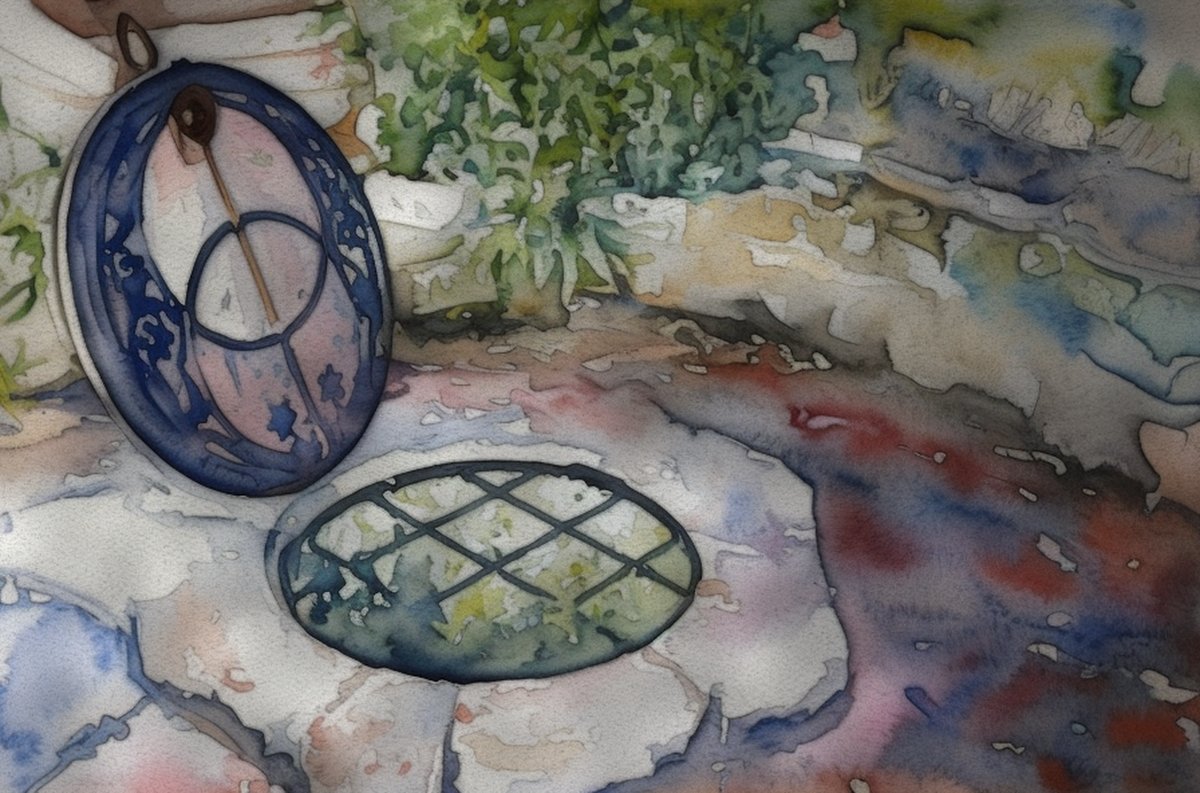
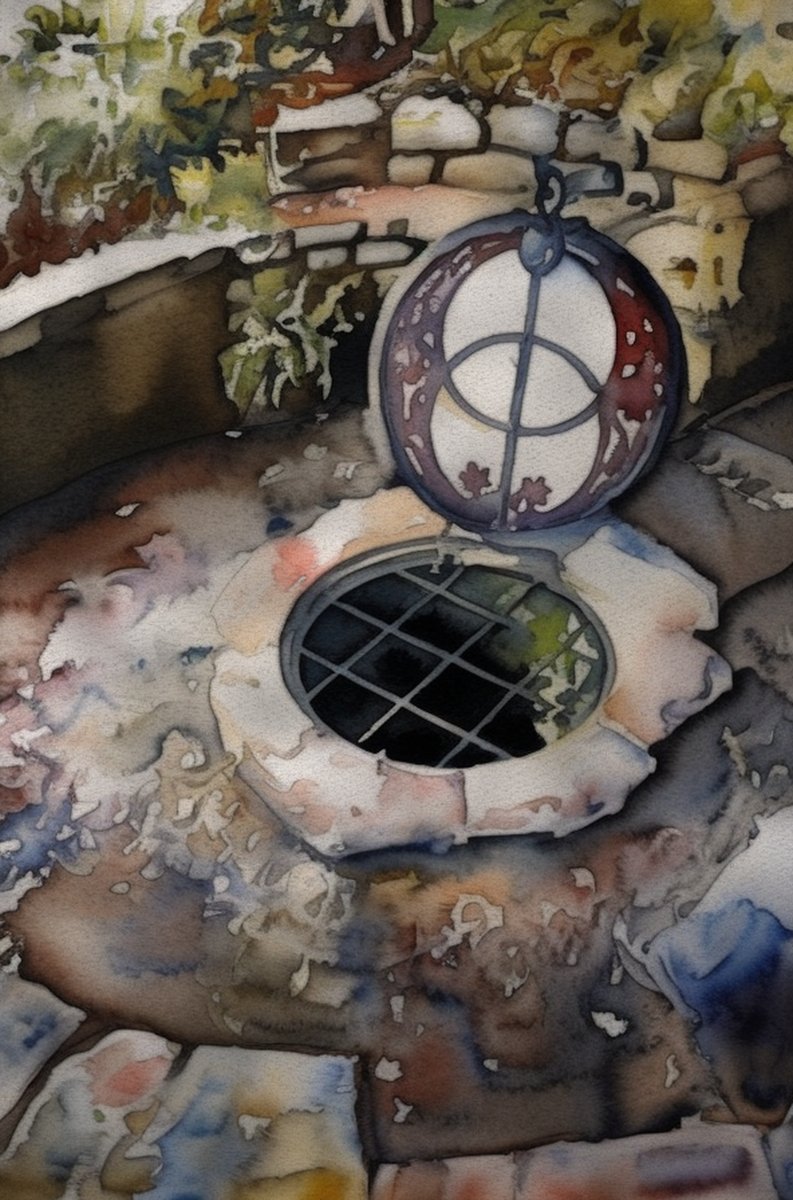
The single most deliberate gesture on the site is the well cover, designed by the church architect and archaeologist Frederick Bligh Bond and presented as a gift after the Great War in 1919. Its two interlocking circles form the Vesica Piscis, with a spear or sword bisecting them — a possible reference to Excalibur, the sword of the legendary King Arthur, said by some to be buried at the nearby Glastonbury Abbey. Foliage in the design stands for the Glastonbury Thorn. Bligh Bond wrote that the vesica was “the rendering of spiritual truth… of which geometry is the best interpreter.” Here, geometry is laid directly over groundwater: the lid frames the threshold between, as he put it, the inner and outer worlds.
Material and water
The defining material is the water itself. Iron oxide stains it a deep red, as dissolved ferrous oxide oxidizes at the surface and precipitates — the same chemistry that colours the well’s terraces and channels. A 2009 study by Exeter University’s School of Geology found the spring is fed by a deep aquifer in the lower Pennard Sands. Slightly east, the separate White Spring rises from a shallower aquifer, colourless, beneath a former waterworks now used for worship.
Setting, garden, history
Archaeological evidence — flints, an Iron Age sherd, Roman and medieval finds — suggests near-constant use for at least two thousand years. The garden reads as a sequence descending the hillside, warmed by subterranean water so that roses bloom in winter and the Holy Thorn flowers each Christmas.
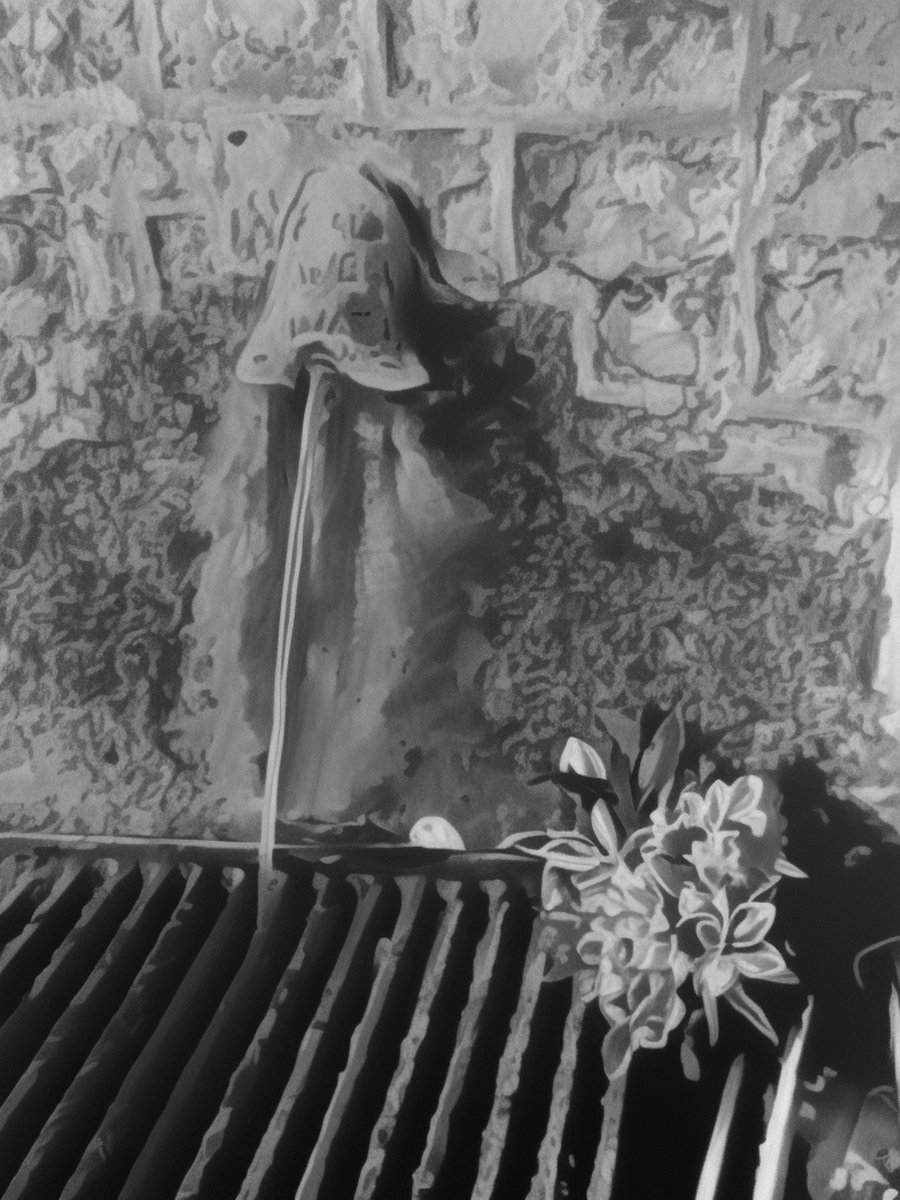
A pilgrim’s well. Christian legend holds that Joseph of Arimathea hid the chalice of the Last Supper here, and the waters ran red. Wells recur in Welsh and Irish myth as gateways to the spirit world. Today the grade I listed grounds host solstice gatherings, Samhain, and World Peace Day — and water still flows to a public pipe in Wellhouse Lane.
Glastonbury, United Kingdom