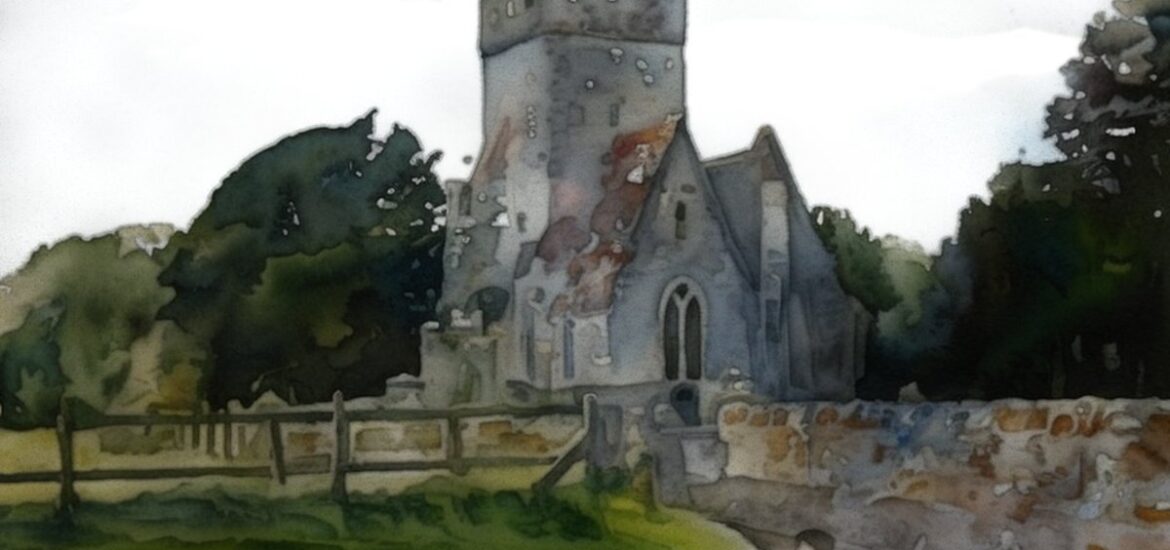
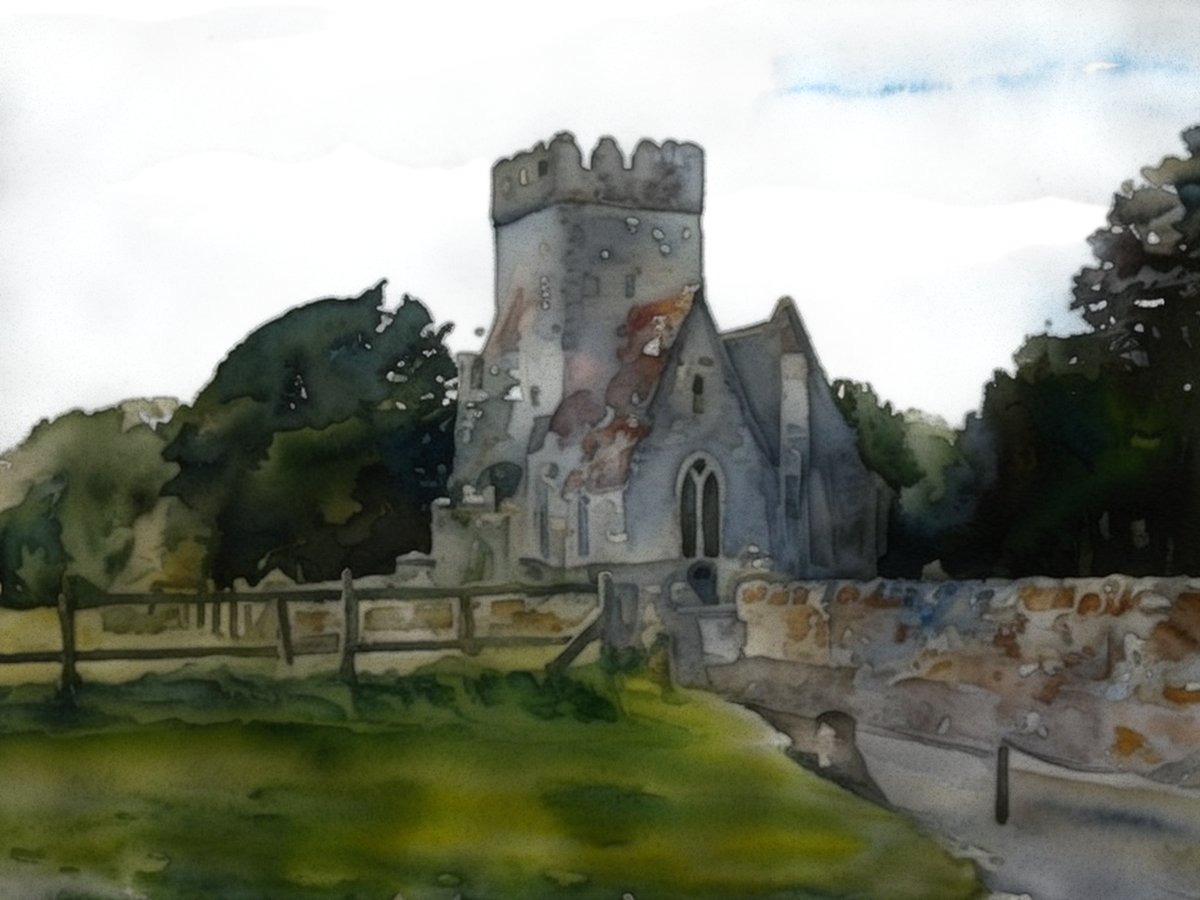
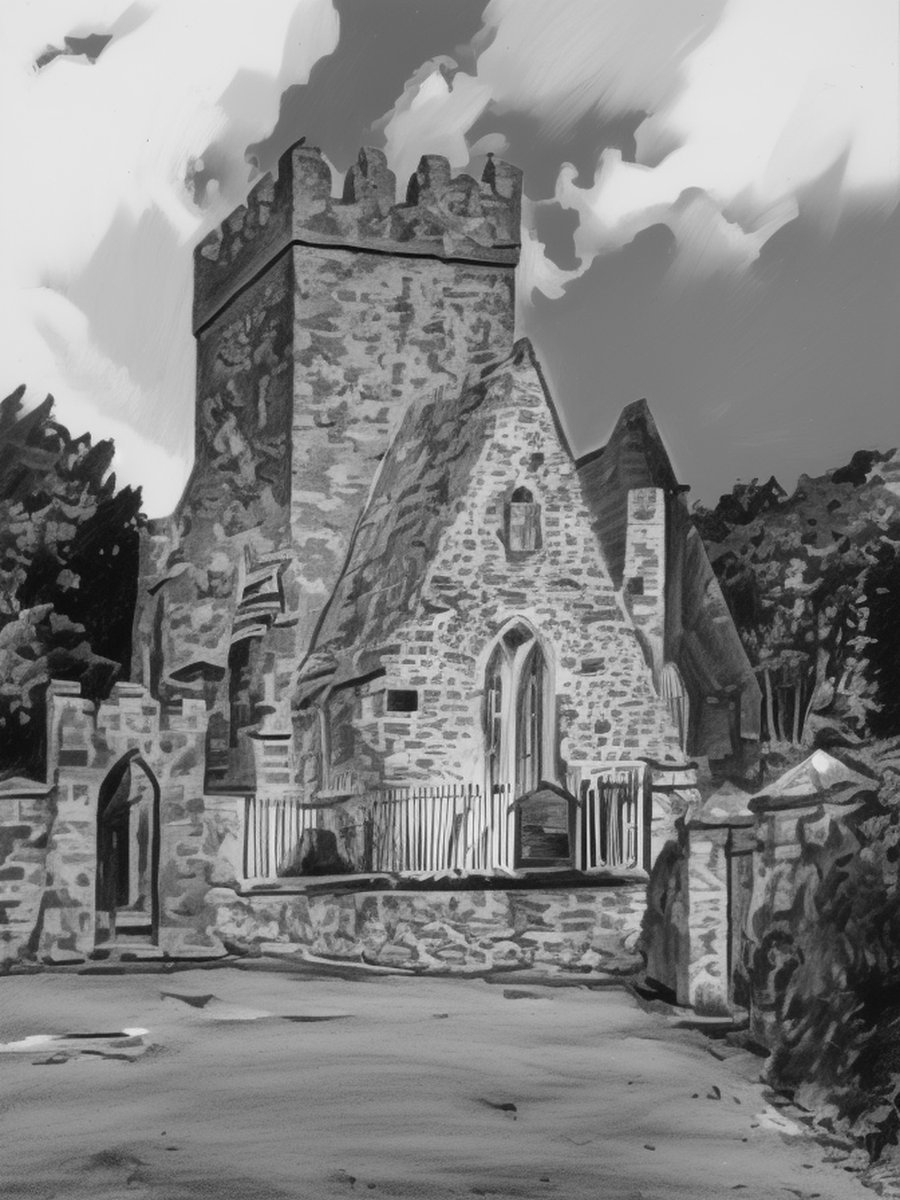
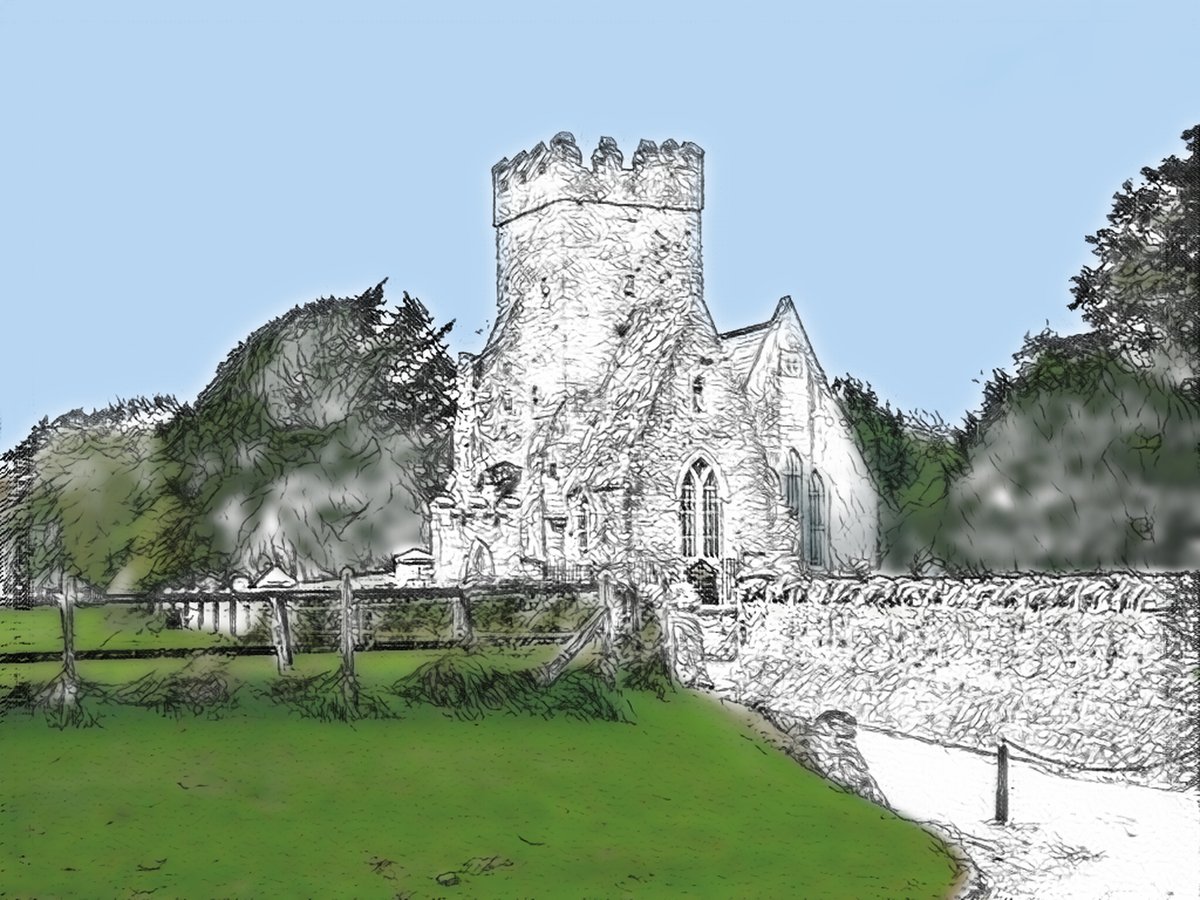
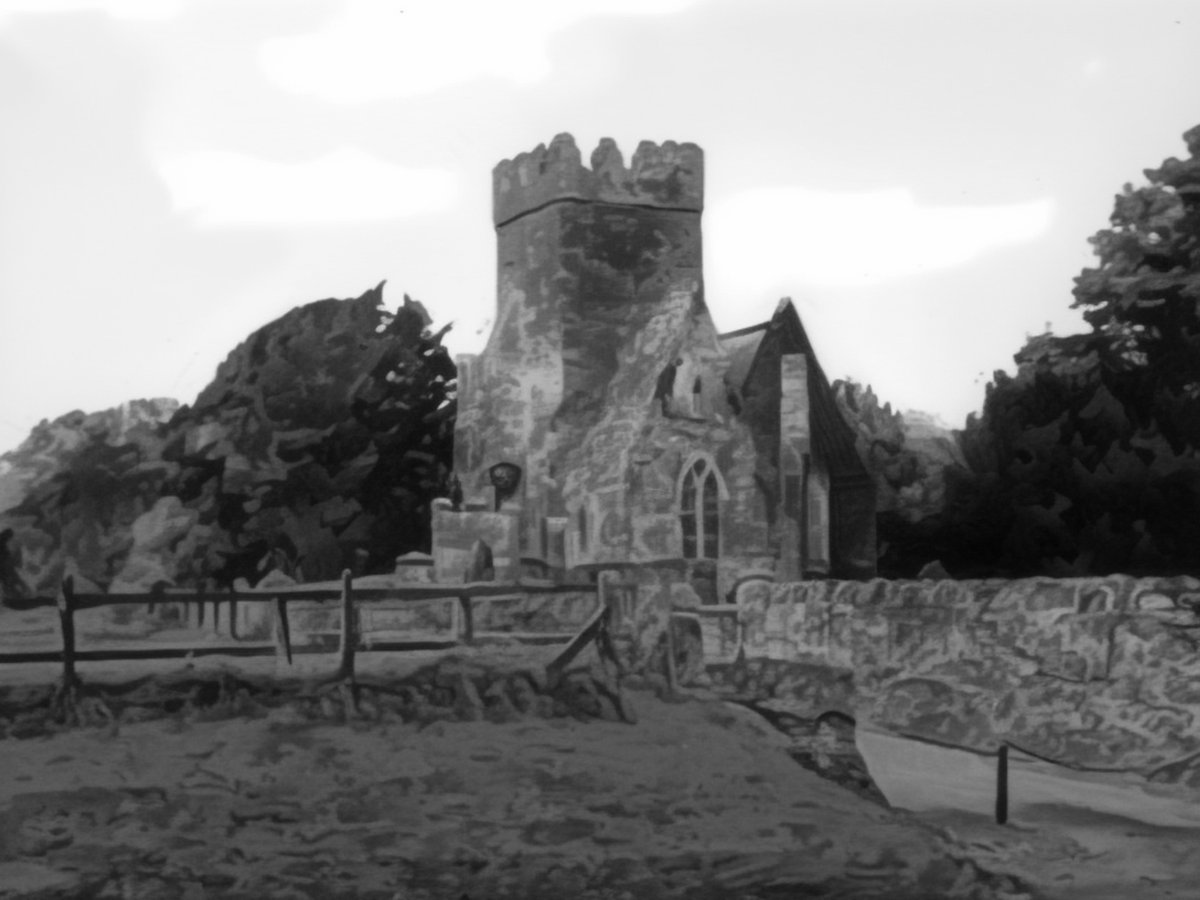
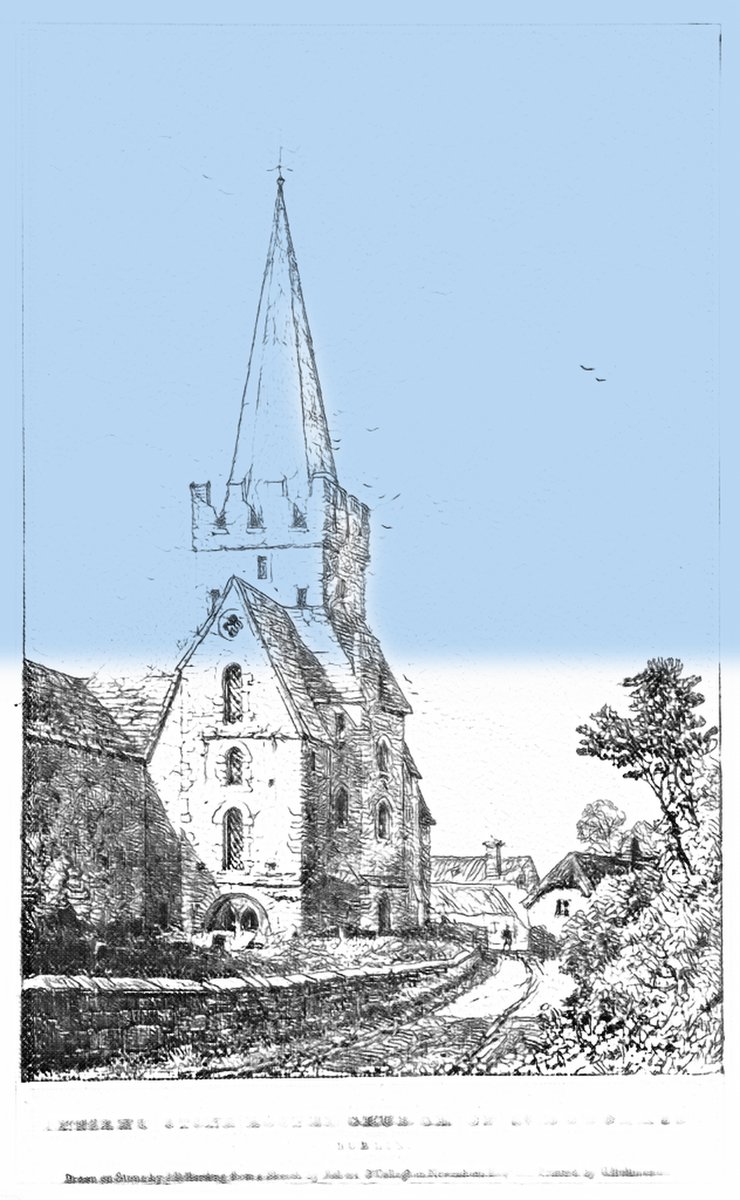
A church built to last in stone. St Doulagh’s Church (Irish: Clochar Dúiligh) sits roughly ten kilometres north of Dublin, just above the hamlet of Balgriffin in the traditional County Dublin. It is the oldest stone-roofed church still in use in Ireland, and the claim is legible in the fabric itself. The main historic building measures 48 feet by 18 feet, and rather than a timber-framed covering it carries a double roof of rough stone set with cement. The space between the inner and outer wedge-style roofs is usable, and partway along the ridge a small stone tower rises. Enter through a low door on the south face, under a rough arch flanked by traces of smoother ones, and you pass from a smaller room holding the reputed tomb of St Doulagh into a larger former place of worship, with a stair climbing to the upper floor and tower.
A complex, not a single object
What makes the site exceptional is that the church is only one element of a larger ritual landscape. The oldest fabric is medieval, dating from the 12th century, with additions and alterations across succeeding centuries; the first definite documentary mention comes in 1406. A Victorian church was added in 1864 and consecrated in 1865, so the place reads as a layering of phases rather than one designed gesture. Inside, the eastern room now called The Oratory is agreed to be the first part built, aligned east–west with its altar position to the east; its principal south window has been dated to 1230.
The well, the baptistry, the pool
The water gives the place its real strangeness. In the field beyond the church, slightly nearer the road, a sunken stone enclosure holds a low octagonal building covering a spring, St Doulagh’s Well. This is believed to be a baptistry, and is regarded as the only surviving detached baptistry in Ireland. An open-air pool with stone seating stands outside, where pilgrims gathered on November 17, St Doulagh’s feast day, and where adult immersion may have taken place. A short path leads down to St Catherine’s Pond, a small rectangular stone chamber holding water and linked to the well underground, both fed by a single spring. In 1609 the baptistry was given frescoes of St Patrick, St Doulagh, St Bridget and St Columcille, later damaged by soldiers after the Battle of the Boyne. Legend holds that the founder, an early-7th-century anchorite, lived in a cell here in near-total isolation.
County Dublin, Ireland