The Chapel Well
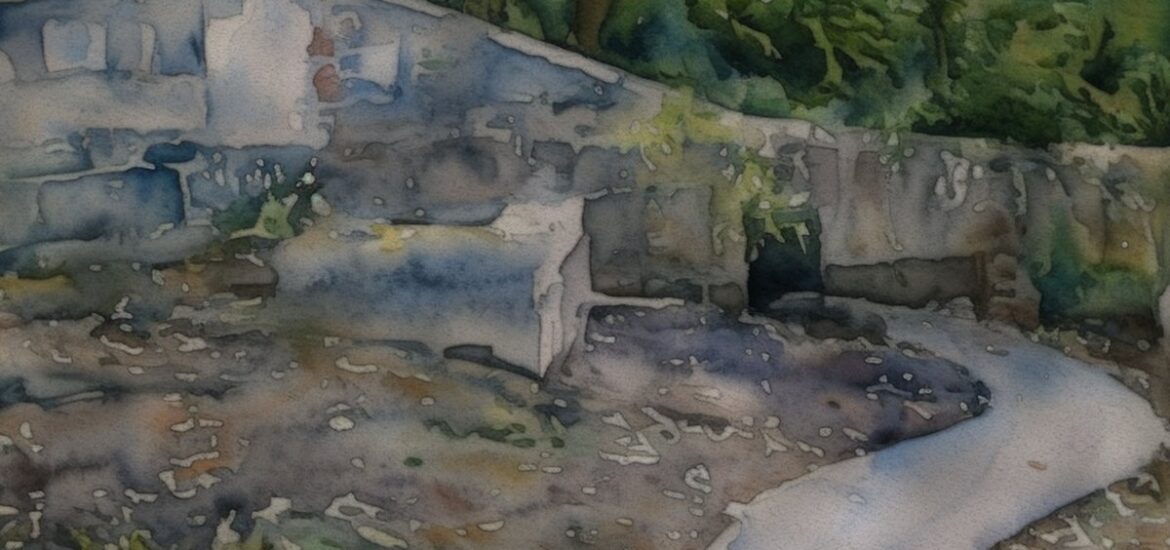
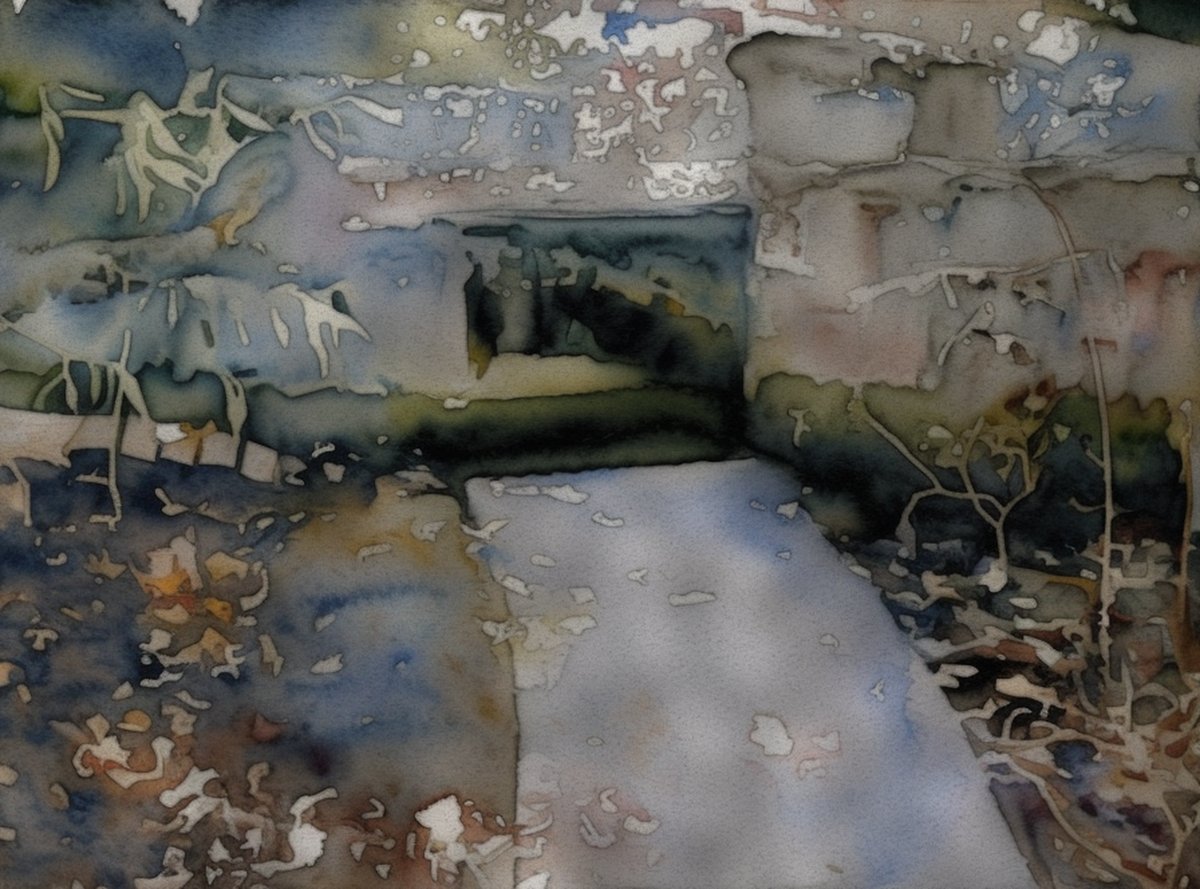
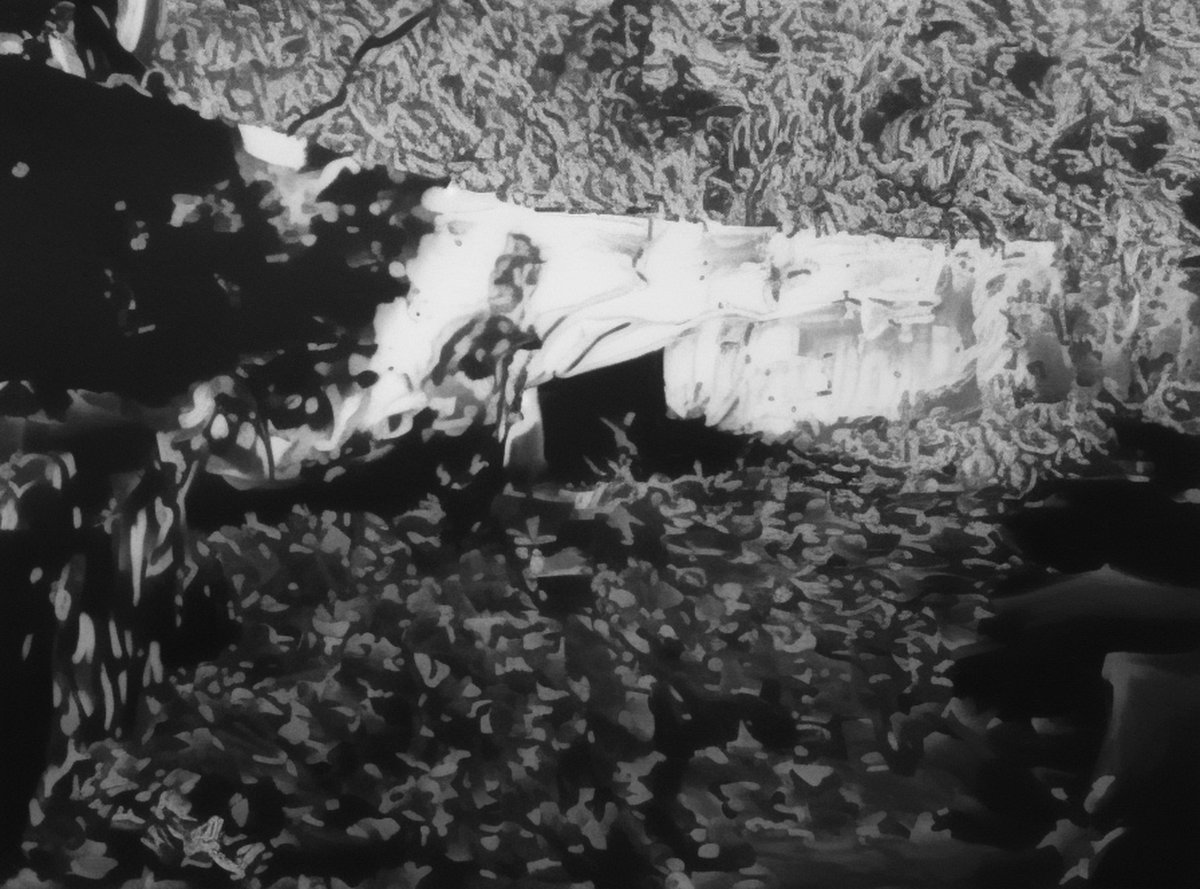
A spring read into a wall. The Chapel Well sits at the end of the Chapel Lane path in Irvine, North Ayrshire, where the lane runs down from the Kirk Vennel and stops at the bank of the River Irvine. This is not a freestanding monument but an architecture of insertion: the well is set directly into the stone wall of Chapel Lane, so the boundary itself becomes the source.
The structure
The form is modest and deliberate. The spring sits in a semi-circular alcove with a slanting stone roof and a slanting stone base, the water seeping in through the bedrock at the back. Above the stone lintel, a carved stone plaque reads “St Inan’s Well AD839” — a dedication the record judges probably erroneous, placed by the Irvine Burns Club. The chamber is shallow and intimate: 85 cm wide at the entrance, opening to 100 cm internally, 90 cm deep, with water reaching a maximum of 50 cm.
A wall that remembers more. Beside the well the wall rises much higher than elsewhere, reading like an old gable end — a spatial clue to the pre-Reformation chapel dedicated to the Virgin Mary that once stood on this riverbank below the present churchyard. A grant to it was confirmed in 1471–2, and when the Town Council bought the field in 1761 a digging operation uncovered wall foundations likely belonging to that chapel. The well’s alternative name, St Mary’s Well, keeps that lost building in the landscape.
Water, work, and ritual
This was a working well before it was a wishing one. In the 18th century it served for washing clothes, and a little wash house came with the council’s 1763 purchase of the land from William Allan. In the 1830s, with cholera threatening Irvine, it was the only well thought fit for “Tea Water.” Capped with concrete in 1954, the site was renovated in 2013 by the Redburn Activity Agreement Group under the North Ayrshire Ranger Service, and on 25 September 2013 the Reverend Robert Travers re-dedicated the holy well.
Coins for luck. Today it is casually used as a wishing well, coins visible where they have been thrown for luck. Nearby lies the Grannie Stane — a glacial erratic, or the last stone of a circle whose neighbours were blasted away in 1897 and 1899 — and the old siting of chapel and well beside it fits the long practice of placing Christian sites over pagan ground.
North Ayrshire, United Kingdom