A mound that watches the ford
Rathbeagh takes its name and its meaning from the earthwork that crowns the hill: Ráth Bheathach, the rath of the birches, on the River Nore in the parish of Lisdowney near Ballyragget, County Kilkenny. The land around it carried the older valley-name Mágh Airgid Rois, the plain of the silver wood. To stand on the structure is to read a deliberate piece of defensive landscape design.
The form is unambiguous. The ringfort is a flat-topped oval mound, roughly 41 metres north to south and 36 metres east to west. A fosse some 3.7 metres wide rings the mound, deliberately broken by a gap at the river’s edge, and beyond that a rampart rises about 3 metres high. The whole work overlooks a bend in the Nore. Because the river is fordable here, the fort commanded the crossing — geography turned into architecture, the bank and ditch reading less as ornament than as a control point on a route.
Earth, water, and a Milesian grave
The materials are the elemental ones of the Irish rath: raised earth shaped into mound, ditch, and bank, set against living water. There is no mortared masonry in the fort itself; its power comes from siting and from mass moved by hand. Local tradition deepens the place by naming it a grave — the burial place of Heremon, son of the Celtic leader Milesius — laying a founding legend over a working fortification.
The lost well and the desecrated missal
Roughly 300 metres north, an enclosed graveyard holds the remains of a church dedicated to St. Catherine, raised on the site of an earlier castle or stronghouse, its earliest legible headstone dated 1715. Just east lies a pond beneath the road, Poll Leabhair — the pond of the book — where tradition says the missal was dumped when the church was desecrated during the Cromwellian conquest.
The water tradition here is real but faint. A former holy well, St. Catherine’s Well or Tubber Naev Kathaleen, is recorded among the Monuments and Places. By 1839 Eugene O’Curry noted it as already disused, once the site of a patron held each 24 June and 6 December; today no trace survives. Folklore held its water a cure for eye disease — a small, honest remnant of devotion at a site whose true monument is the mound above the ford.
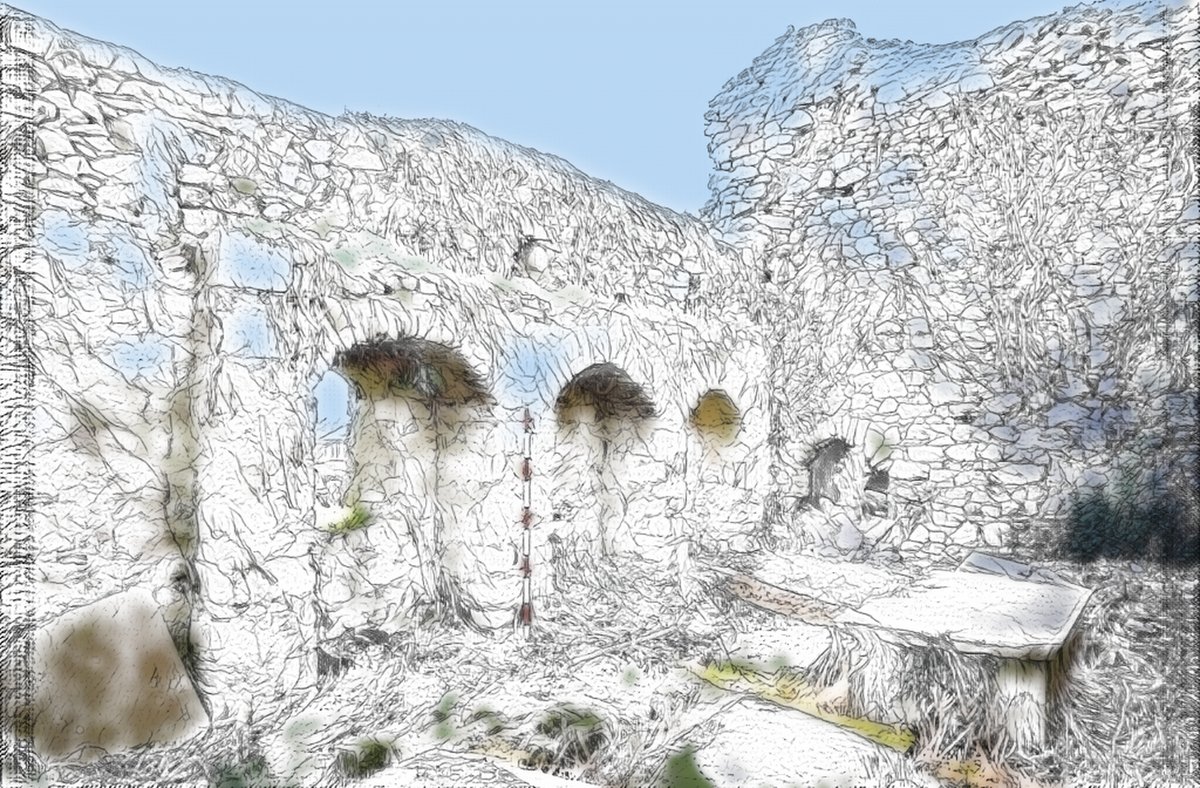
County Kilkenny, Ireland