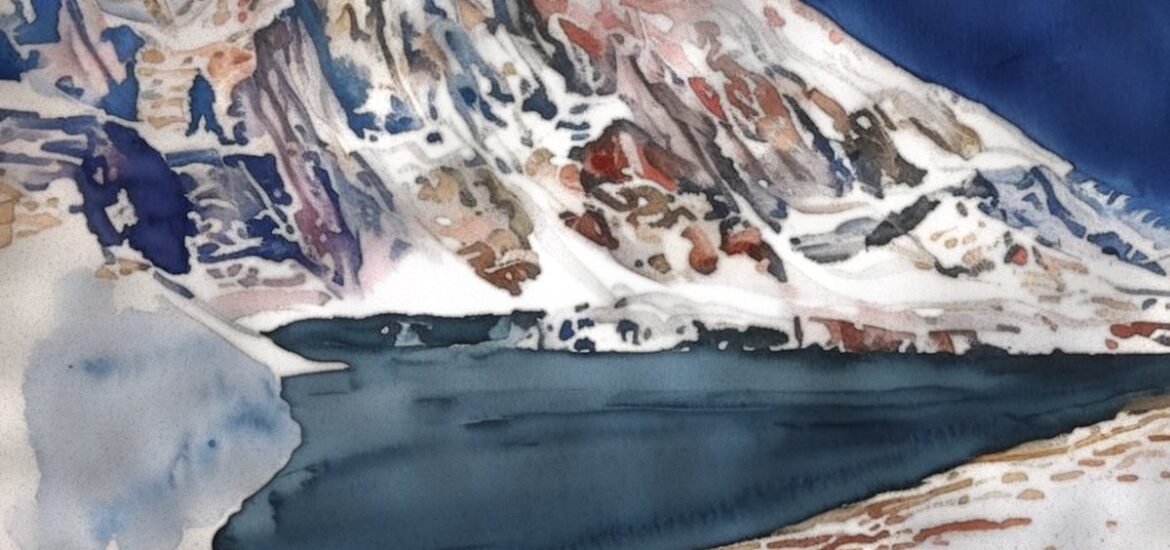
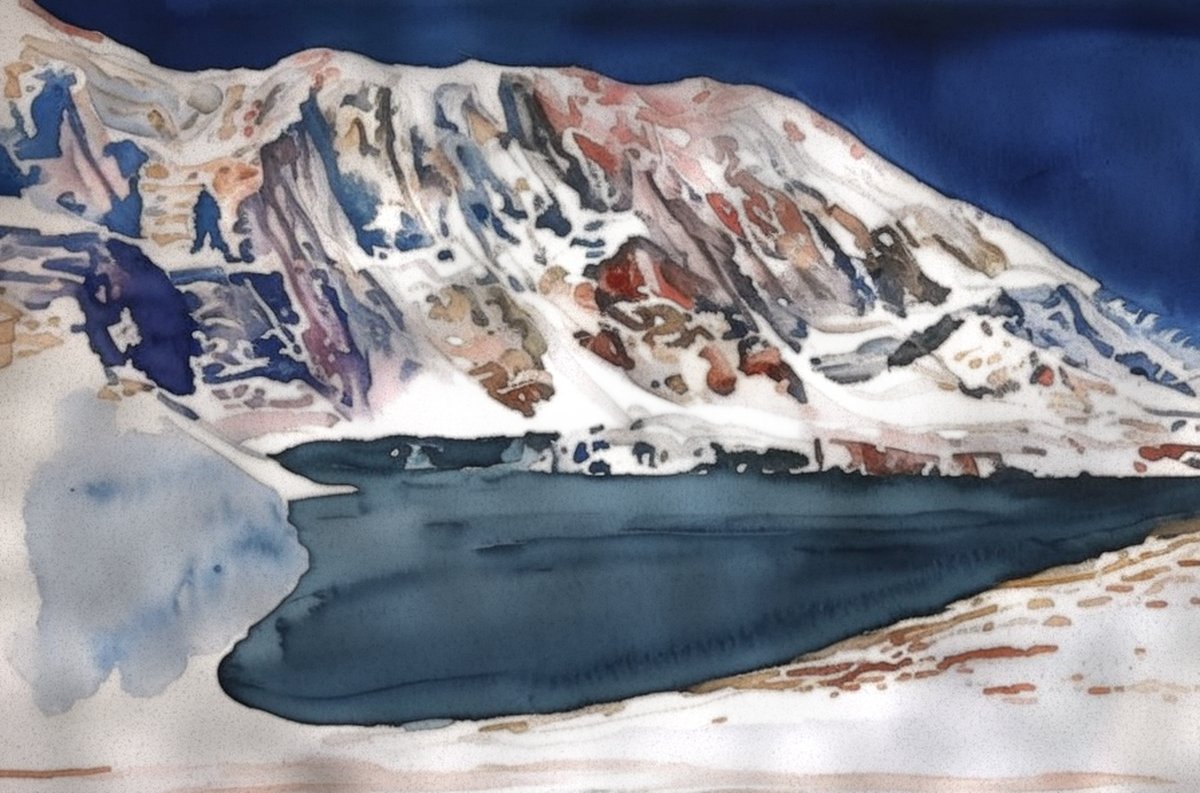
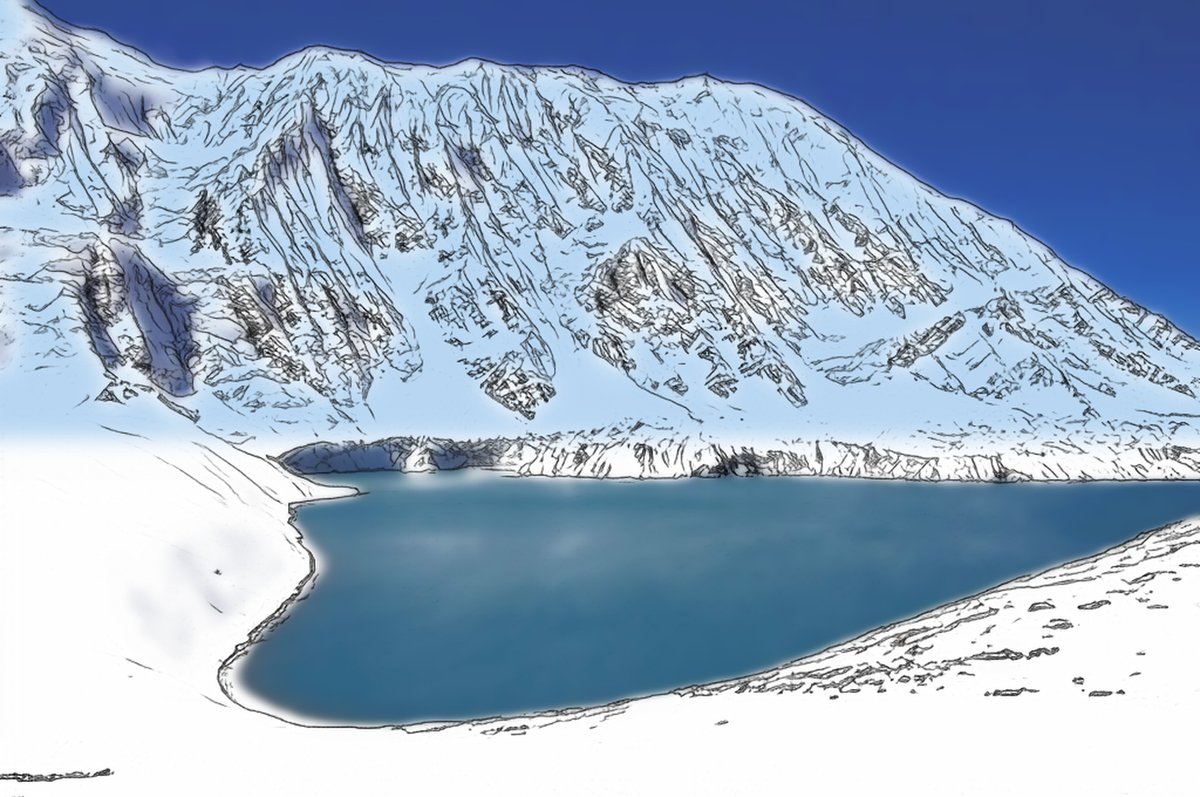
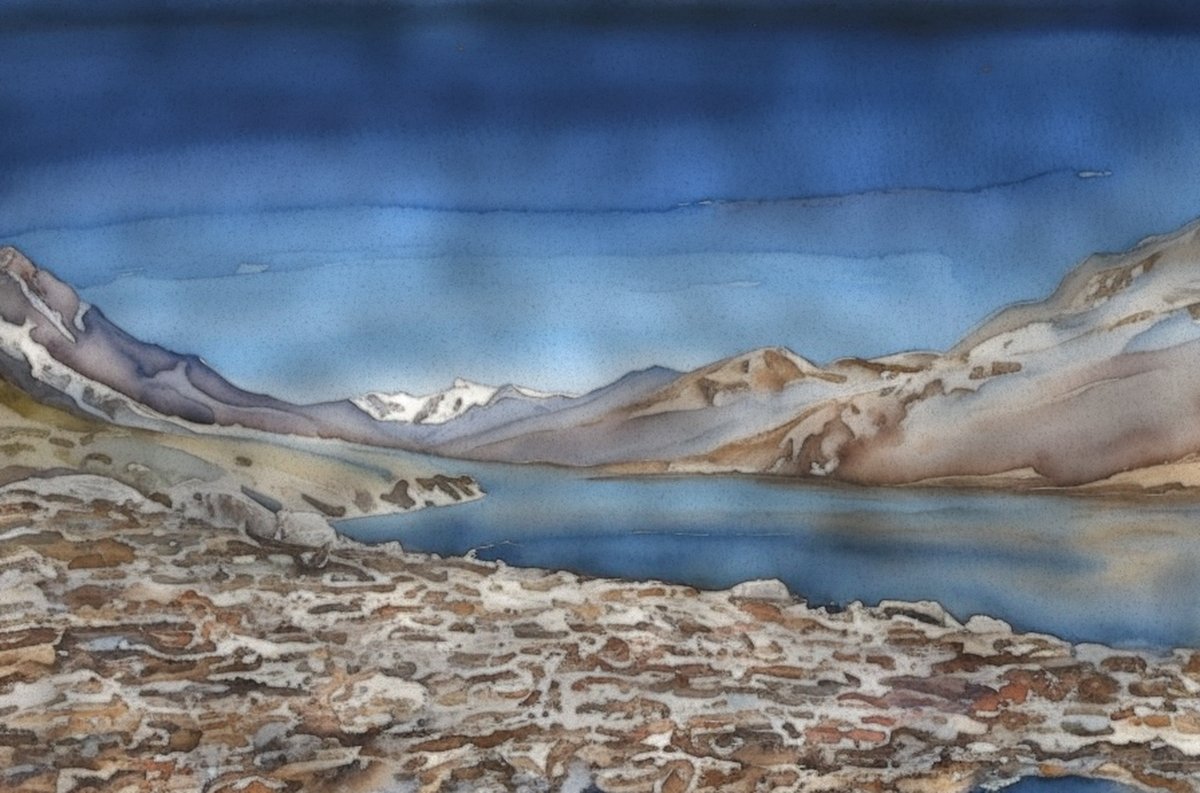
In the north where I was trained, we are taught that a clear, cold thing asks for very little ornament. So when I read of Tilicho Lake — तिलिचो ताल — a glacial lake in the Manang district of Nepal, set at 4,919 m in the Annapurna range of the Himalayas, I recognise the discipline of the place before I have seen it. One source gives a second figure, 4,949 m. The disagreement does not trouble me; at that altitude the lake is simply very high, a held void of water under a thin, exacting light.
The lake as material
I trust spare numbers, and these are very spare. As of 2003, the Nepali Department of Hydrology and Meteorology had recorded no aquatic organism in the water. A lake with nothing living in it is not a dead thing to a Nordic eye — it is honesty taken to its limit, water reduced to water, cold reduced to cold. The life is kept to the rim: the surrounding alpine zone holds the Himalayan snowcock, the ibex, and mosses adapted to extreme altitude. Tilicho is, in the most literal sense, an austere vessel, and its biography only deepens the austerity. In 2000 a Russian team — Andrei Andryushin, Denis Bakin, and Maxim Gresko — descended into it on the highest-altitude scuba dives ever made. To enter such a void deliberately, downward, is an act I understand as architecture: a body measuring an empty room.
The water that held a story
What I cannot draw, I can only receive. Hindus hold that Tilicho is the ancient Kak Bhusundi Lake named in the Ramayana. By this belief, the sage Kak Bhusundi first told the happenings of the epic to Garuda, king of birds, near this very water. The sage took the form of a crow as he spoke — kak is crow in Sanskrit, and from it the lake takes its older name.
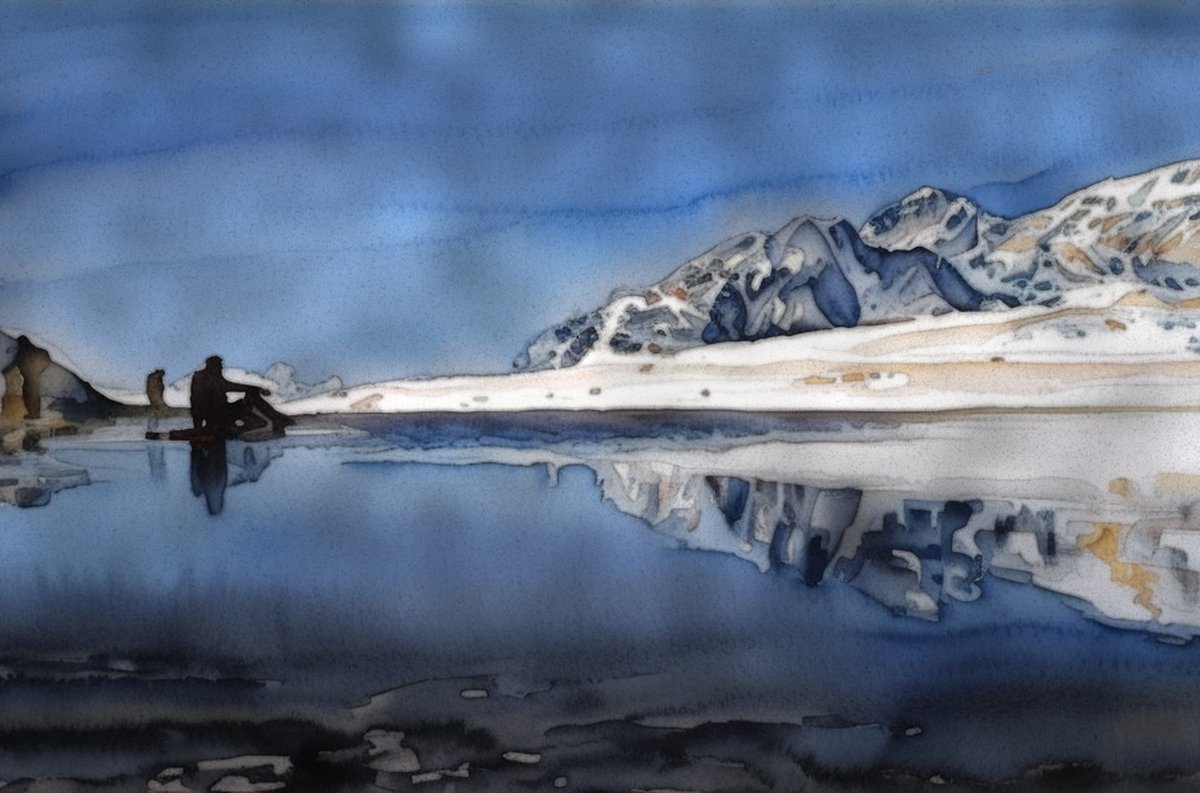
I find this fitting in a way my own tradition would respect. The lake is too high for fish, too cold for ease, almost without ornament; and yet it is remembered as the place where a story was first spoken aloud. A still surface that once held a voice. We build silence and revere it; here the silence was filled, once, with the telling of everything — and the water has kept that, as water keeps a reflection: completely, and without weight.
Nepal