
A structure read against the hillside
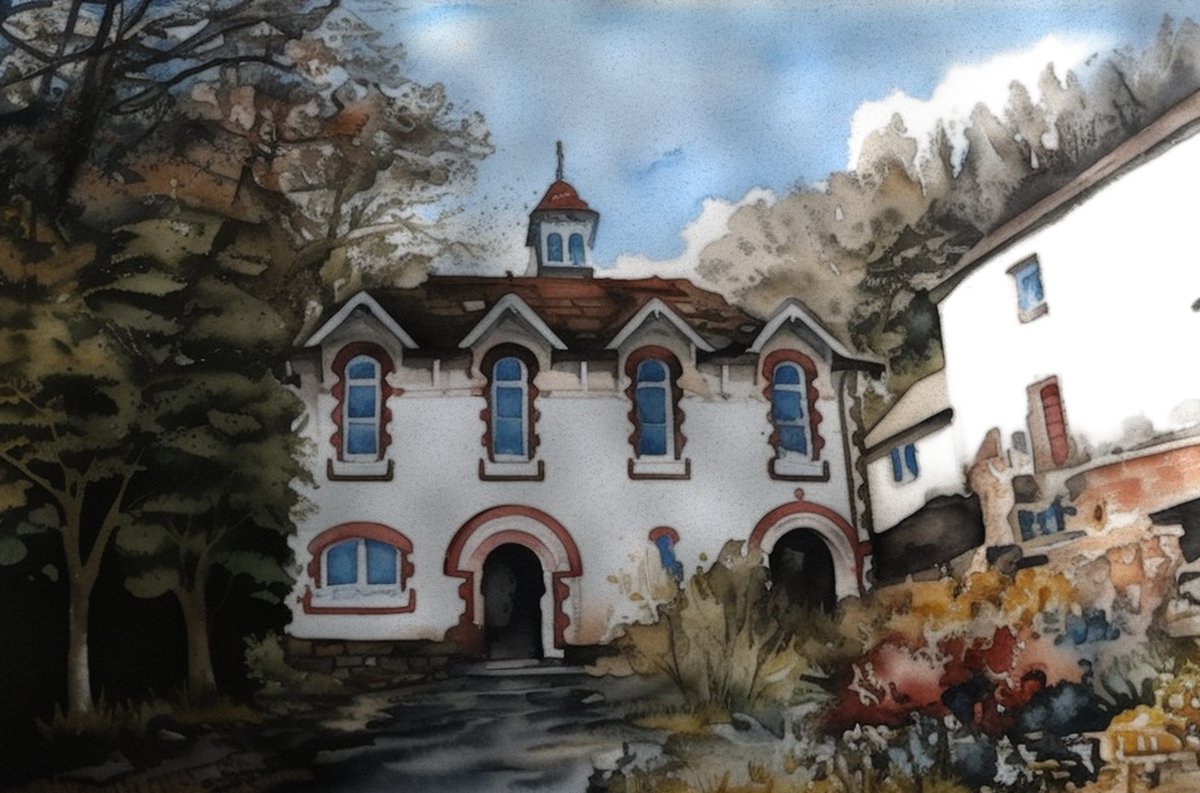
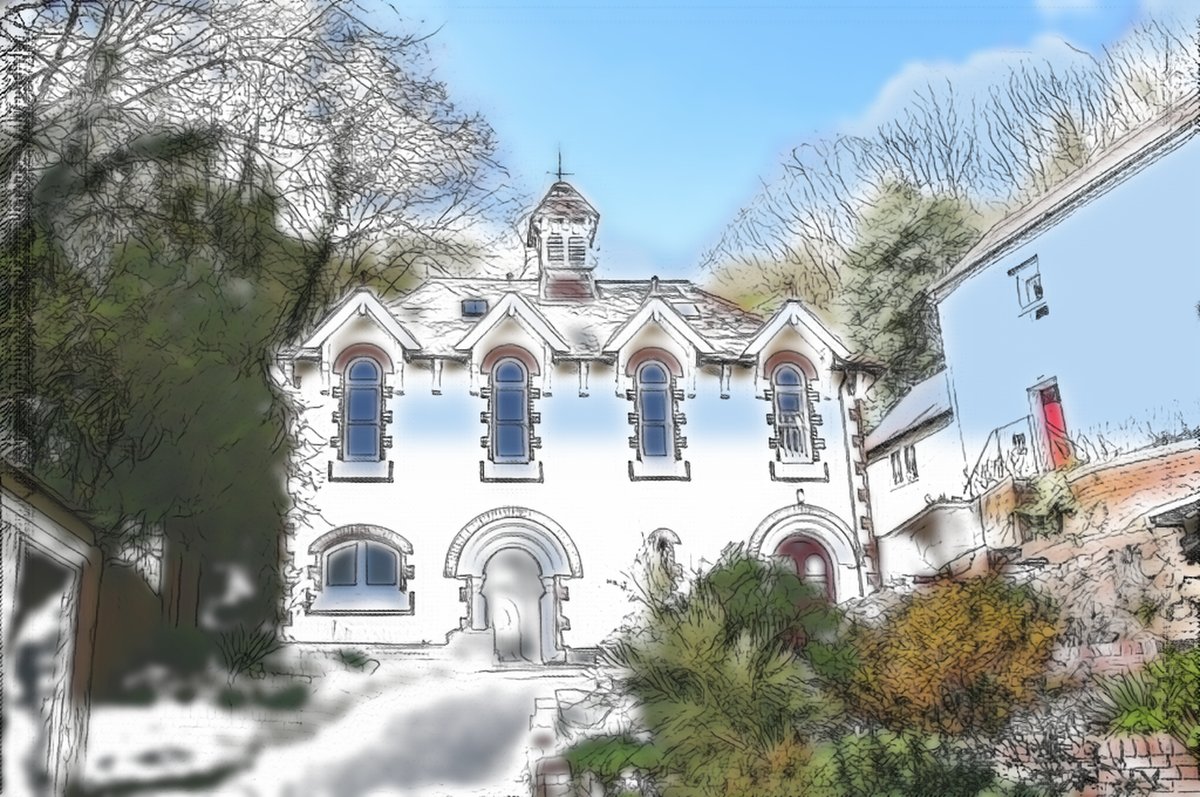
The Holy Well sits on the slopes of the Malvern Hills above Malvern Wells, and to read it as architecture is to read a building shaped entirely by the spring it encloses. This is not a freestanding monument but a working enclosure: the building houses the spring and, today, a modern commercial bottling plant. The structure we see is the accreted result of centuries of small interventions around a single prolific source of water.
A history written in additions. In 1559 the manor and vicarage of Hanley Castle, which contained the spring, were bought from the Crown by John Hornyold. The first piece of built fabric we can name came in 1747, when Edward Popham of Tewkesbury, partially cured of his gout, erected a small bath in thanks — a modest gesture that, by the record, probably resembled little more than a stone sink. The decisive enlargement followed in 1853, when Thomas Charles Hornyold purchased the Holy Well and nearby Bath Cottage and extended the building housing the baths and spa at a cost of £400. That layered making — sink to bath to spa house — is the spatial story here: a shell that grew outward from the water. In the 1970s the building was listed as Grade II and of Architectural Interest.
The water and its industry
The oldest bottling plant in the world. The well is believed to be just that. Malvern water was bottled from as early as the reign of James I, with bottling recorded at the Holy Well in 1622, and in 1743 Dr John Wall analysed the water and famously reported it contained “nothing at all.” Schweppes opened a bottling plant here in 1850, serving the Great Exhibition of 1851 with what they called Malvern Soda, renamed Malvern Seltzer Water in 1856. Schweppes left in 1890; John and Henry Cuff then bottled here into the 1960s. After dereliction, a Lottery Heritage grant in 2009 restarted production at 1200 bottles a day.
Folklore at the threshold
A dressed well. The Holy Well was dressed on St Oswald’s day by those cured here — St Oswald having revealed its healing properties to a hermit on the hills. Until 2006, Christians and visitors of many faiths left flowers, prayers and votive offerings in thanks for the pure water. Tokens are now removed except at the official May well dressing. Alfred Watkins, in Early British Trackways, theorised a ley line running through Holy Well and its neighbouring springs along the hills.

Malvern Wells, United Kingdom