A shaft beneath the holiest ground
The Zamzam Well sits within the Masjid al-Haram in Mecca, just 20 metres east of the Kaaba. It is, in the plainest architectural terms, a vertical excavation: roughly 30 metres deep and varying between 1.08 and 2.66 metres in diameter, widened by hand over centuries rather than bored to a single specification. That irregularity is itself telling. This is a structure shaped by accretion and devotion, not by a drafting table.
Reading the section. The well’s geology doubles as its construction logic. Its upper half cuts through the sandy alluvium of the Wadi Ibrahim, lined with stone masonry, with the topmost metre finished in a concrete “collar.” The lower half is sunk into bedrock. Between the two lies a half-metre band of permeable weathered rock, stone-lined, and it is here that water enters. The detailing follows the strata: masonry where the ground is loose, an open seam where it must breathe.
Centuries of enclosure
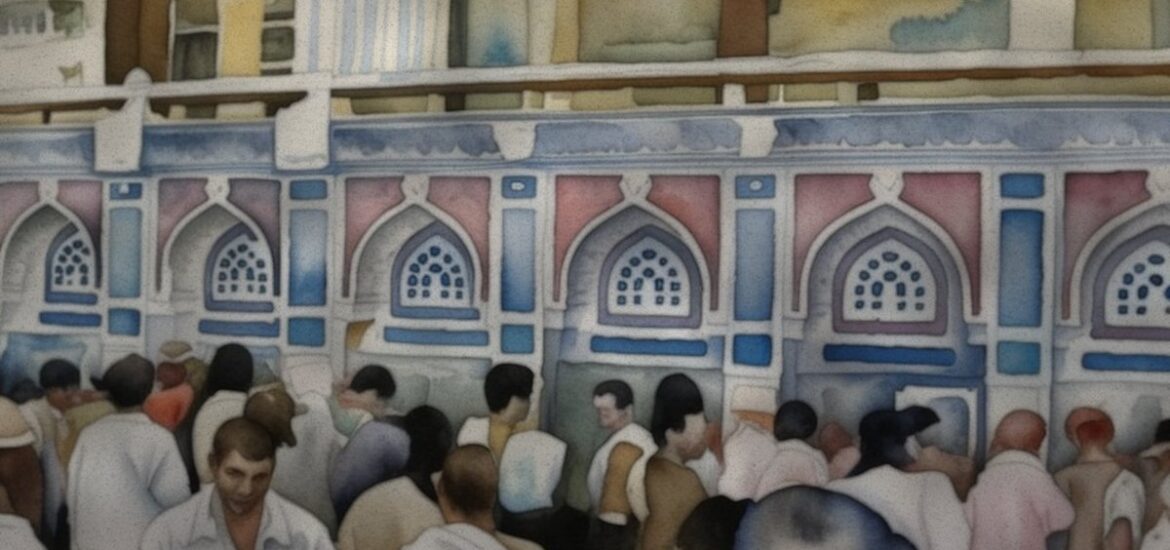
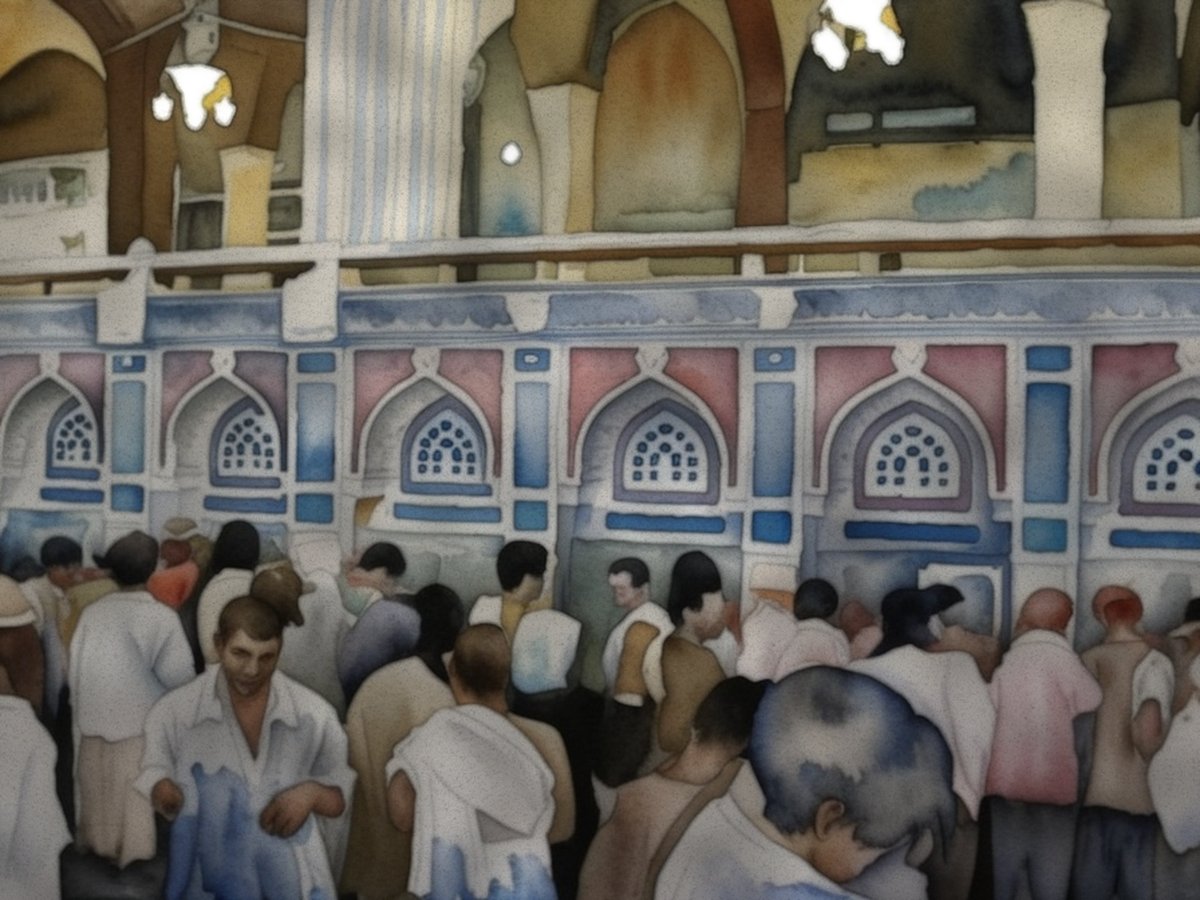
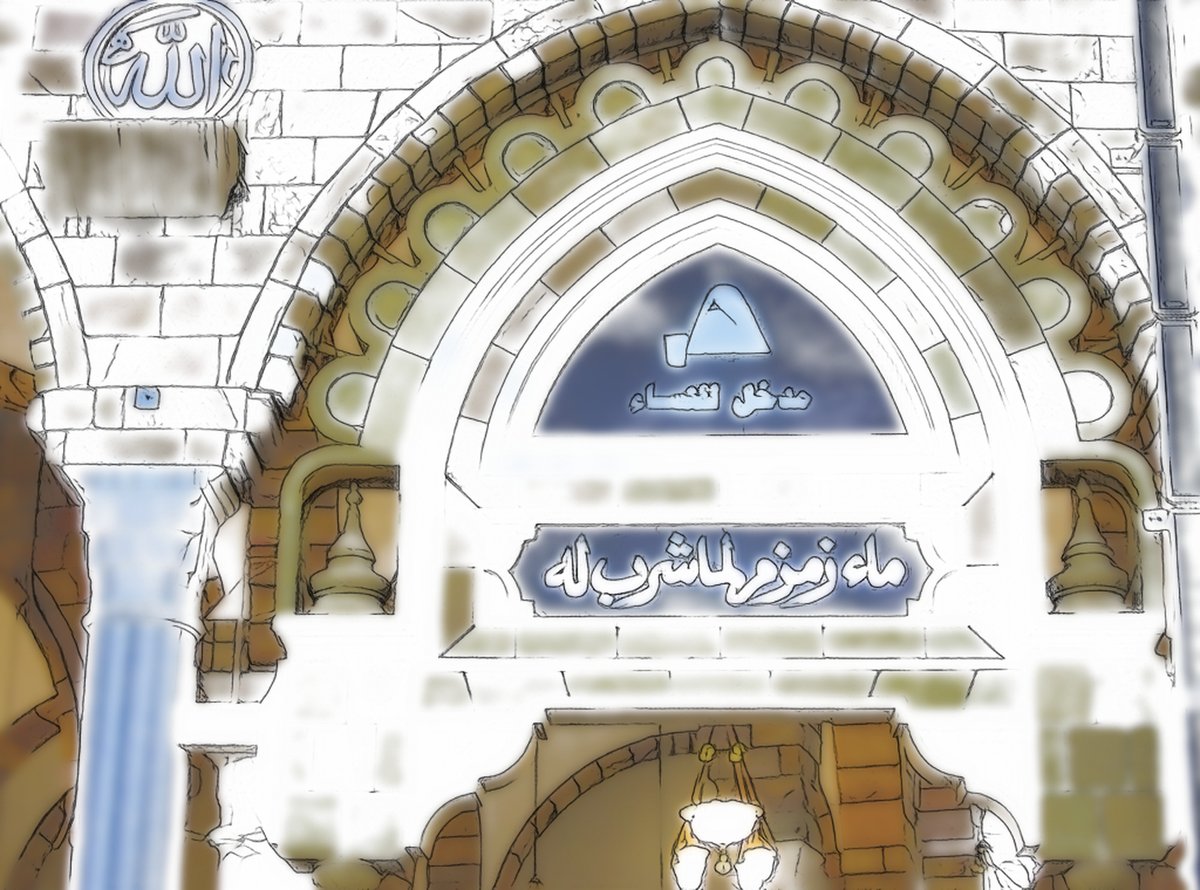
Above the shaft, the architecture was never settled for long. Islamic tradition holds the well was rediscovered and excavated in the 6th century by Abd al-Muttalib. In 775–778 the Abbasid caliph al-Mansur paved the surrounding area in marble; under al-Mu’tasim, a dome of intricate mosaic was raised over the well, with smaller domes and a “House of Drinking” nearby for storing water-jars out of the heat. Later the Mamluk sultan Qaitbay funded a new dome, and Suleiman the Magnificent rebuilt the roof, completed in 1542. Successive cages, domes, and buildings rose and fell, several destroyed in conflict.
The final inversion. In 1964 the last building over the well was demolished and the opening relocated to a basement 2.5 metres below grade, clearing the surface for pilgrims. It was an architectural decision in the truest sense: the monument made invisible so the crowd could move.
Water as the program
Today the source is sealed behind glass in that basement room, drawn by two alternating electric pumps that send it five kilometres south to a treatment and storage plant in Kudai. From there pipes feed drinking fountains throughout the Masjid al-Haram, while tankers carry it to Medina. The well’s name itself may be onomatopoeic, evoking a murmuring, abundant flow. Stripped of its domes, the structure now reads less as a building than as the quiet origin point of a vast, distributed system of water and ritual.
Mecca, Saudi Arabia