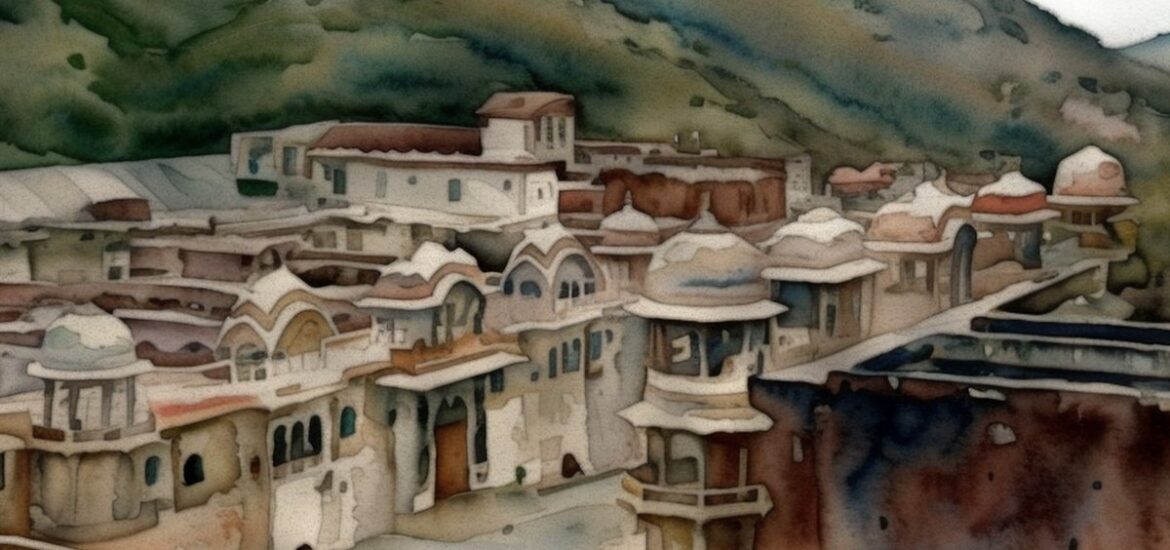
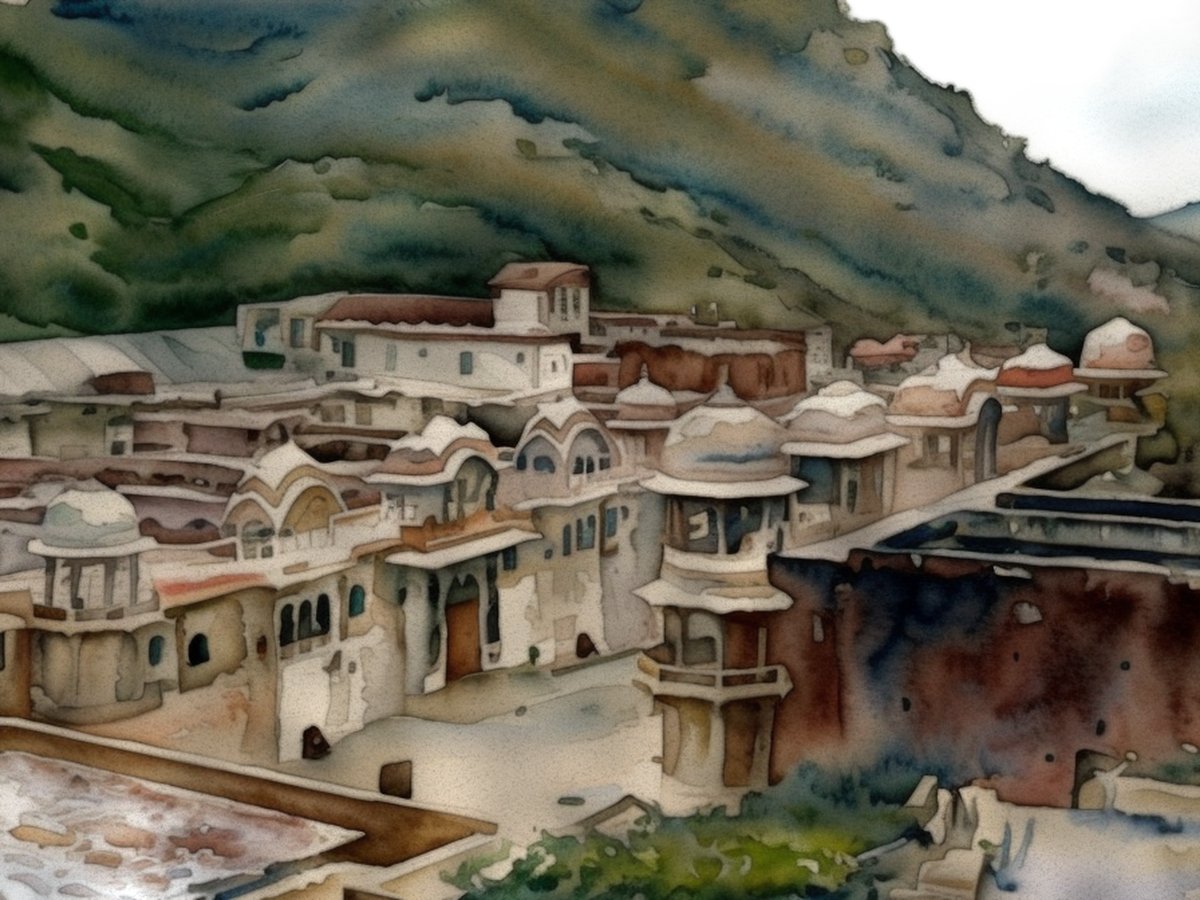
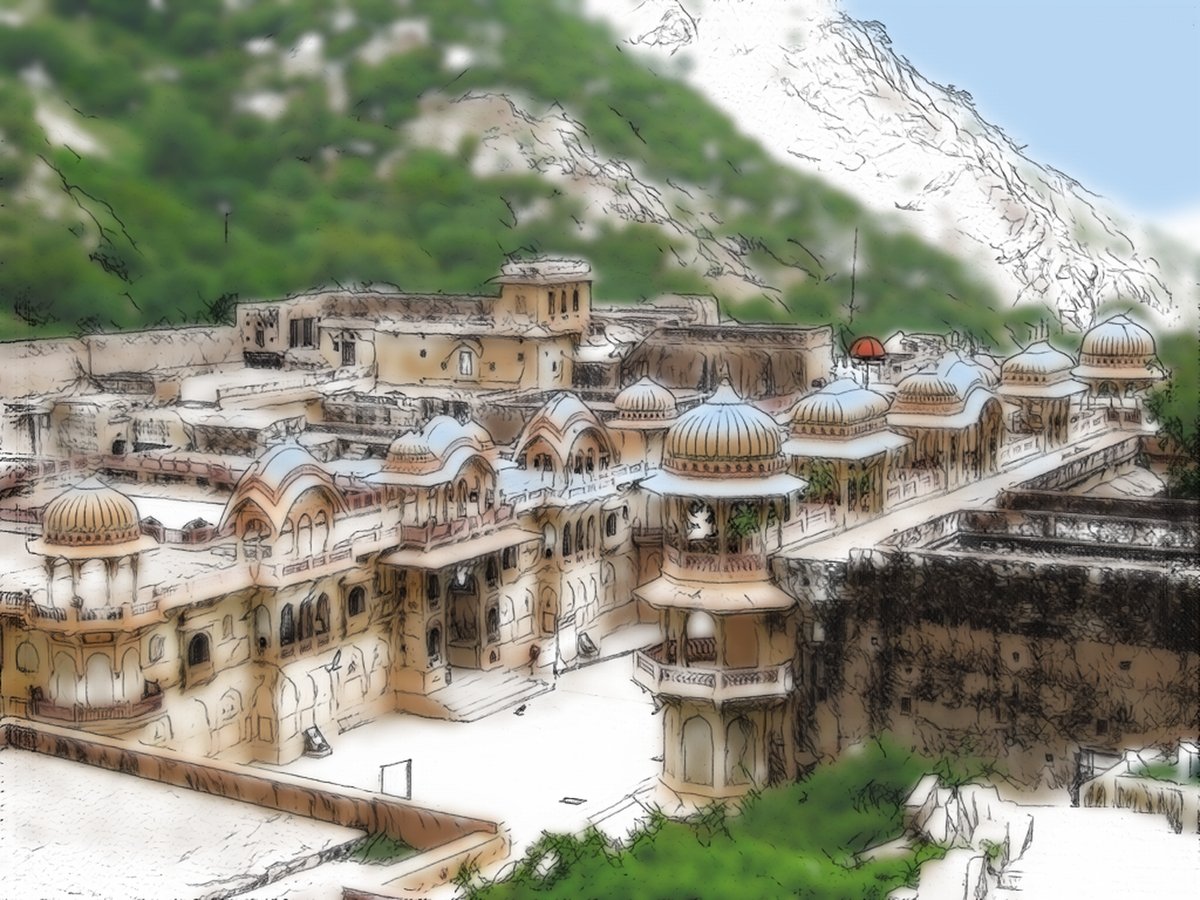
I come to Galtaji from a tradition of emptiness, and find abundance. Where the Nordic chapel withholds, this place gives — temples pressed into a narrow crevice in the ring of hills east of Jaipur, the stone crowded with carved pillars, frescoes, the constant motion of rhesus macaques that have lent the complex its other name, Galwar Bagh. My instinct is to read it as a building. It refuses. It is a landscape that has agreed to hold architecture.
The threshold is the hill itself. A natural spring emerges high on the slope and flows downward, filling a series of sacred kunds — water tanks — as it descends. To enter is to move with the water, not against it. There is a phenomenology here that Pallasmaa would recognise: the body learns the place through the soles of the feet, through the steady drop toward the pools, past the highest water to a hilltop temple where Jaipur and its fortifications open out below. The Sun Temple at the summit, built by Diwan Rao Kriparam of Maharaja Sawai Jai Singh II’s court, marks the end of the climb.
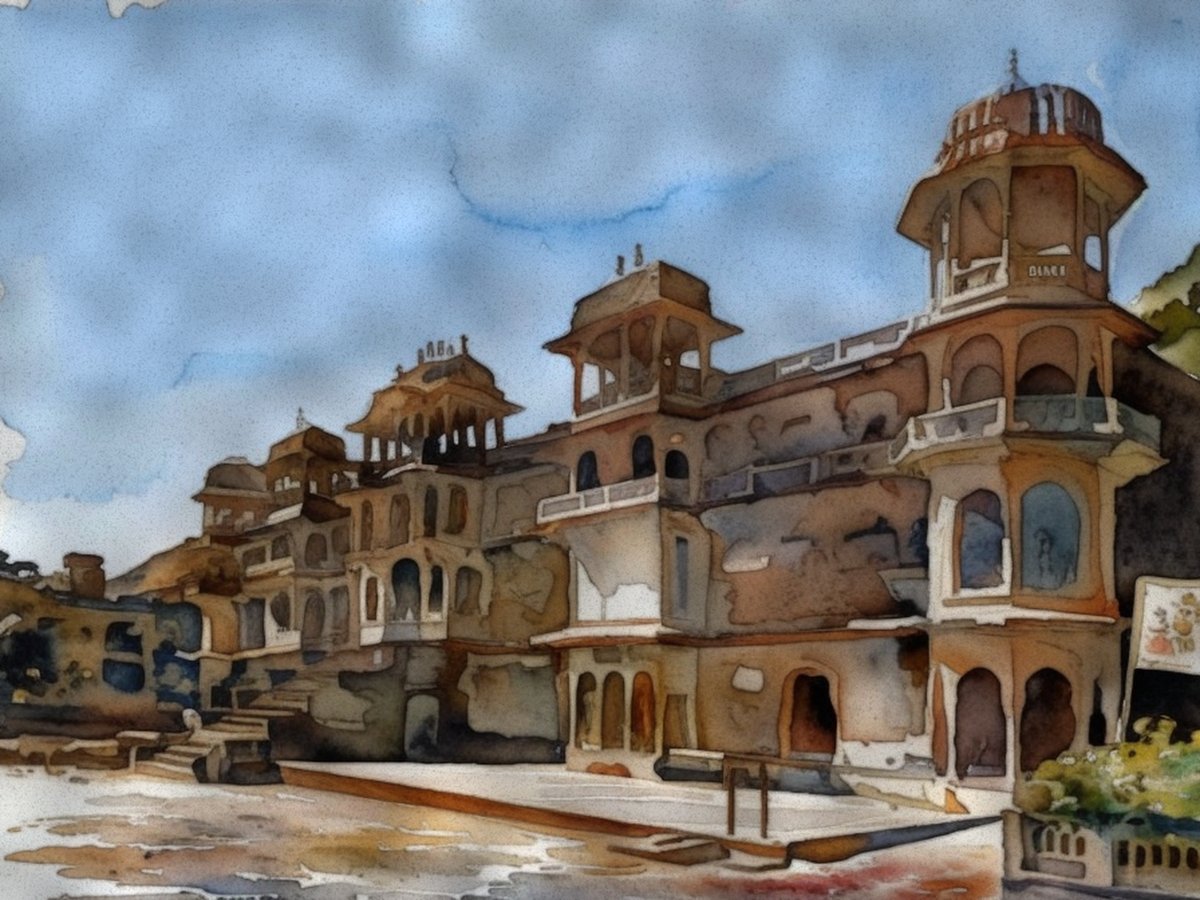
Material honesty, of a southern kind. The complex is built from pink sandstone, with pavilions under rounded roofs — a blend of Rajasthani and Mughal manners, so palatial in feeling that it has been called a palace rather than a temple. A Scandinavian eye trained on Lewerentz’s raw brick reads this differently than intended, but the principle holds: the stone integrates into the rock it was cut near, and the boundary between built and found grows quiet.
Water as belief
What a Nordic sensibility tends to leave wordless, Galtaji makes explicit. Seven sacred kunds are fed by the springs. The most famous, the Galta Kund, is said never to run dry and is believed to hold purifying properties. Pilgrims come to bathe in these holy waters, above all at Makar Sankranti, when thousands arrive to cleanse themselves spiritually. The site is bound to the ascetic Ramanandi lineage, and to the saint Galav, who is believed to have meditated and performed penance — tapasya — here.
The offering at Galtaji, as the source gives it, is the body and its bathing, not the tossed coin. I find that more honest than I expected. One does not throw something into this water. One enters it.
Jaipur, India