( Original text: en:User:TonyTheTiger ) (CC BY-SA 3.0)
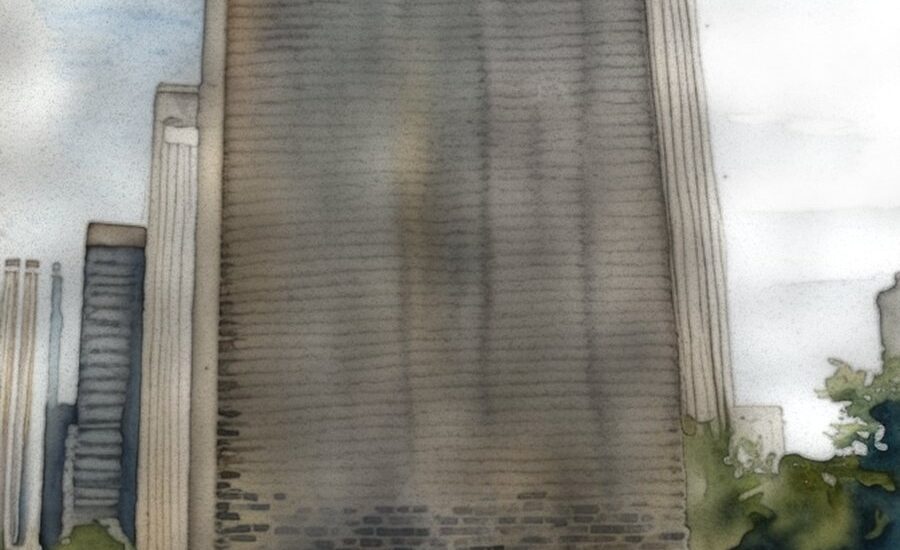
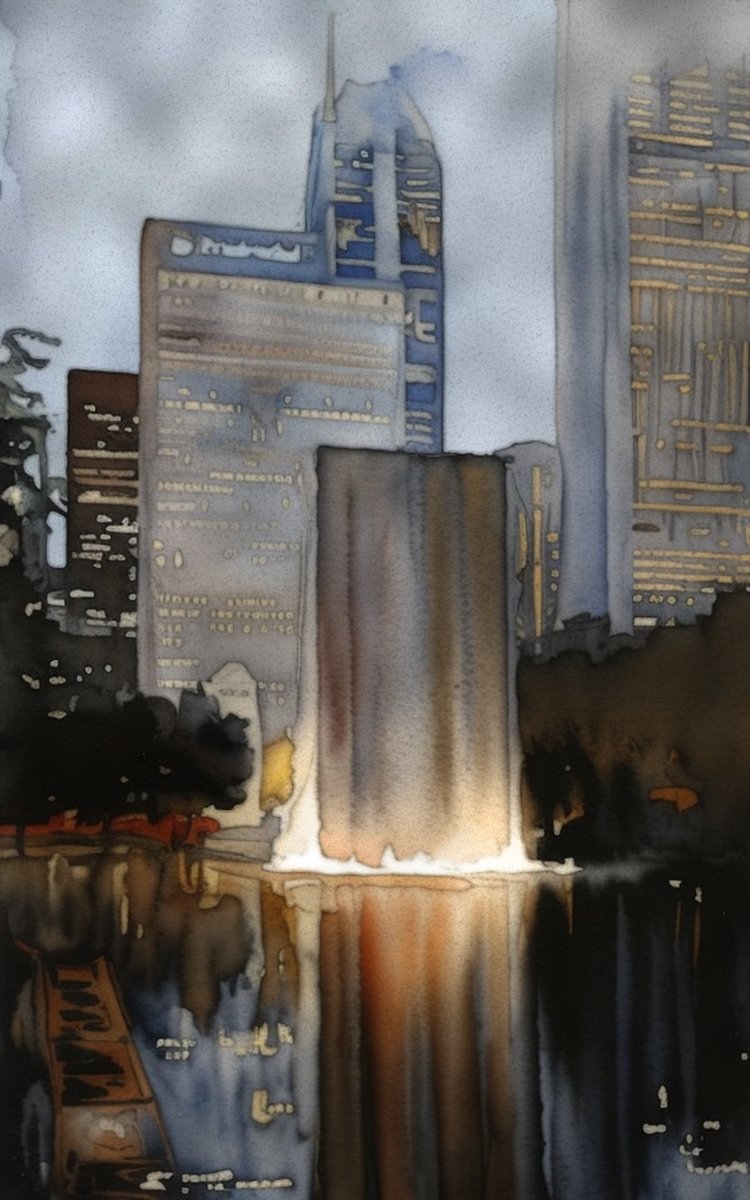
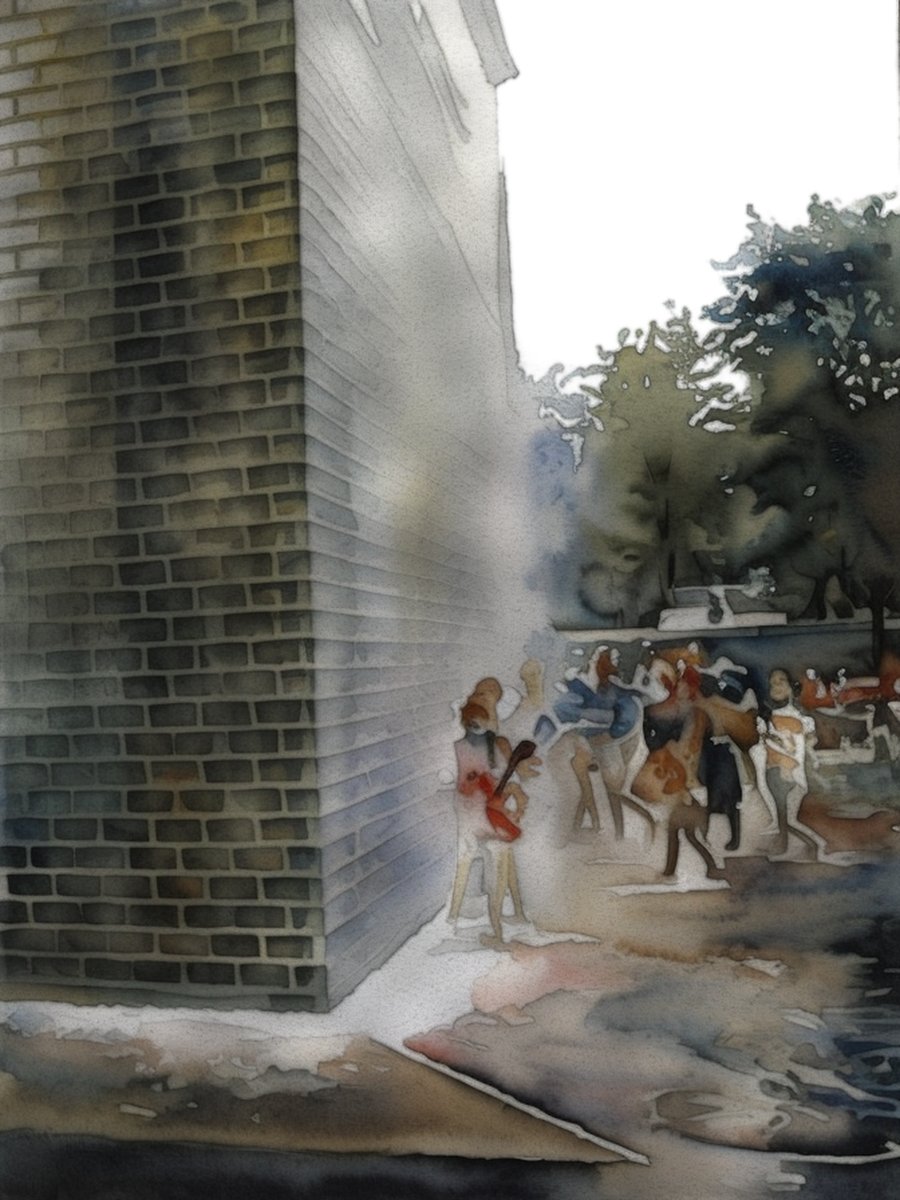
A fountain rebuilt as light and faces. Crown Fountain, opened in July 2004 in Chicago’s Millennium Park, was designed by the Spanish artist Jaume Plensa and executed by Krueck + Sexton Architects. It abandons the basin-and-jet vocabulary of older fountains for something closer to a pair of inhabited lanterns: two glass brick towers, fifty feet tall, set at either end of a black granite reflecting pool. The pool measures 48 by 232 feet, yet holds water only a fraction of an inch deep, so it reads less as a basin than as a polished black plane that doubles the towers and the sky above the Loop.
Material and structure
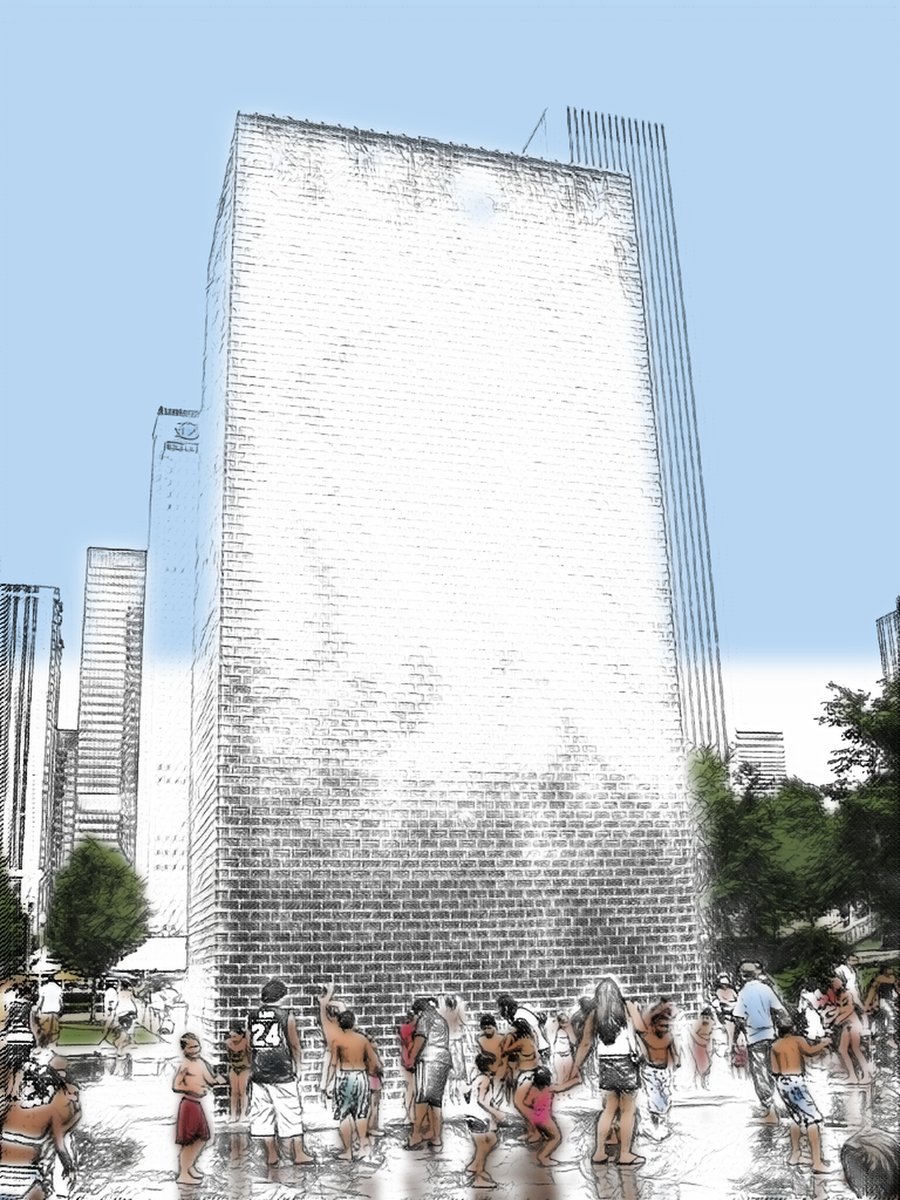
The towers are not solid walls but assemblies of glass. L. E. Smith Glass Company produced 22,500 hand-poured blocks of white glass, chosen over the usual green for image clarity, each block thin enough to avoid distortion. These are held in stacked steel grids, 44 to a tower, refined until the metalwork goes virtually invisible. Krueck + Sexton engineered a stainless steel T-frame to carry the fifty-foot walls and resist wind, transferring load to the base in a zigzag pattern. Behind the inward faces sit over a million LEDs, two inches off the glass, displaying digital video of roughly a thousand Chicago residents in random rotation, each face shown for five minutes.
How it reads in the city
Exempt from Grant Park’s Montgomery Ward height restrictions because it is classified as art, the fountain stakes a deliberately vertical claim. Plensa’s enduring theme is dualism: two faces, two towers, conversing across the water. Water spills down the facades and, from a recessed nozzle twelve feet up, appears to spout from each puckered mouth, knowingly reminiscent of the gargoyle.
The tradition, made interactive
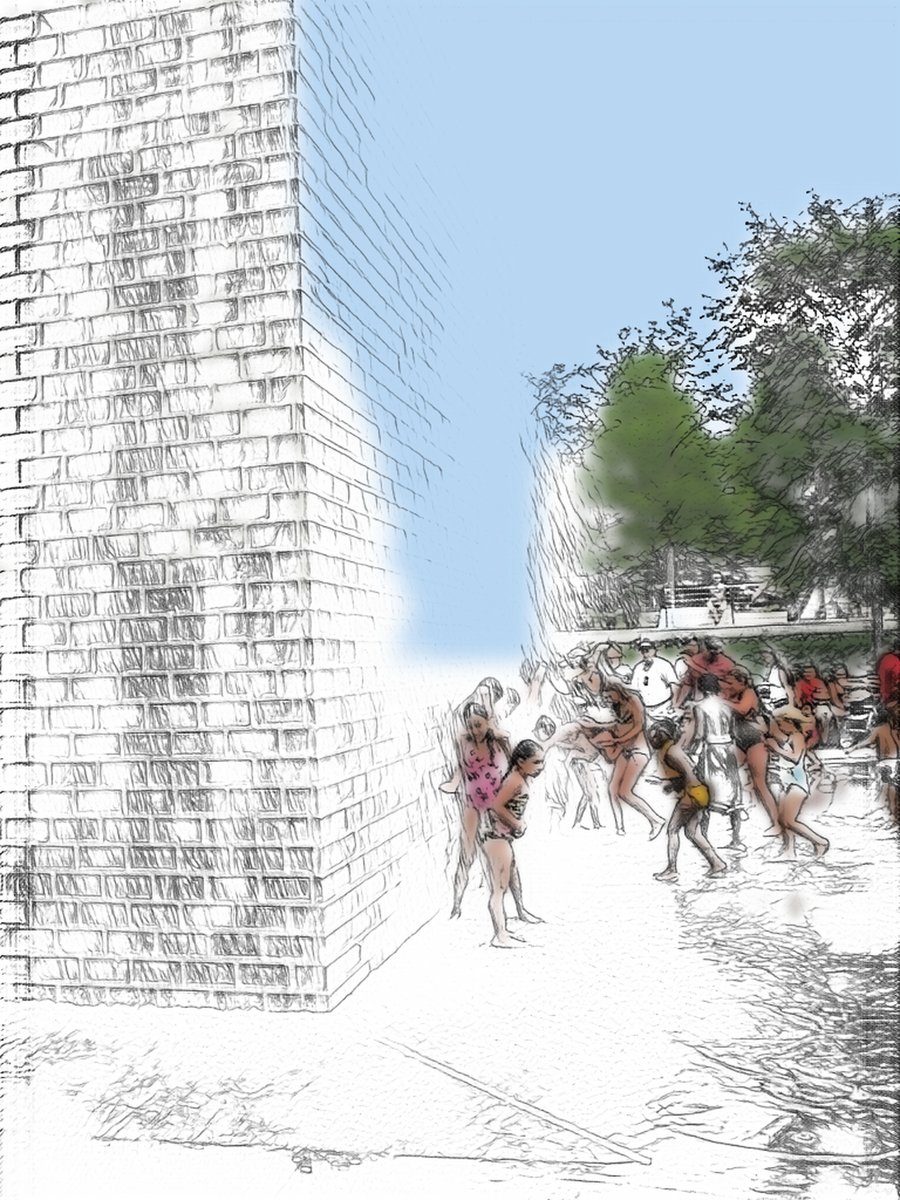
Here the wishing-fountain lineage is inverted. Where Chicago’s Buckingham Fountain is fenced and Lorado Taft’s are moated, Crown Fountain issues an open invitation to touch. The water operates May through October at a depth measured in fractions of a millimeter, and within hours of opening it became a children’s water park, a civic cooling place on summer heat days. Plensa has noted that future generations may update the faces to reflect a changing humanity, keeping the work, like any living fountain, in slow conversation with the city it mirrors.
( Original text: en:User:TonyTheTiger ) (CC BY-SA 3.0)
( Original text: en:User:TonyTheTiger ) (CC BY-SA 3.0)
( Original text: en:User:TonyTheTiger ) (CC BY-SA 3.0)
Illinois, United States · Built: 2004