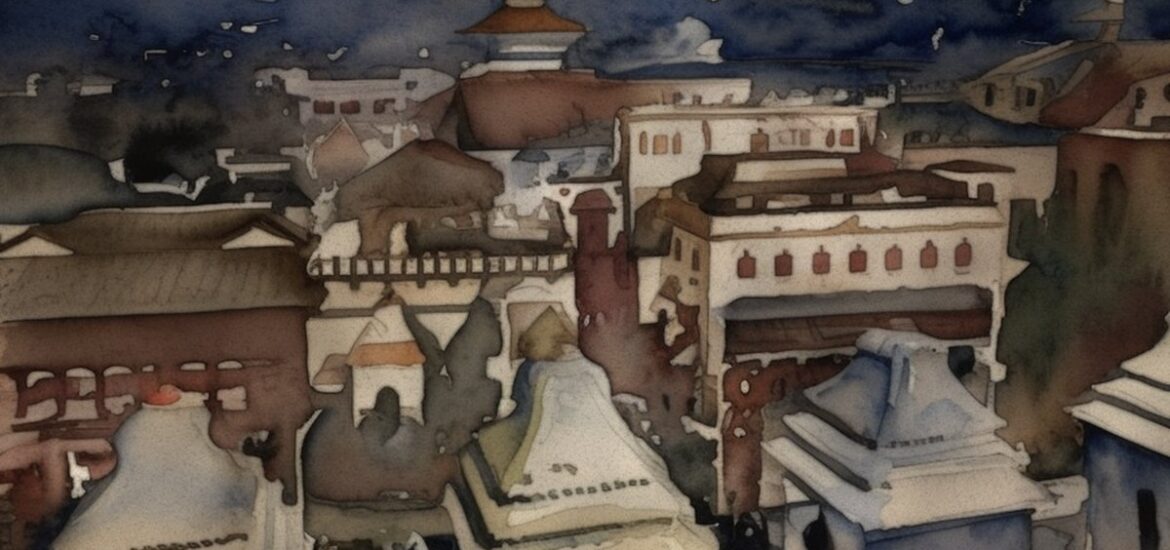
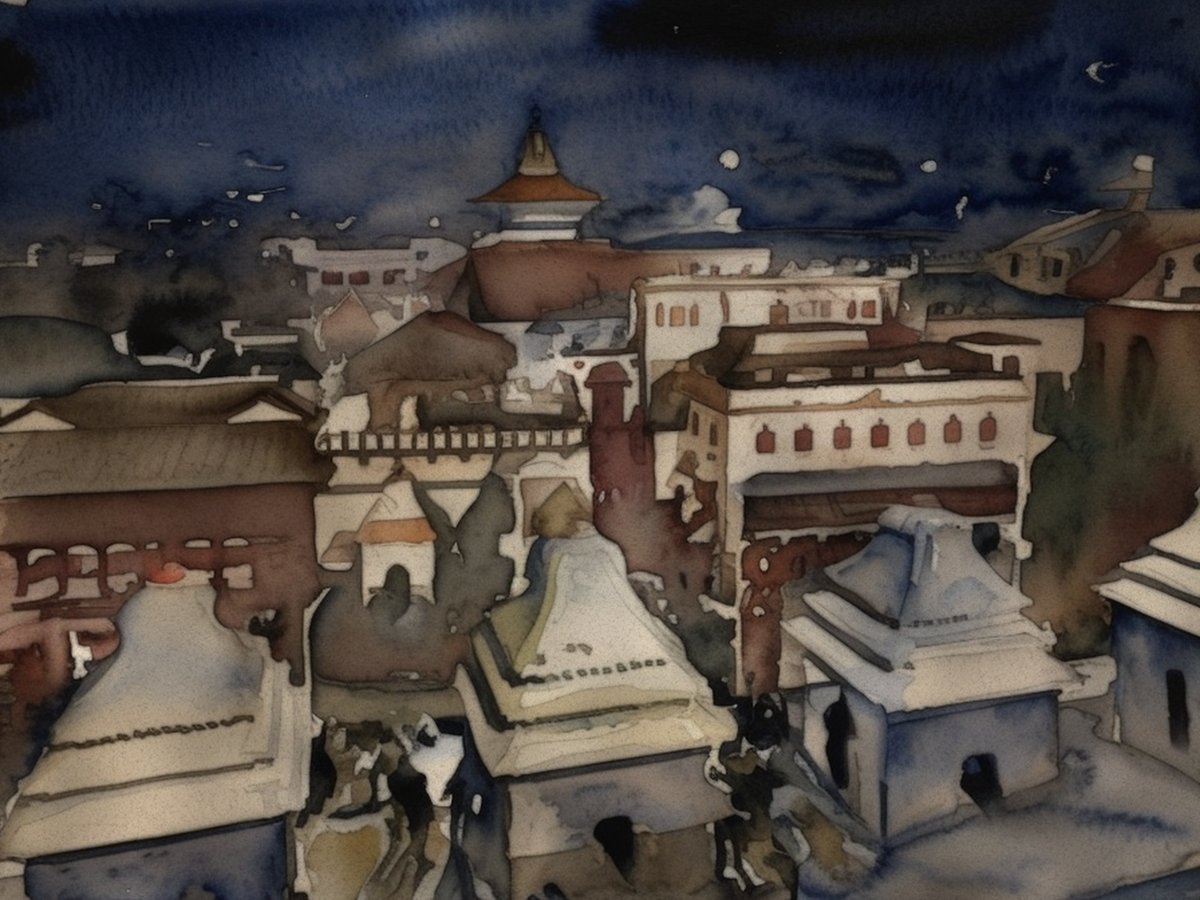
A pagoda on the sacred river
In the north we are taught to trust empty rooms — that silence, plain brick, a single fall of light can carry the sacred. Pashupatinath teaches the opposite, and teaches it well. On the banks of the sacred Bagmati River in Kathmandu, Nepal, this Hindu temple to Pashupati, a manifestation of Shiva, stands not as one quiet vessel but as a precinct: 246 hectares, 518 mini-temples, and at its centre the principal pagoda. Where I would have left a clearing, the centuries left density — temples, ashrams, inscriptions, and images raised along the water. A UNESCO World Heritage Site since 1979, it is the oldest Hindu temple in Kathmandu, recorded as early as 400 CE.
Material honesty, gilded. The main temple is built in Newari architecture, the pagoda form — its two-level roofs of copper covered with gold, resting on a square base platform 23 metres and 7 centimetres from base to pinnacle. Four main doors, all sheathed in silver; a gold pinnacle above. An architect of restraint cannot help but notice the discipline beneath the gold: the square base, the layered roofs, the two garbhagrihas — an inner sanctum holding the idol, an outer corridor-like space around it. Copper, gold, silver, stone. The materials declare themselves.
The threshold and the river
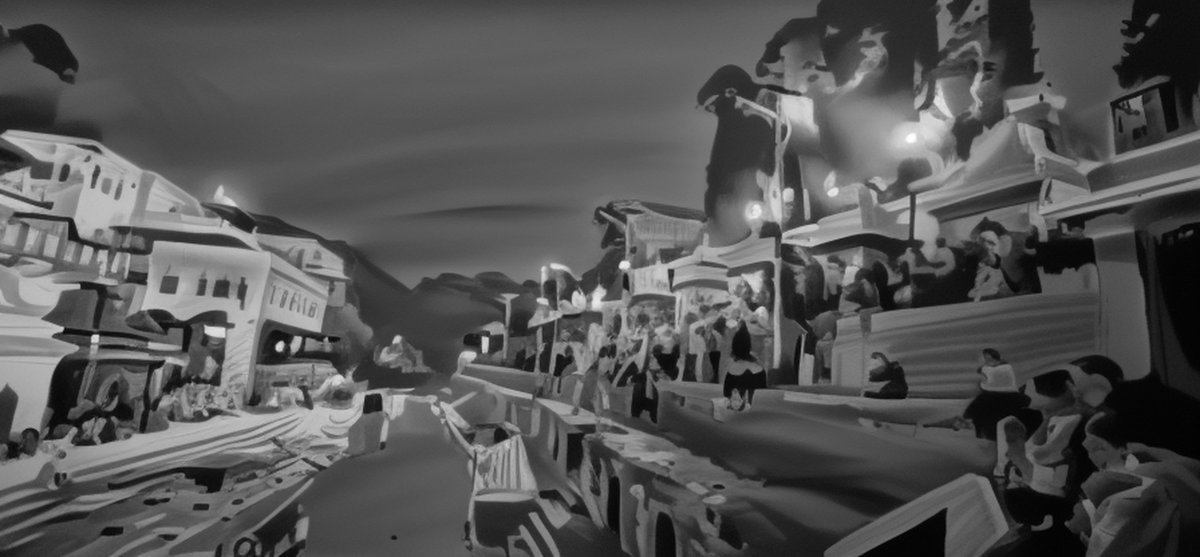
Every threshold here is governed. Four entrances stand at the cardinal directions; only the western one stays open daily, the others reserved for festivals. The inner garbhagriha is closed to devotees, who watch from the outer premises. The stone Mukhalinga itself rests on a silver snānadroṇī base bound with a silver serpent, one metre high, with four faces turned to the directions — and it is always dressed in its golden vastram, so that even the pouring of milk and Ganga Jal is possible only during abhisheka, performed by the priests. The descent to the Bagmati is the precinct’s true axis; on its banks lie the cremation grounds, revered in Vajrayana Buddhism as a charnel ground where Padmasambhava meditated.
A linga that grants every wish
What I would call folklore, the source calls scripture, and it is the heart of the place. As per the Shiva Purana, the linga of Pashupatinath has the capacity to fulfil all desires — believed to be the bestower of all wishes. A legend tells of Shiva and Parvati taking the form of antelopes on the Bagmati’s east bank; a broken horn, worshipped as a linga, was buried and lost, until a herdsman found his cow showering the earth with milk and dug up the divine linga beneath. The wish here is not a coin dropped in water. It is the offering carried to a sacred river, to a stone said to answer every longing — ritual where the Nordic mind expects only silence.
Kathmandu, Nepal