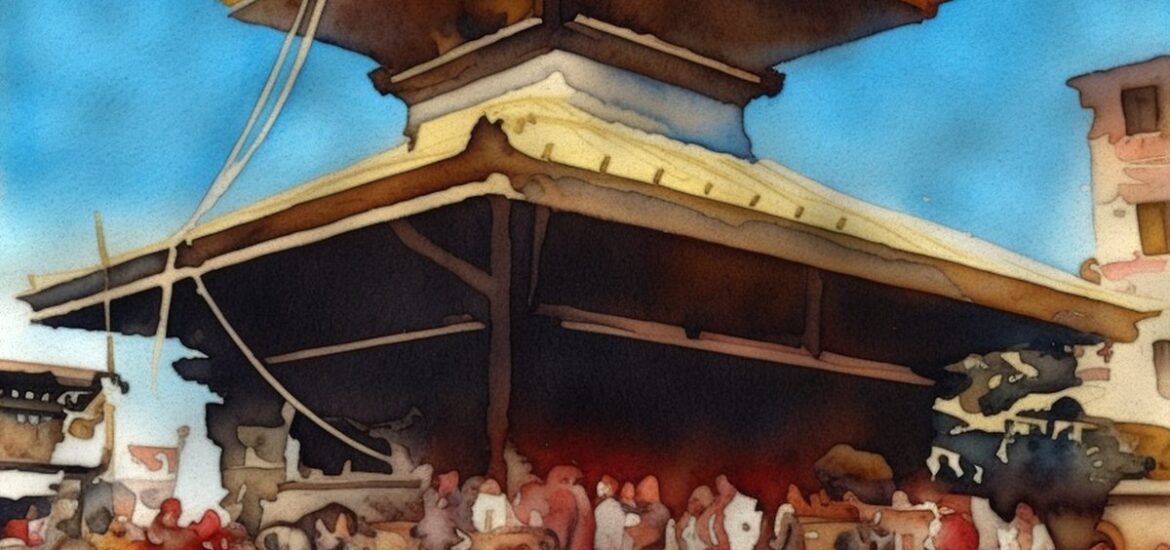
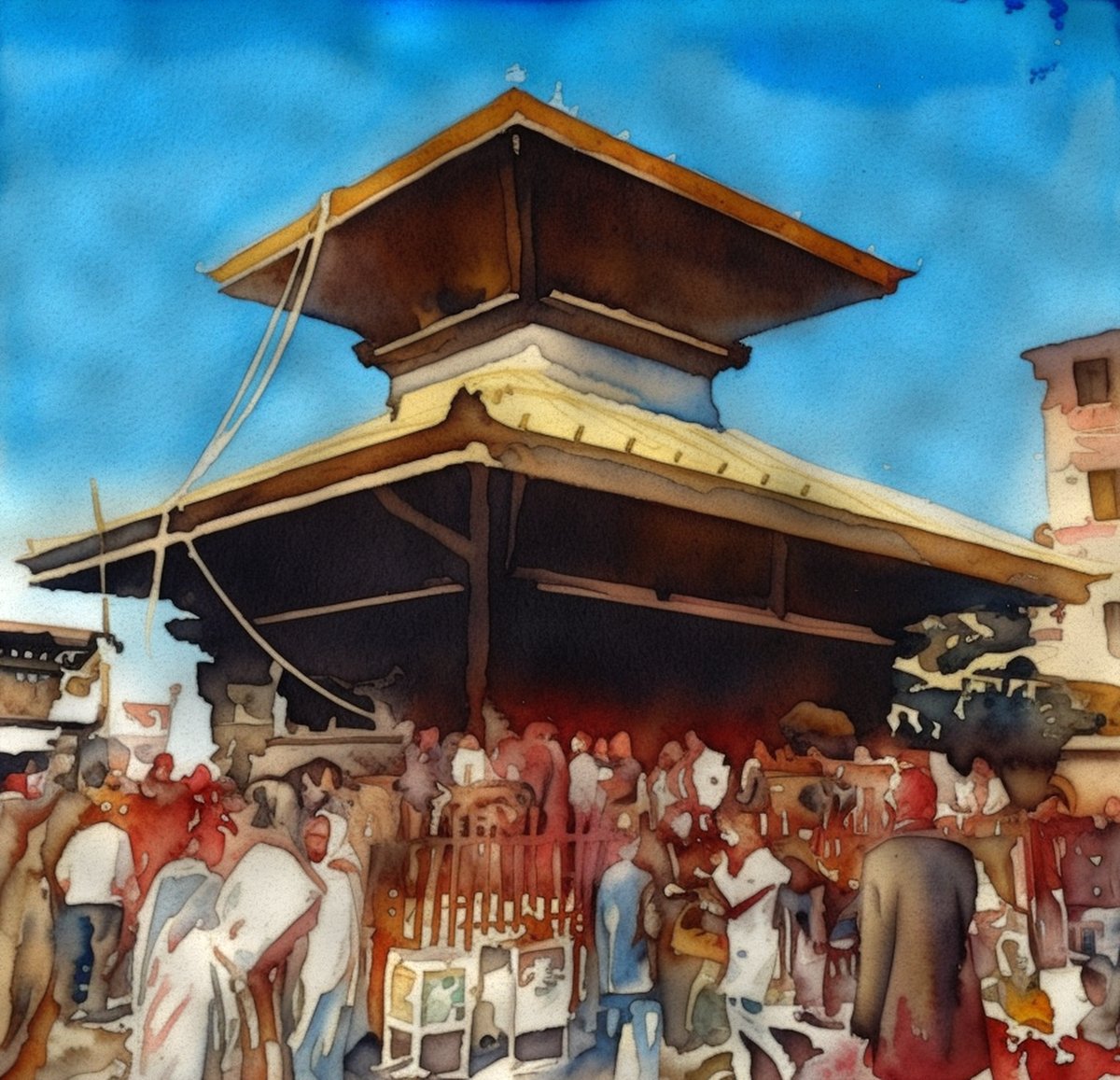
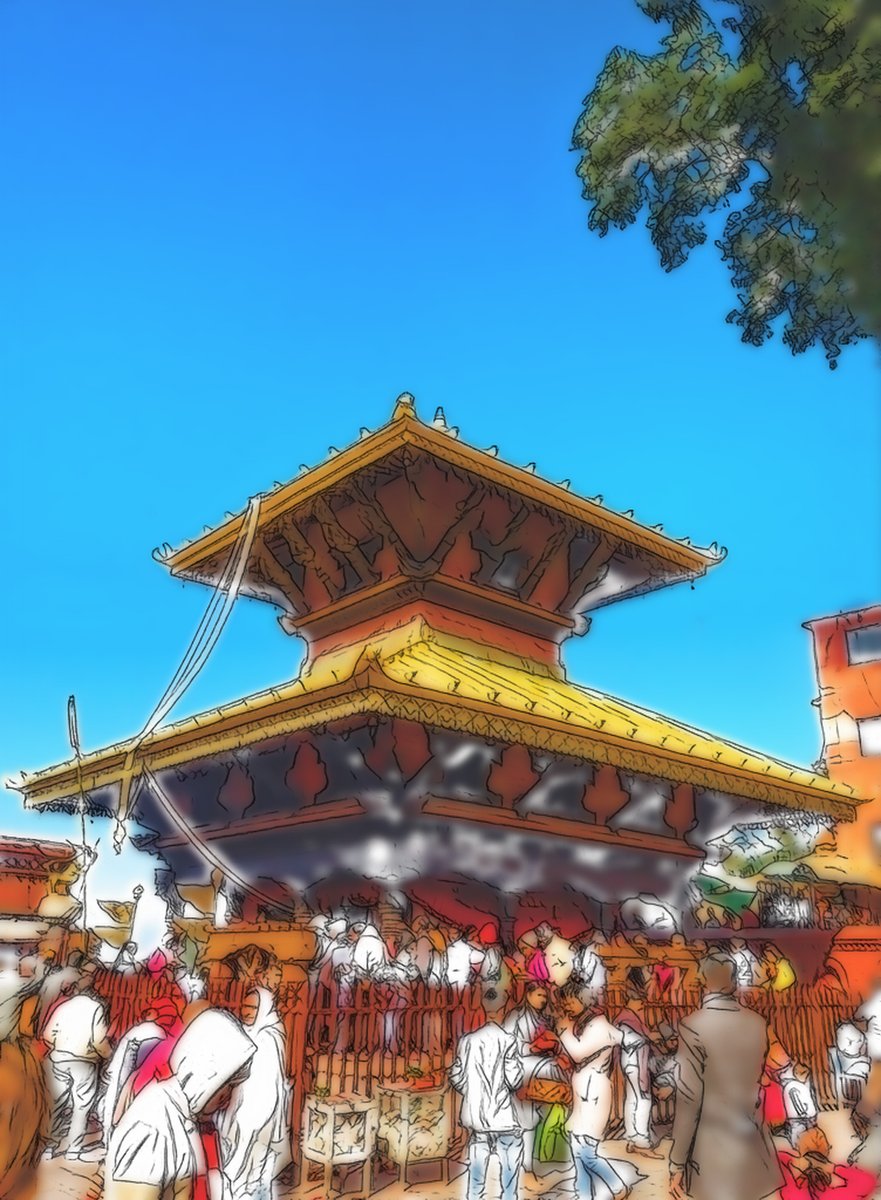
There are buildings you understand before you reach them. Manakamana is one: a two-story pagoda standing at 1,300 metres on the Kafakdada Hill, in the confluence between the Trishuli and the Marsyangdi. From its ground you can read Annapurna II, Lamjung Himal, and Baudha, a flank of Manaslu. A Nordic eye, schooled in scarcity, recognises the instinct at once — to set a small built thing against a vast, patient landscape and let the distance do the speaking.
The approach as procession
For centuries the only way up was a three-hour climb, roughly 1,000 metres of ascent from the valley. Procession by effort. Since 1998 there is also the cable car from Kurintar — 2.8 kilometres covered in about ten minutes, the bottom station at 258 metres, the top at 1,302. Two liturgies of arrival now coexist: the slow body and the quick cabin. Fehn would have understood both as thresholds — the journey is the building’s first room.
A name that is a promise
Mana means heart; kamana, wish. The temple’s full name reads “temple that grants wishes of its devotees.” It is dedicated to the goddess Bhagwati, an incarnation of Lakshmi, with Garud as protector. People do not come here to look. They come to ask.
The legend grounds the ask. Tradition holds the temple rose in the 17th century, in the reign of the Gorkha kings. A queen, believed to be Champawati, was seen by the king in the form of the goddess; soon after he died, and per the practice of Sati she gave herself to his pyre — but promised to return. Six months later a farmer split a stone and a stream of blood and milk ran from it. The priest Lakhan Thapa Magar performed tantric rites that stilled the flow, then raised a shrine on that very spot “so that their wishes can come true.” To this day the priest must be a Magar, a descendant of his line — continuity built into the institution as firmly as into the timber.
Material honesty, and its repairs
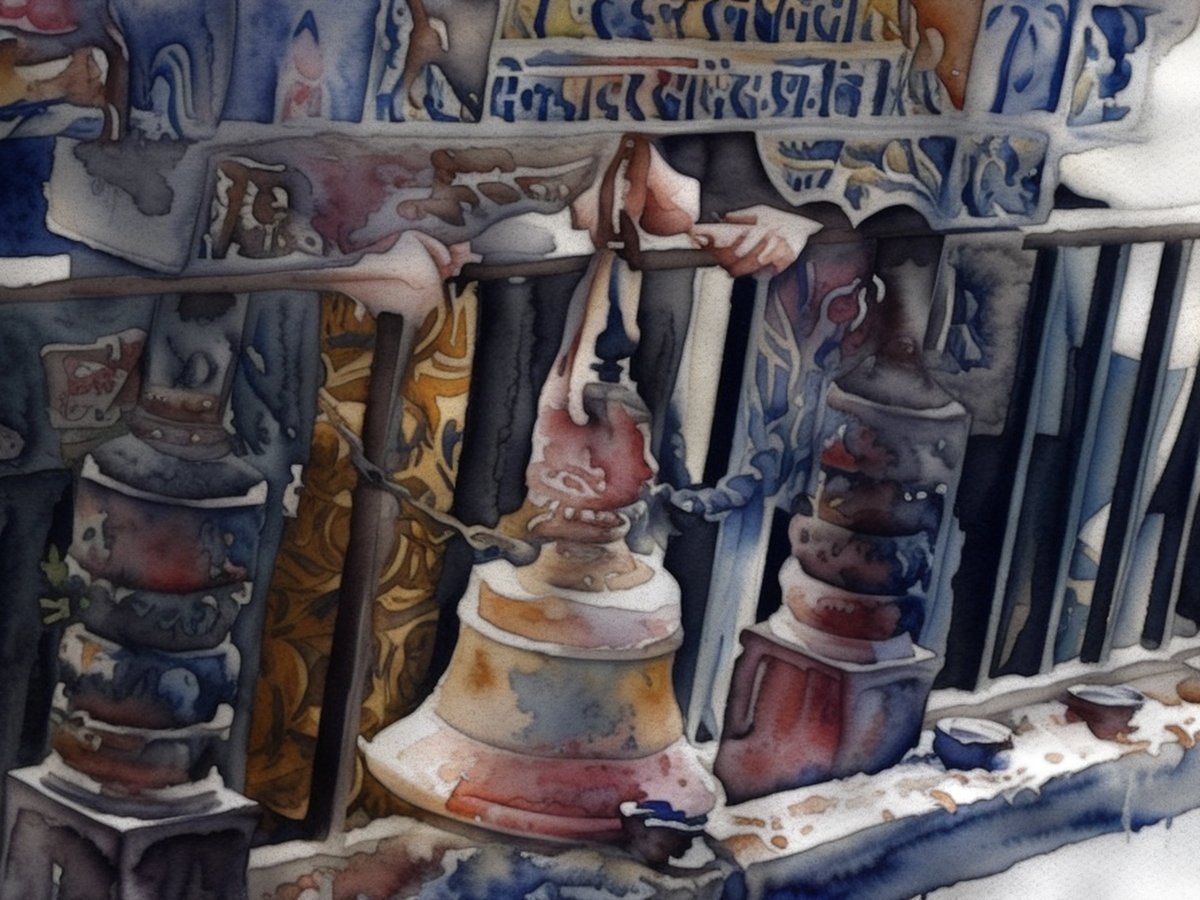
The pagoda carries its history in its surfaces. A bronze bell, a gold-plated main gate raised by four siblings in 1802–3, a roof rebuilt in corrugated copper, later roof trusses engraved with the Asta Matrikas. The hill is restless: earthquakes in 1934 and 1988 leaned the temple six inches to the south-west; the 2015 quake cracked the roof and tilted it further. The reconstruction finished in 2018 used limestone, surkhi, brick and wood — honest materials — and 14 kilograms of gold on roof, door, finial and windows.
What the silence here is for. A Scandinavian sanctuary empties itself toward stillness. Manakamana fills the same restraint with offering, vow, and the steady labour of return. The architecture is modest; the wish is not. That, finally, is the building’s argument: keep the structure plain, and let what people bring to it be the abundance.
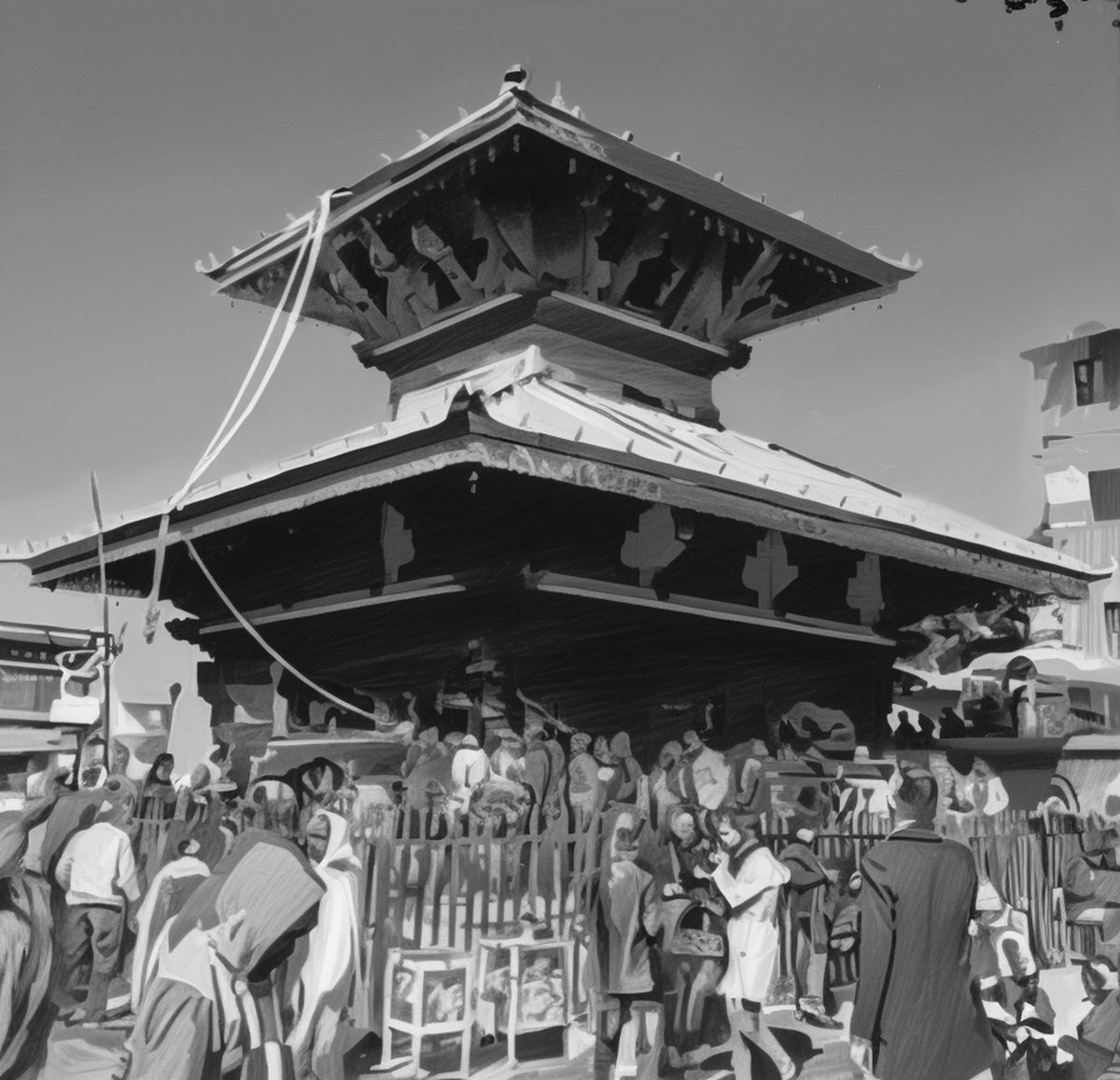
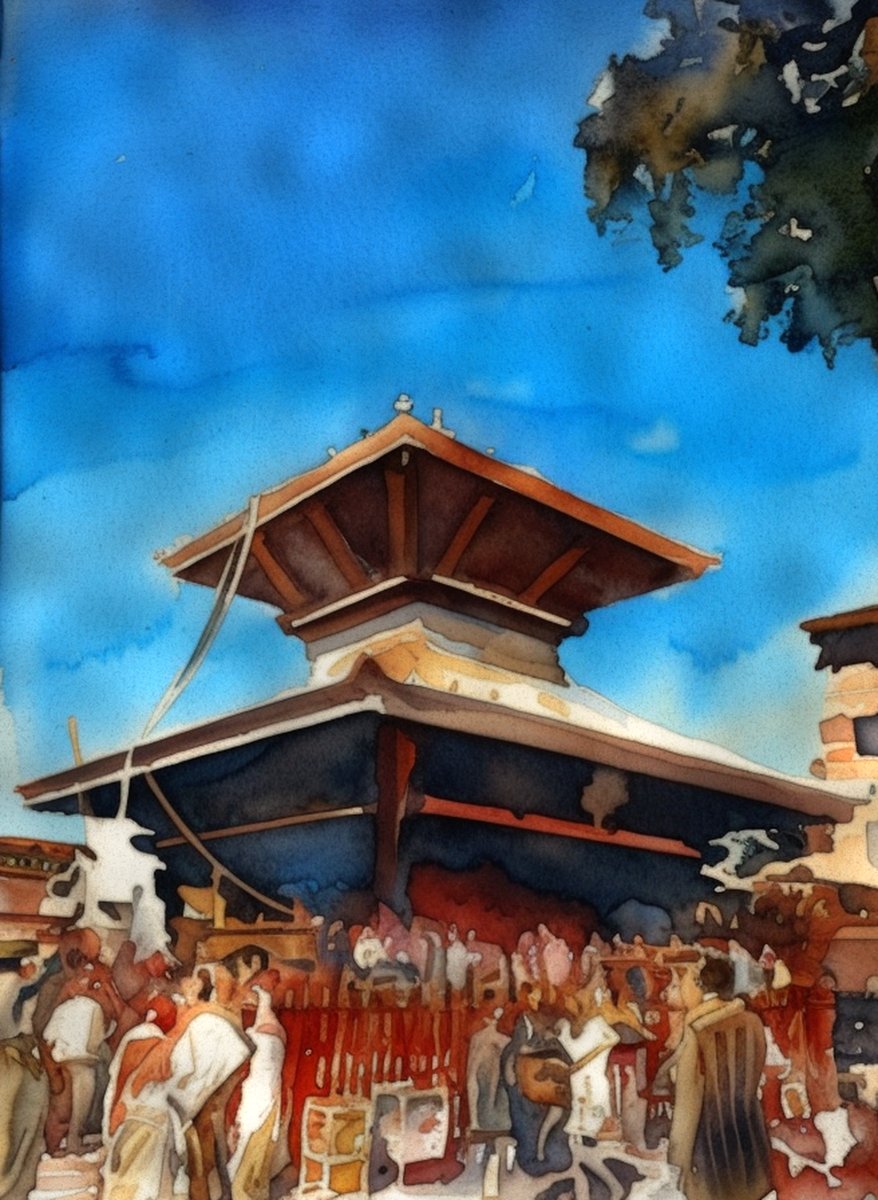
Manakamana, Nepal