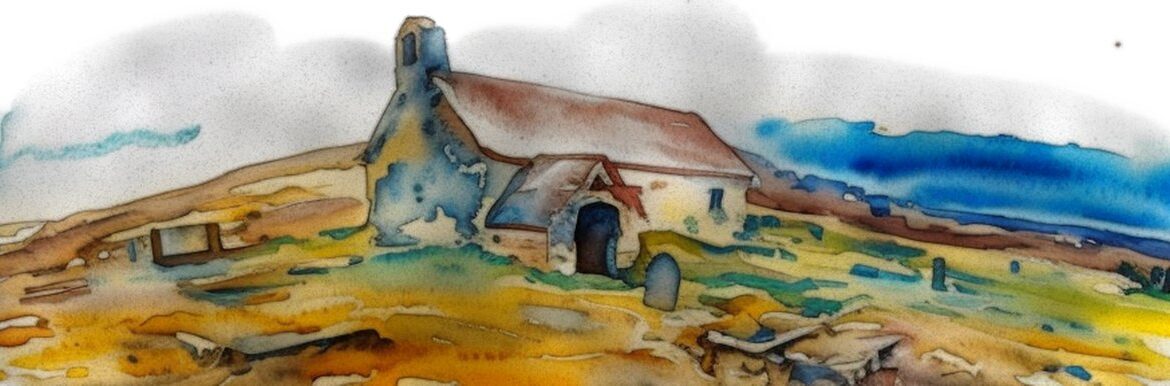
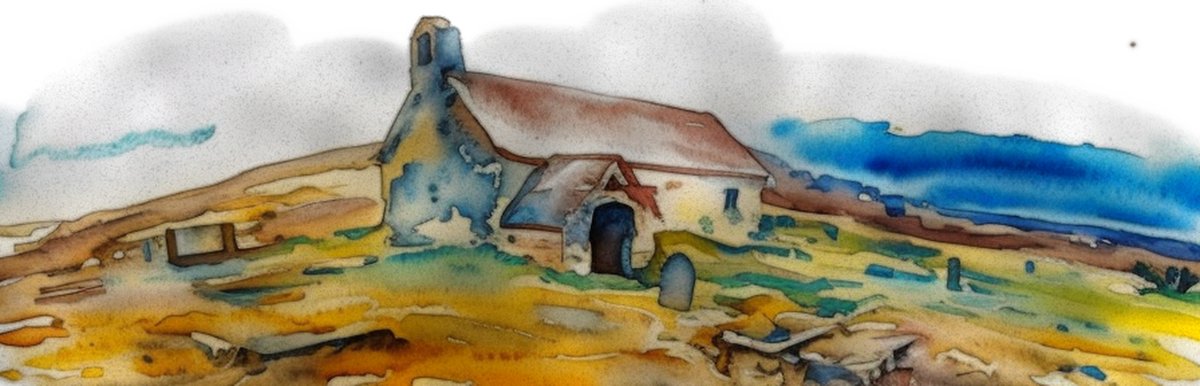
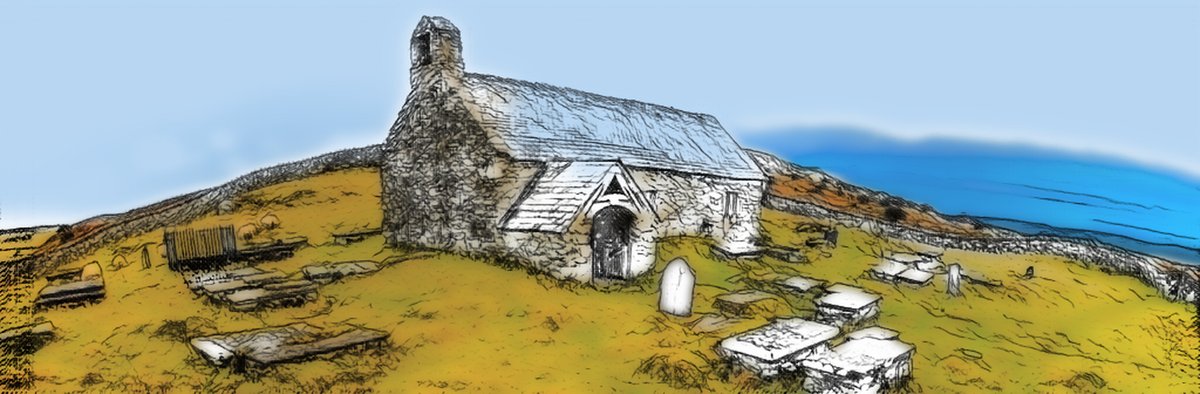
A church set against the mountain. At roughly 280 metres above the village of Henryd, in the shelter of Tal y Fan to the south-west, Llangelynnin Church sits among the remotest in Wales. It reads not as a monument imposed on the landscape but as something grown out of it: a small, simple building whose 12th-century nave is the oldest fabric, dedicated to Saint Celynnin, the 6th-century figure who probably founded the first religious settlement on this exposed Conwy-valley shoulder.
Reading the structure
The plan is a record of slow accretion. The nave came first; the chancel was added later, probably in the 14th century. A 15th-century porch carries an unusual “squint window” in its east wall, its roof once repaired with yew, quite possibly from churchyard trees. Door hinges and threshold date from the 14th century. The north transept of the 15th century was Capel Meibion, the men’s chapel; a south transept, Capel Eirianws, was raised around the 16th century and demolished in the 19th, its outline still legible from outside. Dark oak rafters span the roof, and the present east window of the 15th century replaced a smaller 14th-century opening. Inside, whitewash removal uncovered the Creed, the Lord’s Prayer and the Ten Commandments in Welsh, with scrollwork and a skull and cross-bones. Today it is a Grade I listed building.
The walled churchyard
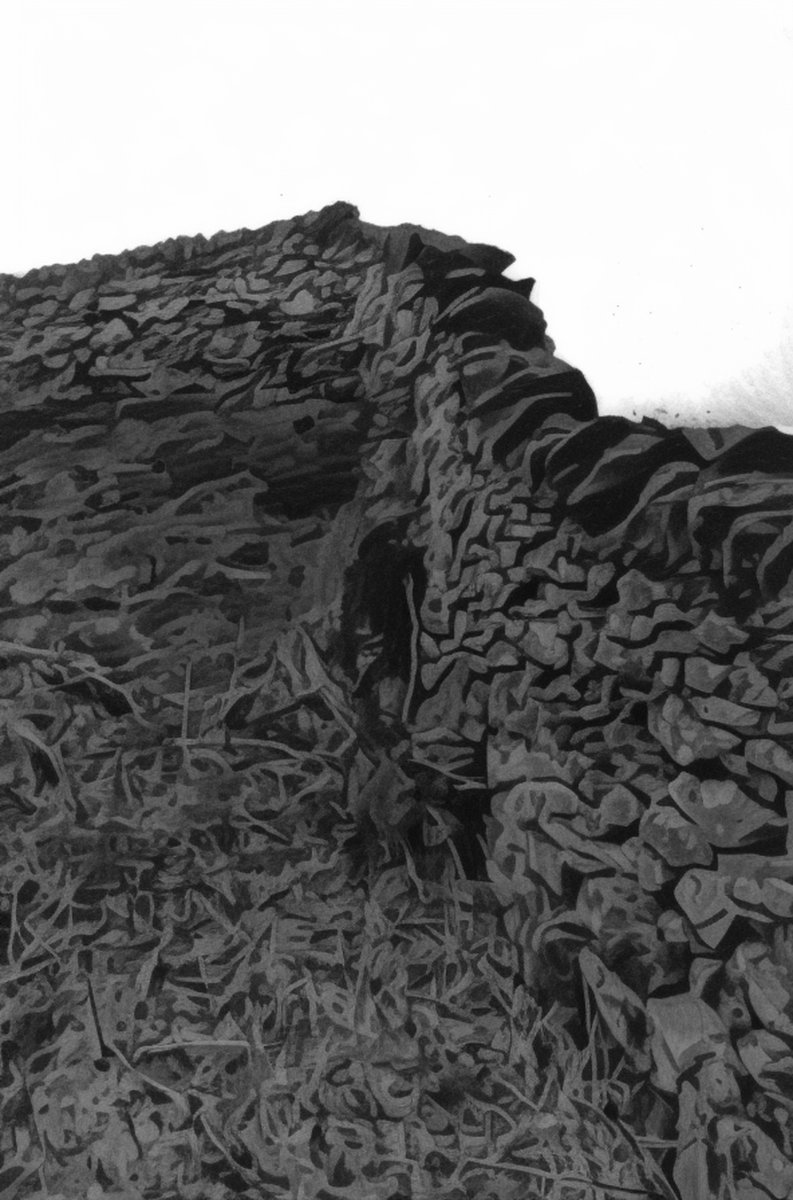
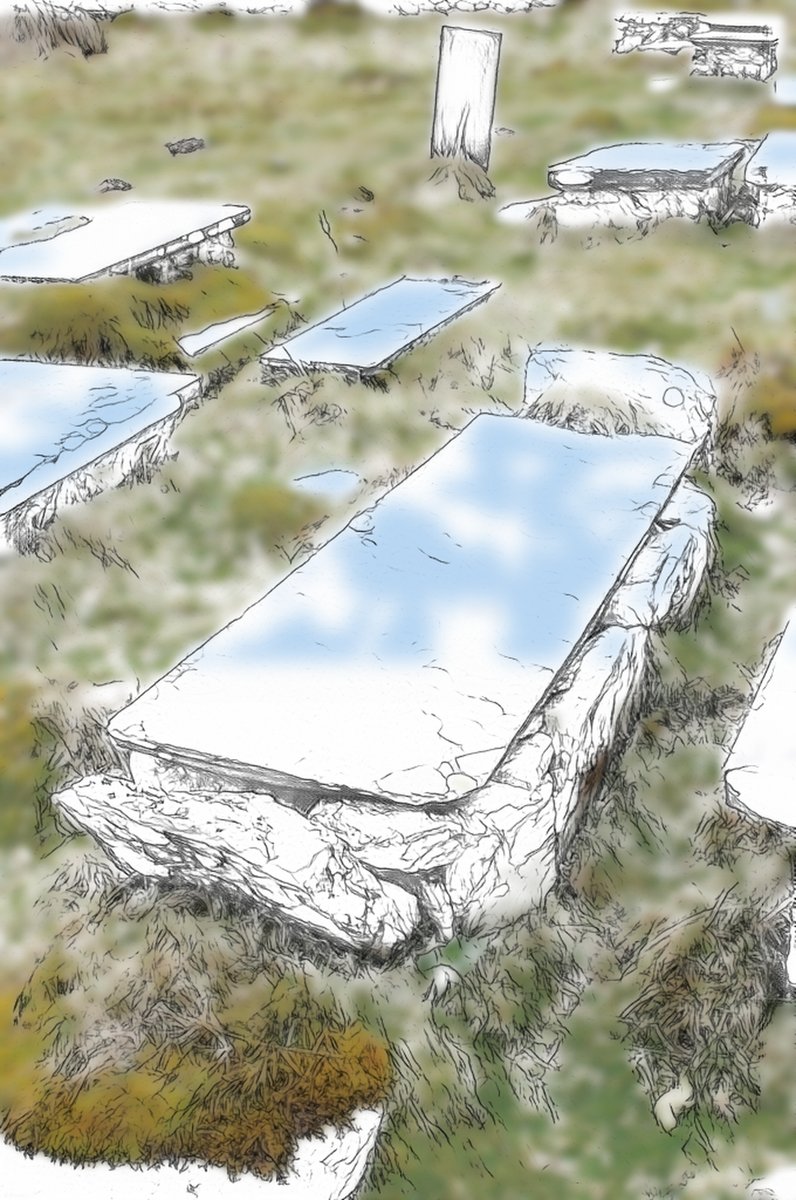
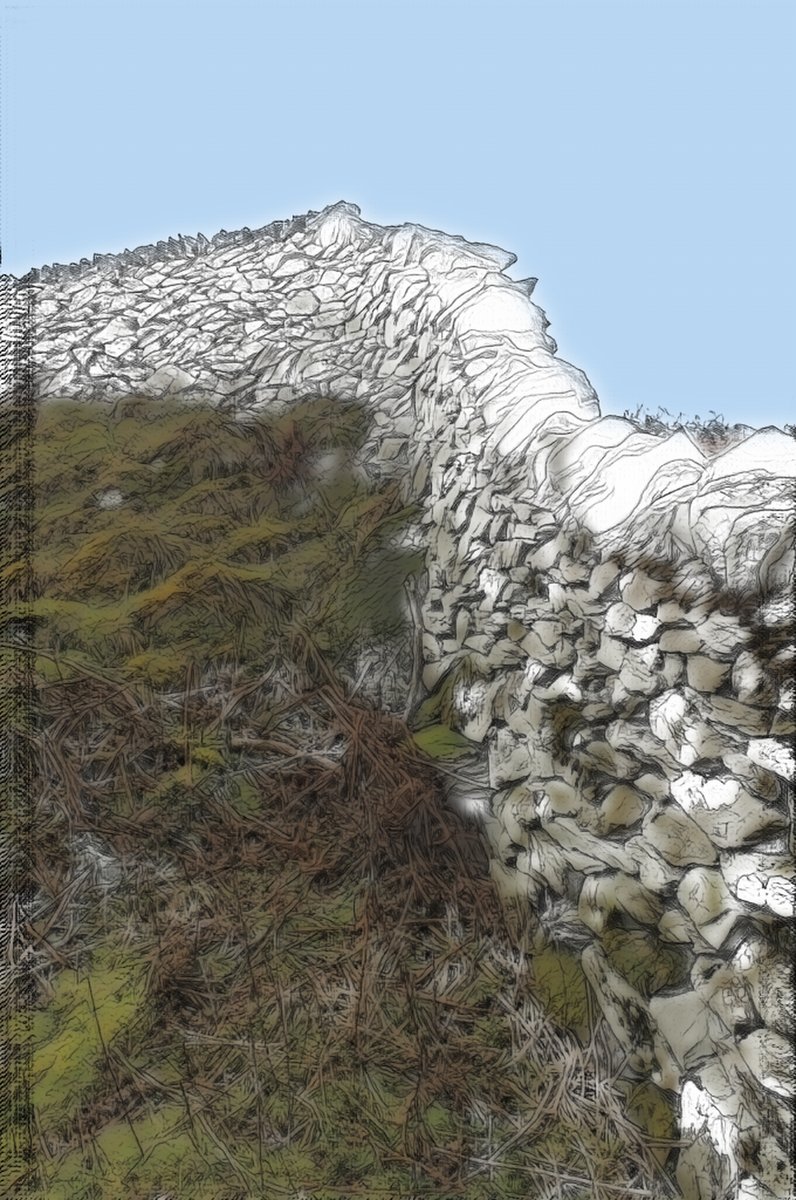
The churchyard is walled, entered through an arch in the eastern wall, and almost bare of trees now. Bedrock outcrops so insistently that graves, some dating to the 14th century, follow no uniform layout — siting the dead has been a centuries-long negotiation with stone.
Ffynnon Gelynin, the holy well
The water that judged a child’s fate. In the south-eastern corner lies Ffynnon Gelynin, a small walled rectangular pool renowned for curing sick children. One old story tells that parents threw items of a sick child’s clothing into the water: if the clothes floated, the child would live; if they sank, the child was destined to die. The well was once roofed, though that structure is gone, and its surrounding walls and benches came with later restoration. The well almost certainly predates the church — surface water at this height was likely the very reason for settlement here.
Conwy County Borough, United Kingdom