A palace turned into water
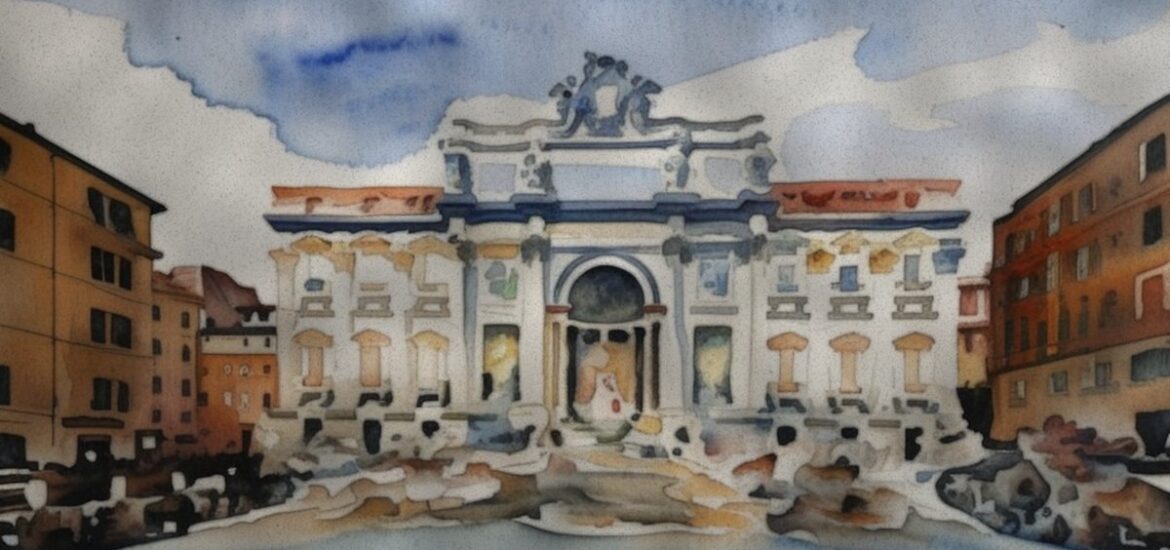
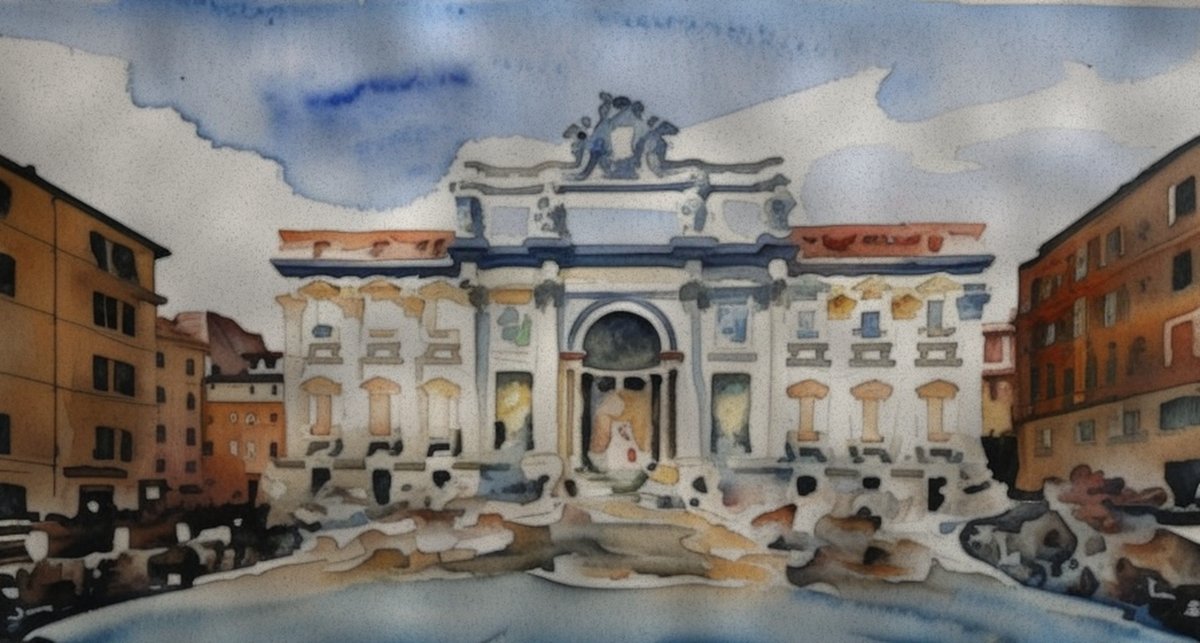
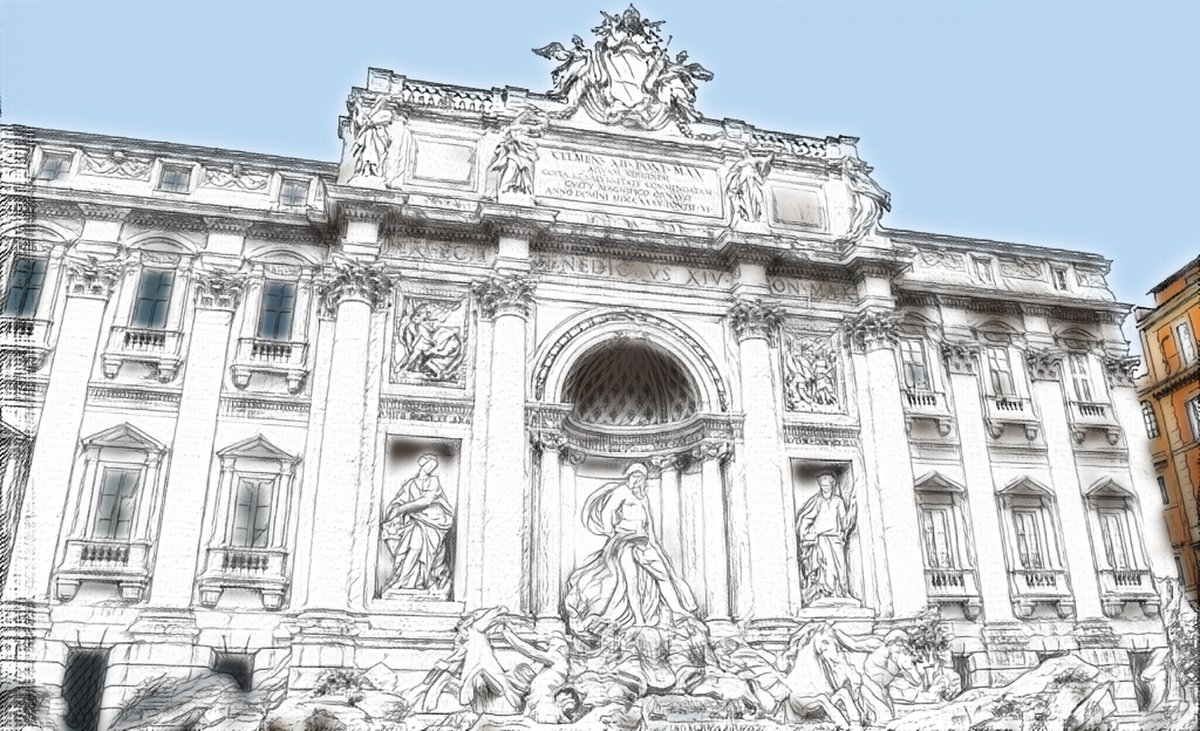
The Trevi Fountain (Fontana di Trevi) is not a freestanding monument set in a square; it is a building made to pour. When Nicola Salvi designed it after winning a 1730 contest organized by Pope Clement XII, a palace—now the Palazzo Poli—already stood on the site, so he incorporated the fountain into the rear of the building. The result is the largest Baroque fountain in Rome, standing 26.3 metres high and 49.15 metres wide, and one of the most famous fountains in the world.
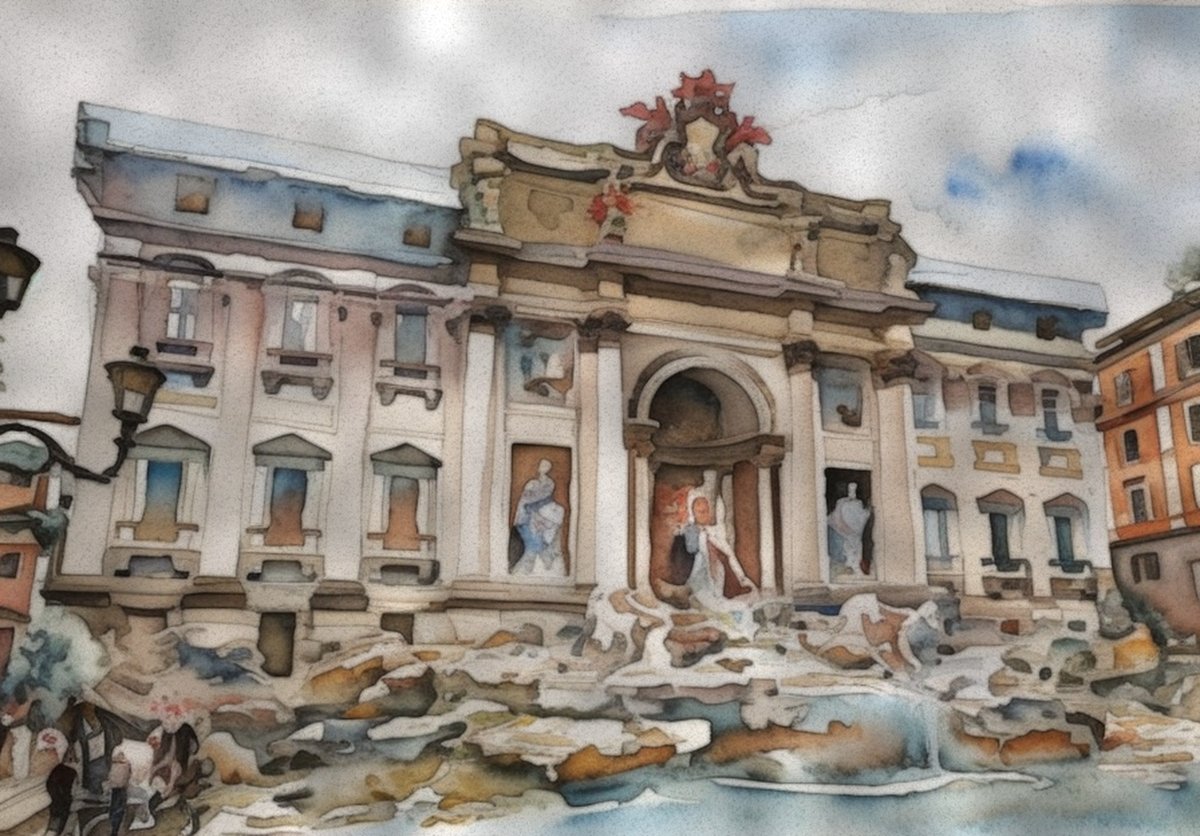
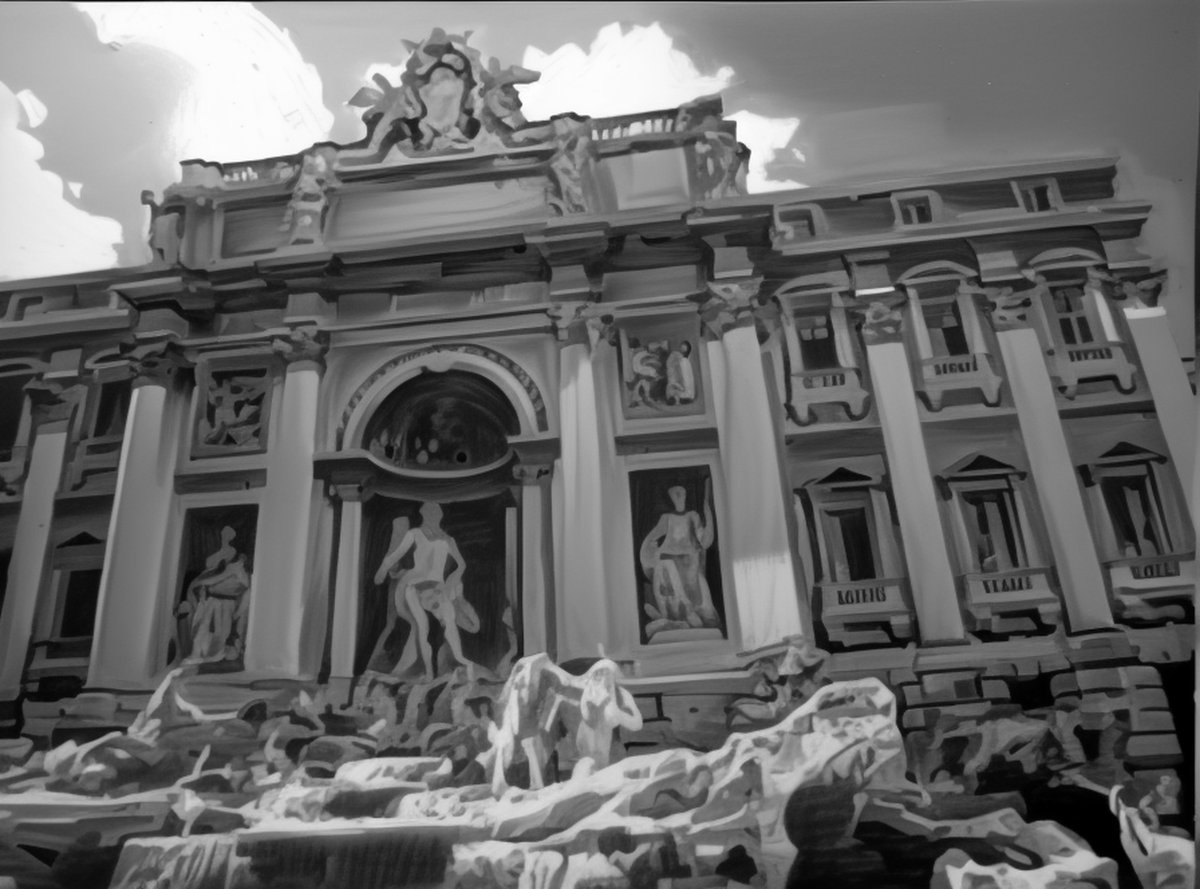
The backdrop. The Palazzo Poli was given a new façade with a giant order of Corinthian pilasters linking its two main storeys. Against this ordered architecture Salvi superimposed a robustly modelled triumphal arch at the centre, so that classical discipline above gives way to turbulence below.
Oceanus and his retinue. The theme is the taming of the waters. From the central niche, or exedra—framed by free-standing columns set for maximal light and shade—the sea god Oceanus rides a shell chariot. Tritons guide it, taming hippocamps, the figures arranged for symmetrical balance with maximum contrast in mood and pose. Flanking Oceanus, Abundance spills water from her urn and Salubrity holds a cup from which a snake drinks; above, bas-reliefs illustrate the Roman origin of the aqueducts.
The scogli. Beneath them all, the gigantic scheme tumbles forward in rusticated rockwork—the scogli—mixing water and stone and filling the small square. The majority of the piece is carved from travertine quarried near Tivoli, about 35 kilometres east of Rome, with Carrara marble for the figures.
Water with a history
The fountain marks the terminal point of the Acqua Vergine, the revived Aqua Virgo, one of the aqueducts that supplied ancient Rome. In 19 BC—supposedly with the help of a virgin, a scene shown on the present façade—technicians located a source of pure water, and the aqueduct still feeds the fountain today.
Throwing the wish
The best-known tradition is to throw a coin before leaving “the eternal city,” the superstition being that the gesture favours a future return. Coins are meant to be tossed with the right hand over the left shoulder, back turned to the fountain. An estimated 3,000 euros land in the water each day; in 2016 the total reached roughly €1.4 million. The money is donated to the Caritas association for charity work. Salvi died in 1751 with the work half finished, and Giuseppe Pannini completed it in 1762.
Rome, Italy · Architect: Nicola Salvi · Built: 1732