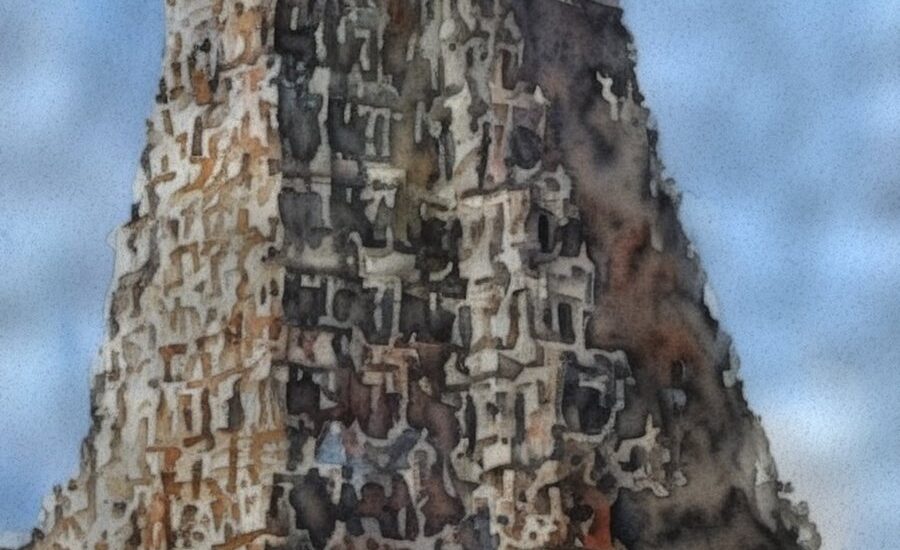
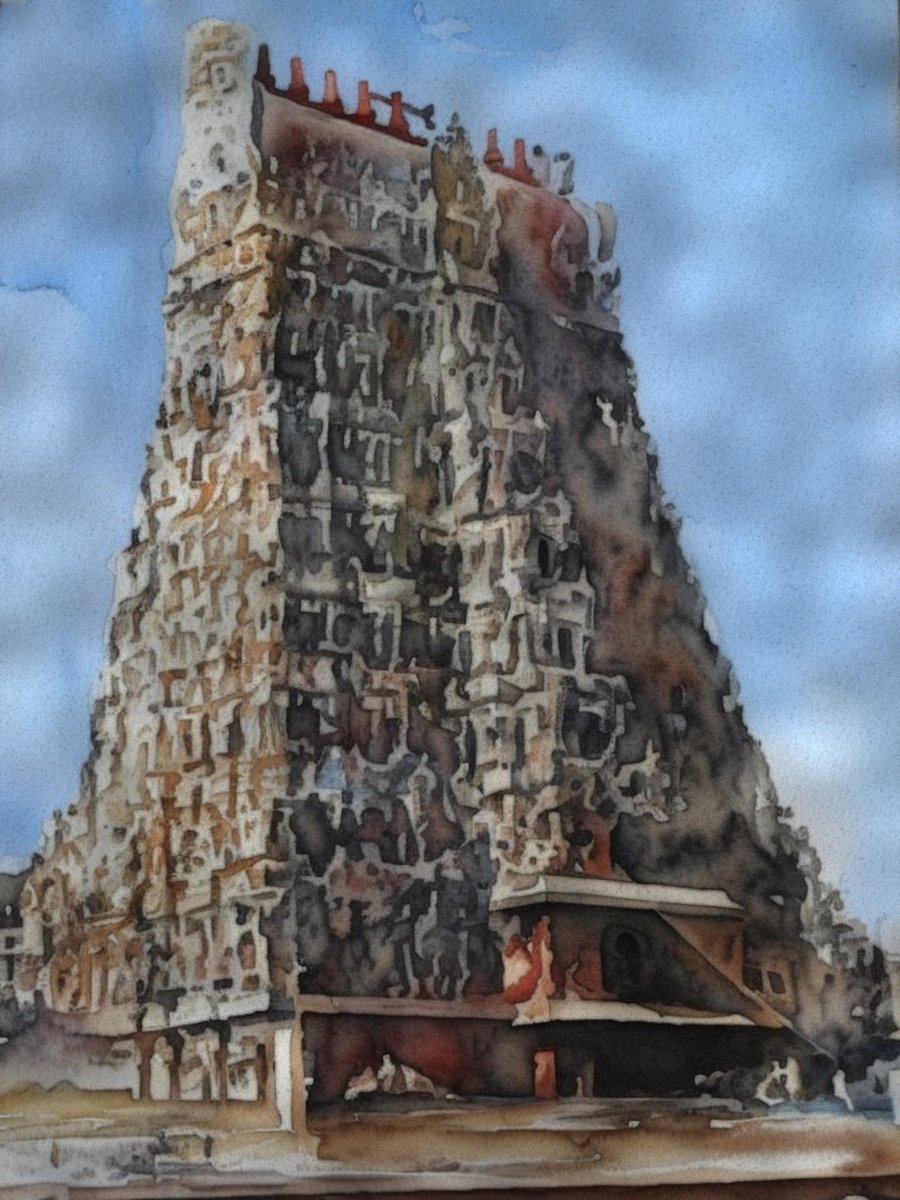
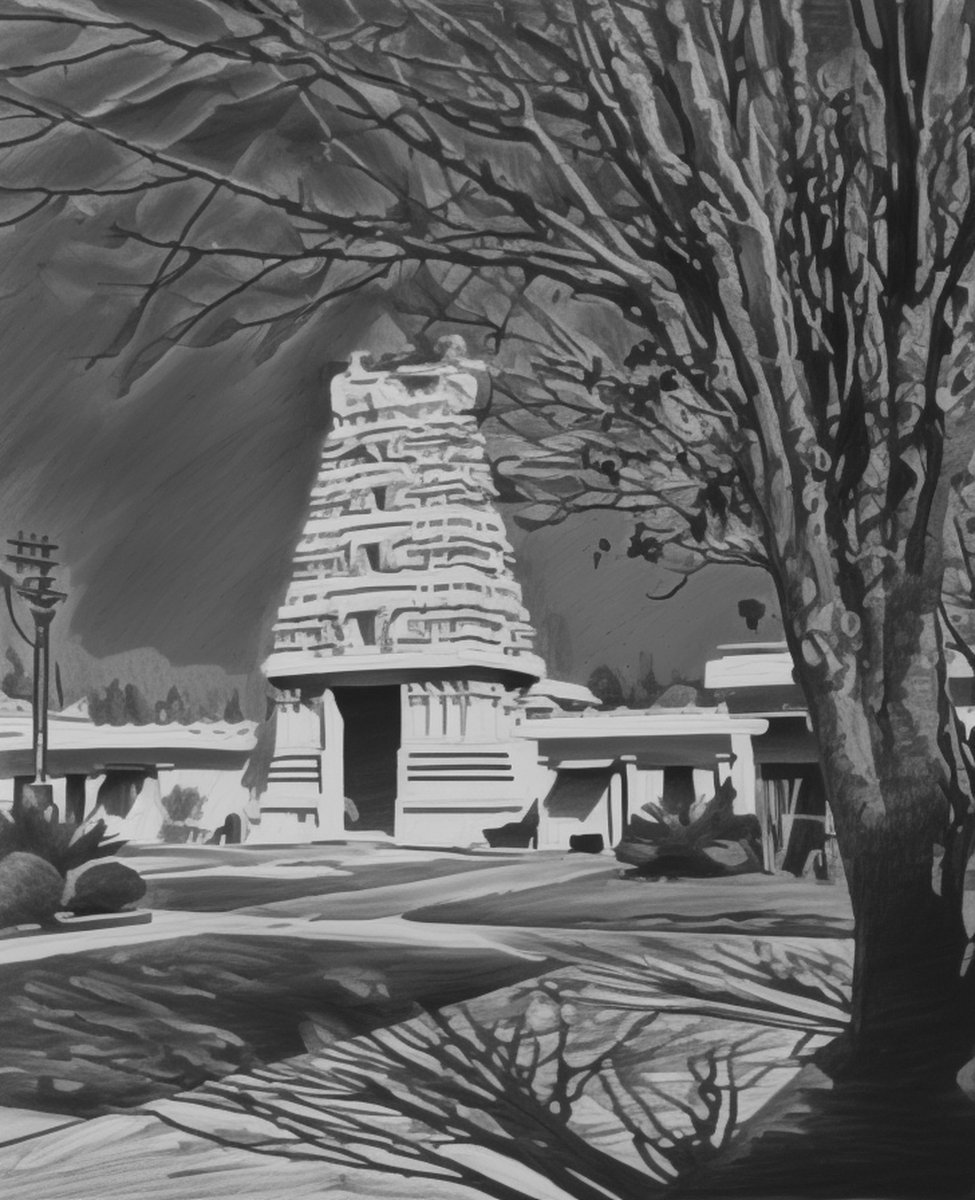
I come from a tradition that trusts the bare wall and the slow fall of northern light. So I arrive at Madurai humbled. Here, on the southern bank of the Vaigai River, the Meenakshi Sundareswarar Temple does not whisper — it sings in stucco. Where Lewerentz would have left brick to speak for itself, the four great gopurams carry, across their outer walls, nearly four thousand mythological stories. The tallest, the southern tower built in the late sixteenth century, rises 170 feet and gathers over fifteen hundred characters from the Puranas. This is not my restraint. But it teaches me something about abundance as devotion.
The procession, and the descent
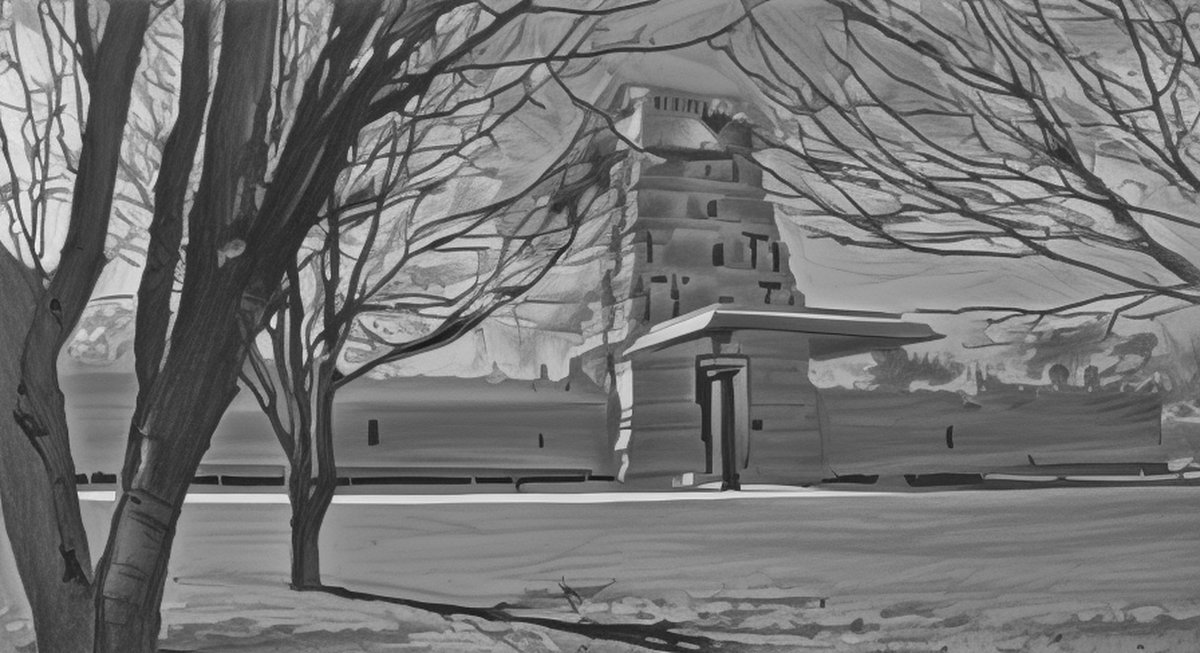
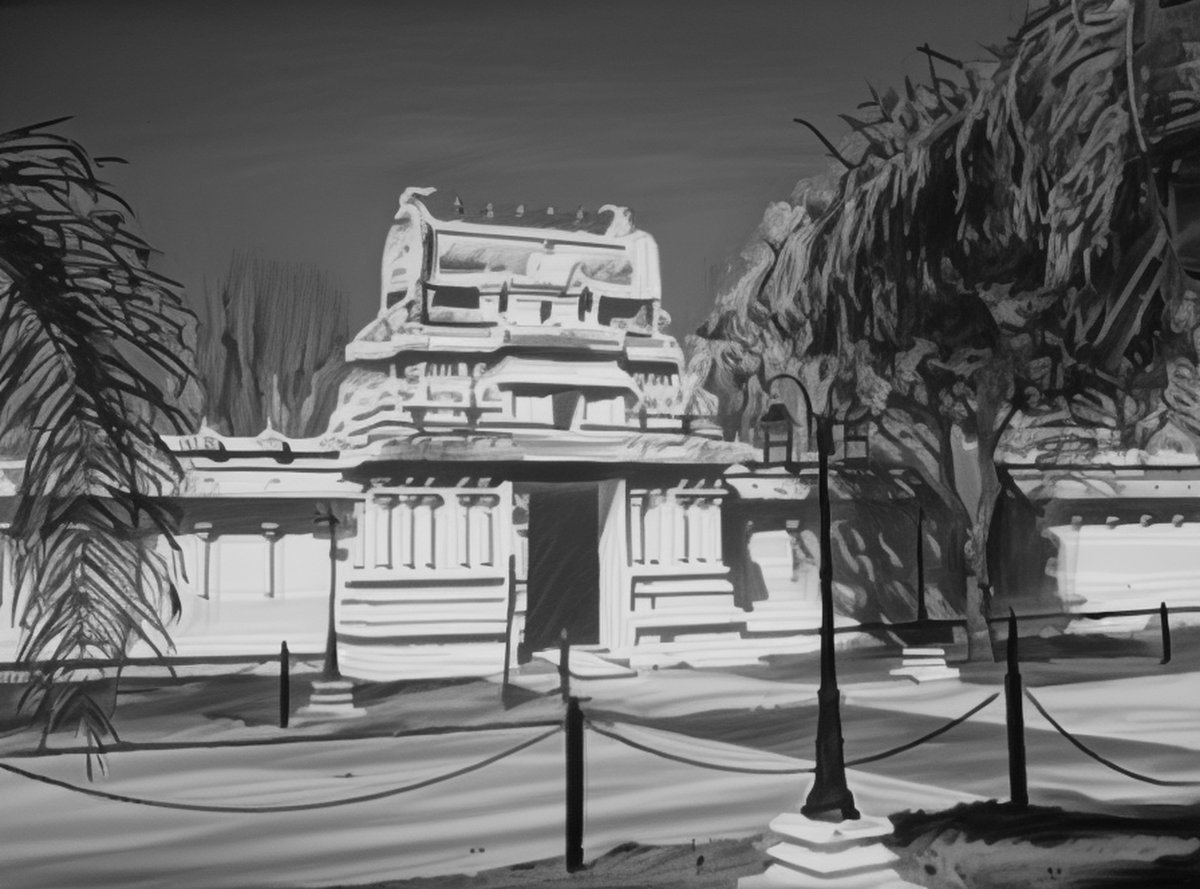
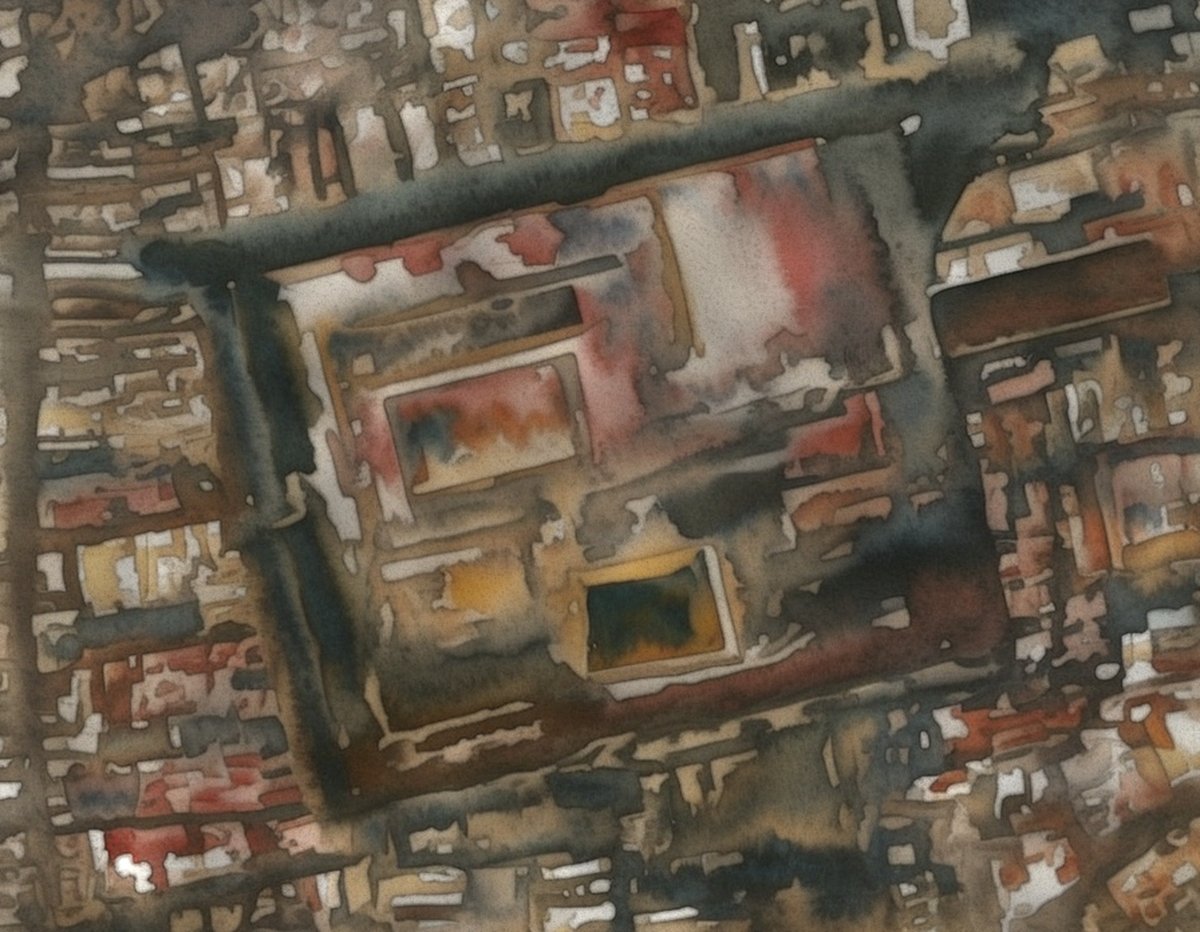
What I recognise is the order beneath the exuberance. The complex is a series of concentric enclosures — prakaras — each fortified, each pierced on the four cardinal directions so one may enter from any side. The city itself radiates outward like a lotus and its petals, streets named for the months of the Tamil calendar, the whole laid east to face the morning sun. As a phenomenologist of thresholds, I read this as pure procession: temple cars grow more massive the farther they travel from the centre. Movement is the architecture.
Water at the heart
And then — the Porthamarai Kulam, the Golden Lotus Pond, set before the Meenakshi shrine. It measures roughly 165 by 120 feet, a gold-gilded lotus floating at its middle. Called also Adhi Theertham and Sivaganga, it is named sacred. On the western wall, a fragment of seventeenth- and eighteenth-century fresco survives: delicate black linework on red, the marriage of Meenakshi and Sundareswarar beneath a flowering tree. To descend toward held water, framed by colonnade and swing-hall, is a gesture I understand in my bones — though here the water belongs to a goddess.
The fish-eyed mother
Folklore makes her central. Meenakshi means “fish-eyed”; the Thiruvilaiyadal Puranam tells of a child born of fire to the Pandya king, three-breasted, who shed the third when she met Shiva as Sundareswarar. For most devotees here, scholars note, she — addressed as Mother — matters more than the Lord, who came as an outsider to rule beside her. Each evening Sundareswarar’s symbolic foot-prints are carried to her chamber so the divine couple may share the night. Offerings are made — to Mukkuruni Vinayakar, three measures of rice shaped into a ball. The source speaks of offerings and votive devotion at this tank, not of coins. I leave it at that, and listen to the water.
Madurai, India · Built: 1200