A fountain conceived for children
The Märchenbrunnen — literally the “fountain of fairy tales” — sits within the Volkspark Friedrichshain in Berlin, Germany. Its origin is unusually personal for a piece of civic architecture. Construction on the site had been intended since 1893, and when Ludwig Hoffmann took office as city councilor in 1896, he found existing plans for a purely decorative architectural piece. He rejected them. After watching children play across the grounds during a tour of the property, he conceived instead a fountain that would depict fairy tales, an idea he later set down in his memoirs.
Composition and water
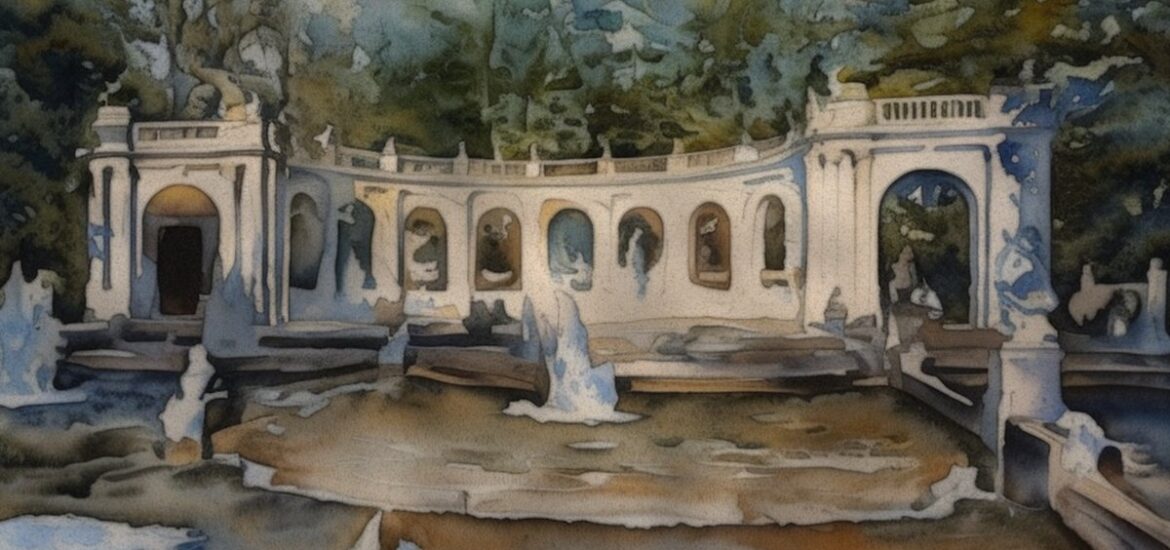
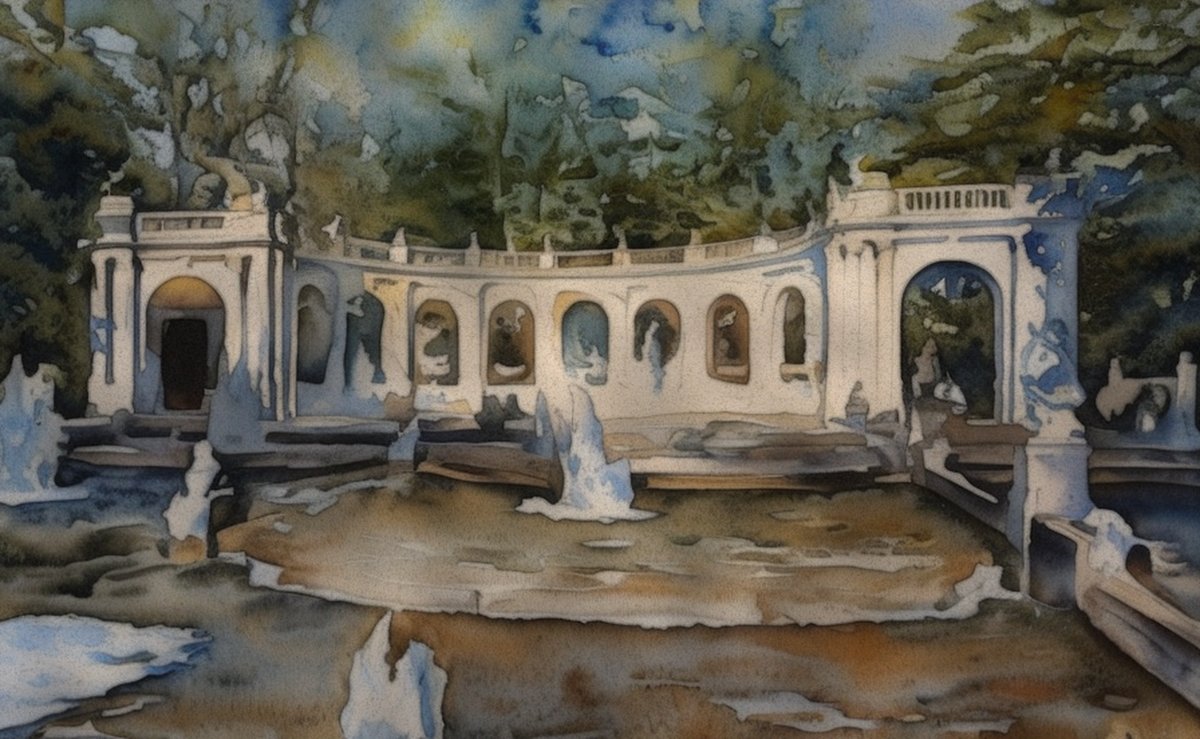
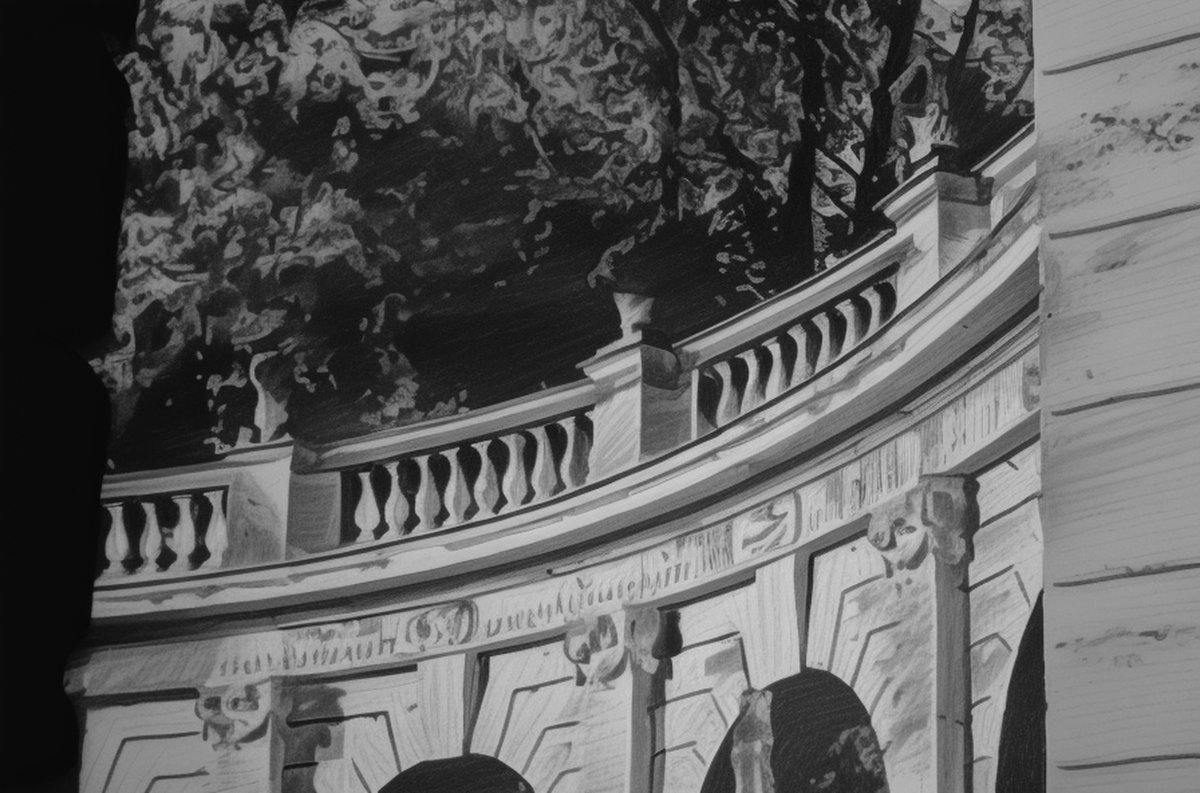
The result is a generously scaled Neo-Baroque ensemble, 90 by 172 metres overall, with a central fountain measuring 34 by 54 metres. Hoffmann organized the water as four cascading stages, feeding one large fountain and nine smaller ones, animated by seven water-spouting frog figurines — one identified as the Frog Prince. On the east side, a semicircular arcade of nine arches encloses the cascading pool, its center marked by a large stone bowl carved with dogs’ heads, and a full gallery of folklore animals running above. Behind the arcade, the eight-metre Dolphin Fountain (Delphinbrunnen), composed in concentric circles, is rimmed with children and fairy-tale animals.
Sculpture as the governing idea
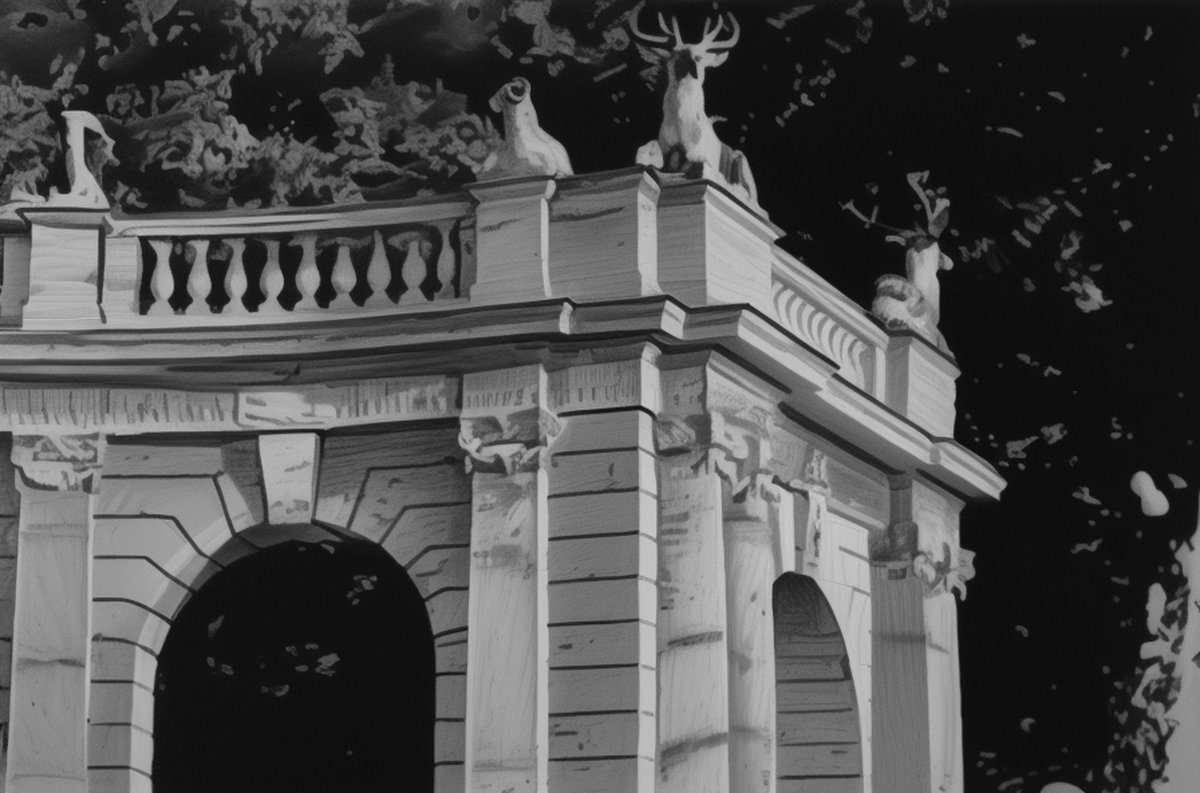
Hoffmann had long believed sculptural ornament was inadequately served in northern Germany, and here he made it the whole point. He brought in three sculptors from the south — Ignatius Taschner, Georg Wrba, and Josef Rauch — who together produced 106 stone figures. Taschner carved ten central pieces interpreting nine Brothers Grimm tales, among them Hansel and Gretel, Cinderella, Snow White and the Seven Dwarfs, and Sleeping Beauty. Wrba supplied four Hermas, the Dolphin Fountain’s child groups, and other decoration; Rauch contributed fourteen marble game animals along the arcade.
Materials and afterlife
The fountain is built of travertine, limestone, sandstone, wrought iron, and wood. Opened on 15 June 1913, it was severely damaged in 1945, its sculptures scattered and only rediscovered in 1950. Successive restorations followed, culminating in a landmark project begun in 2005 that returned the full complex to the public by July 2007.
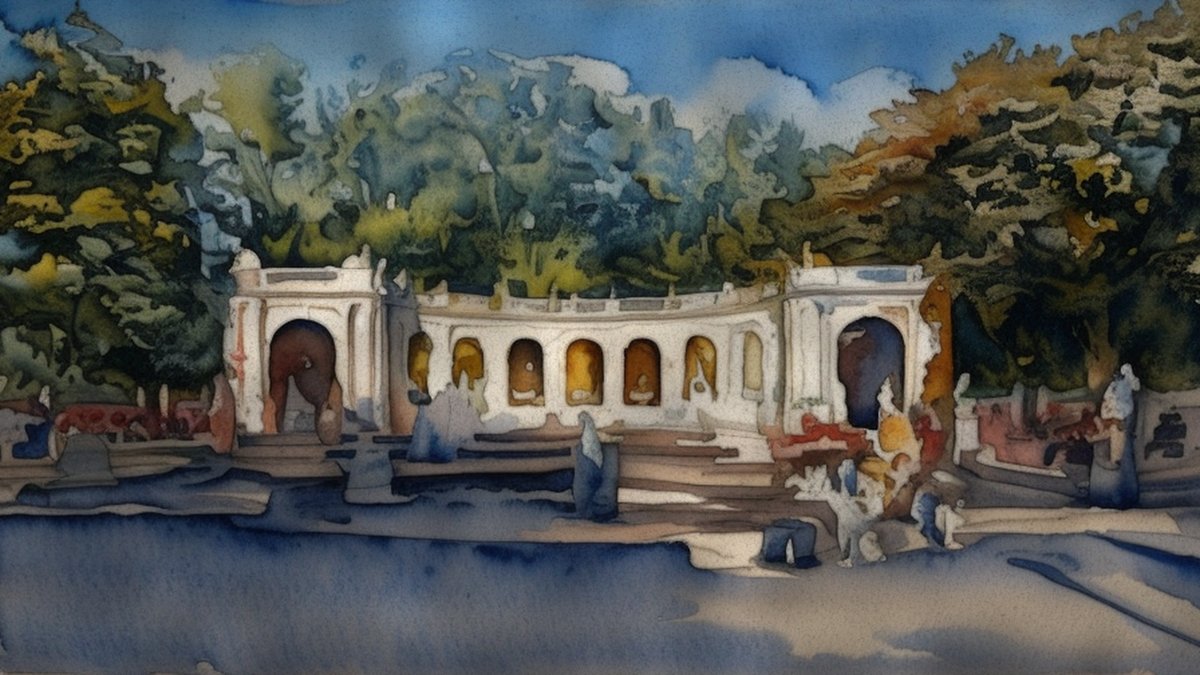
Friedrichshain-Kreuzberg, Germany · Architect: Ludwig Hoffmann · Built: 1913