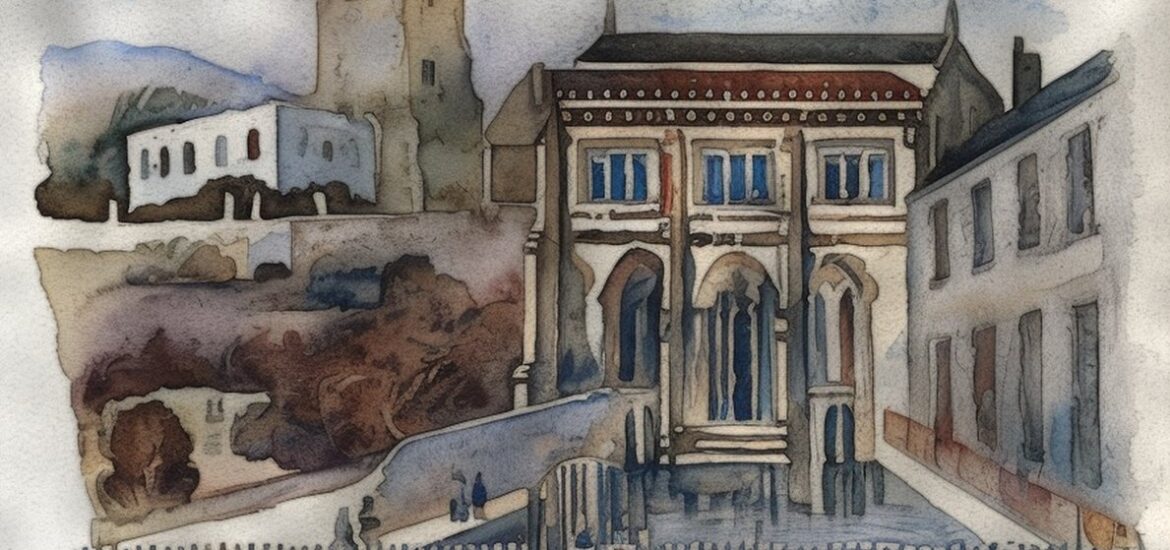
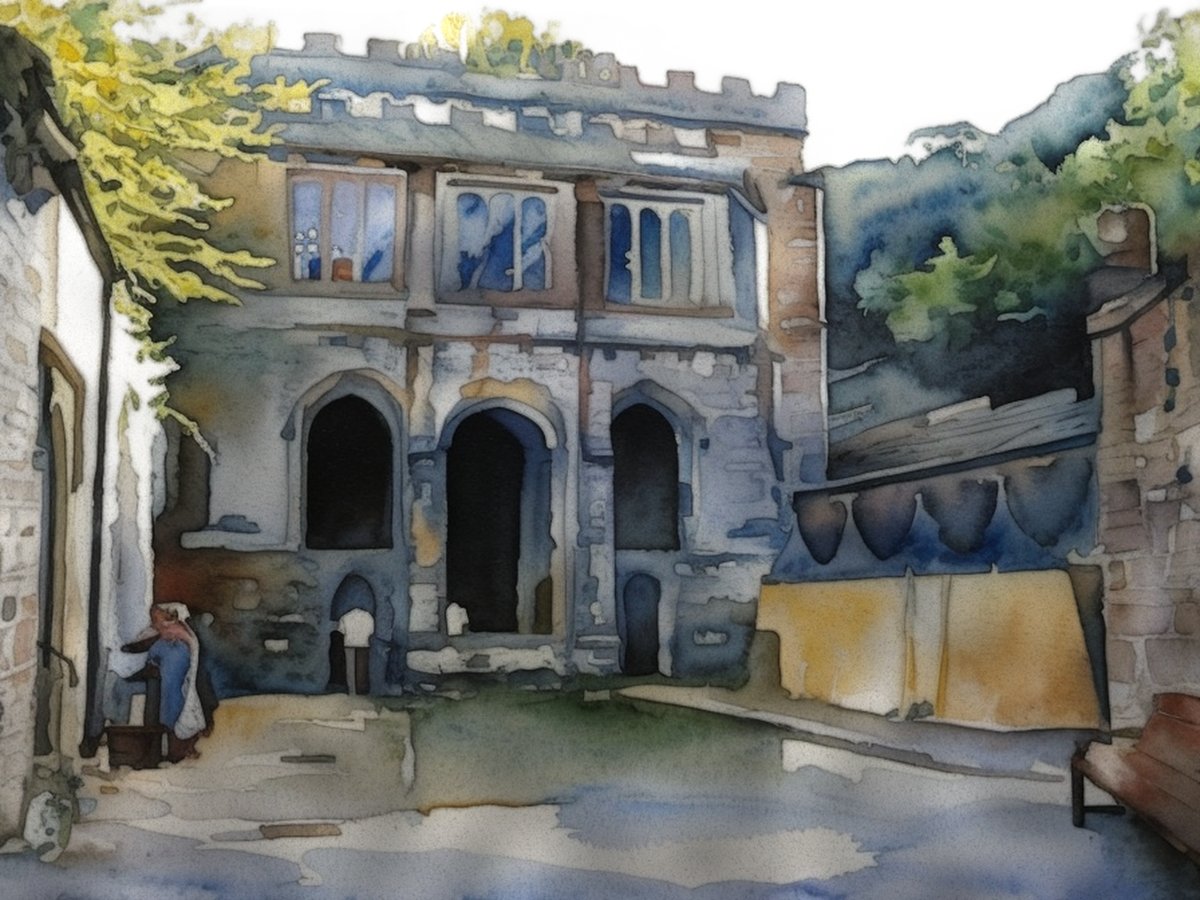
A building cut into the hillside
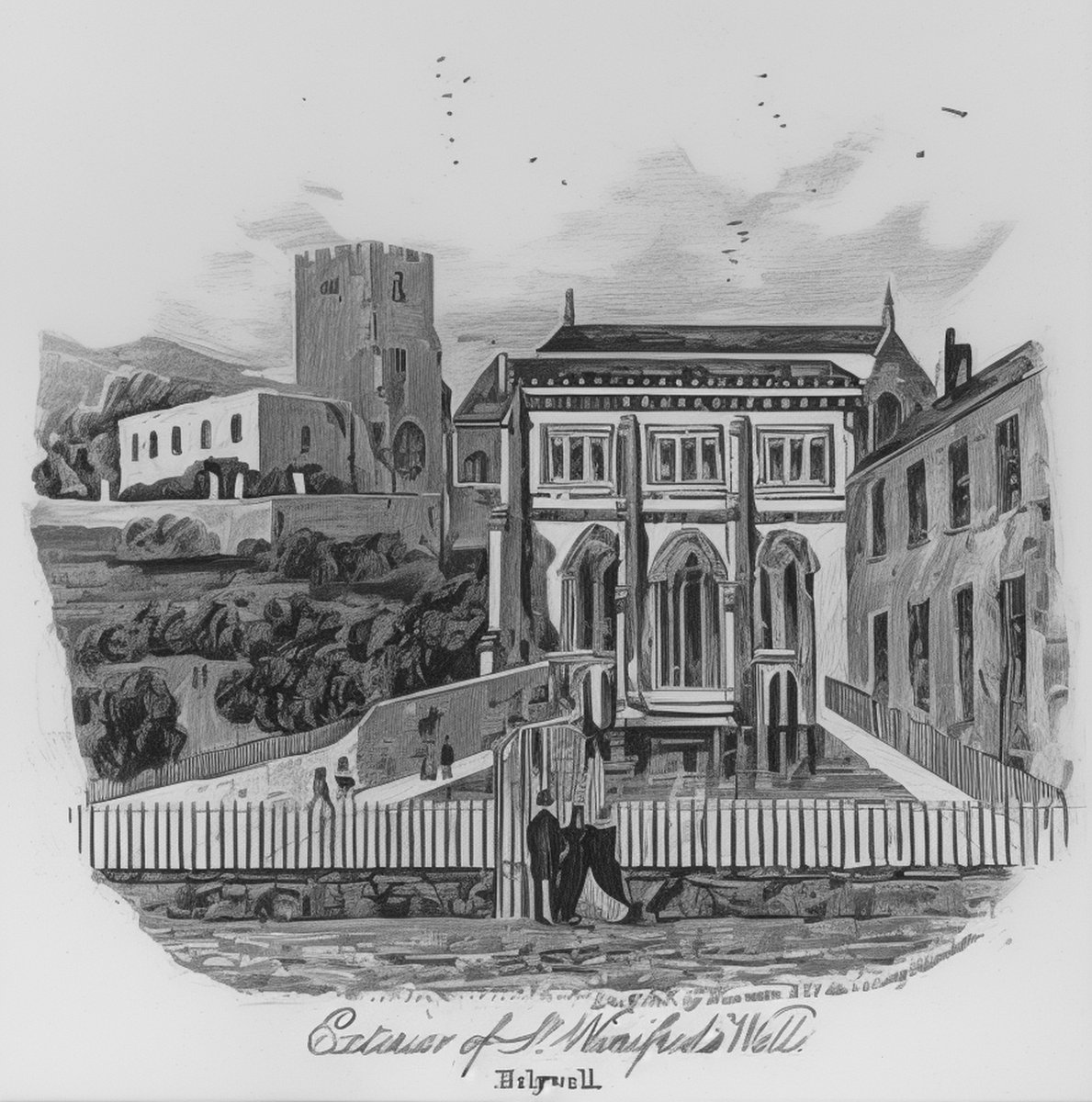
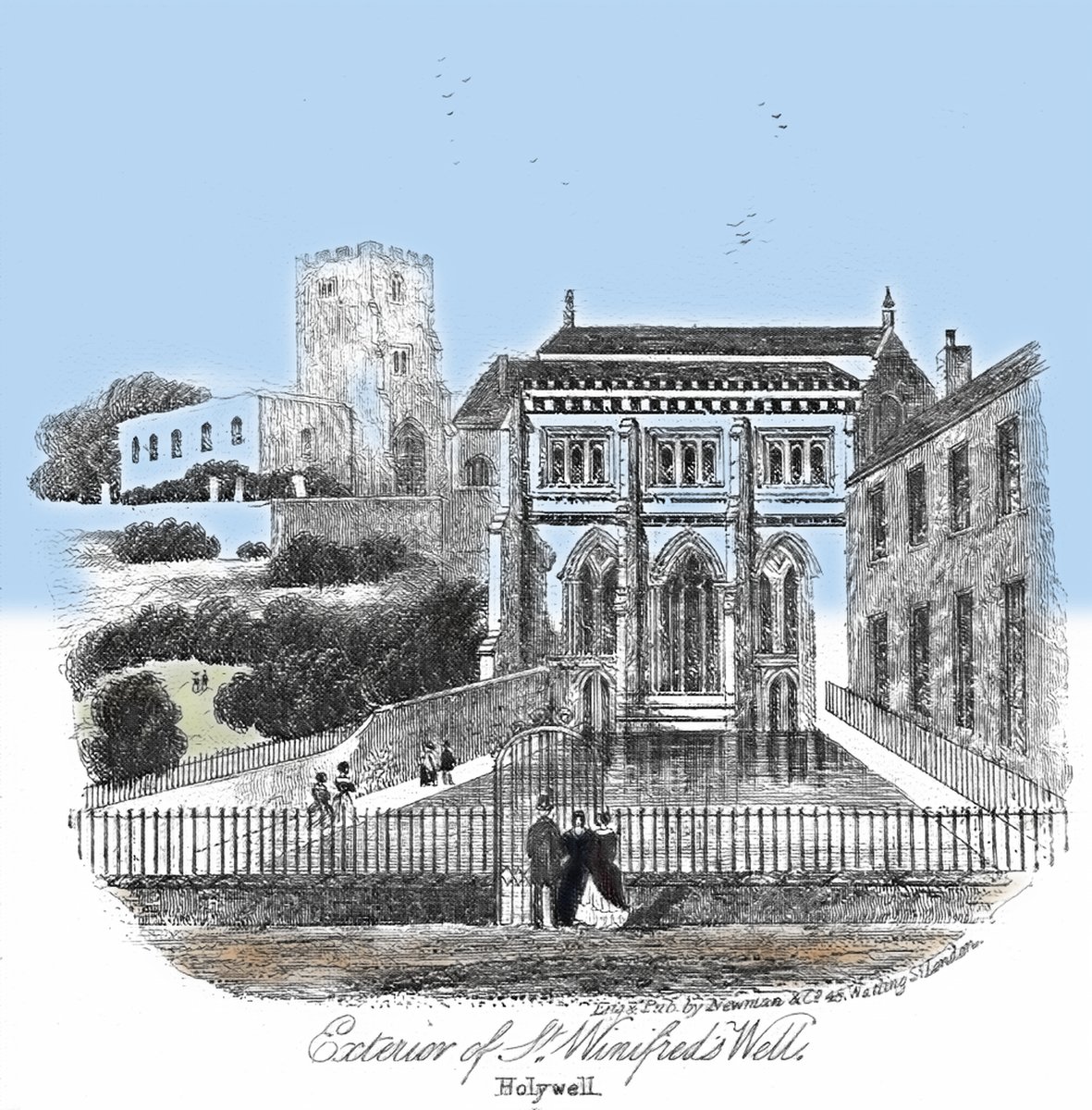
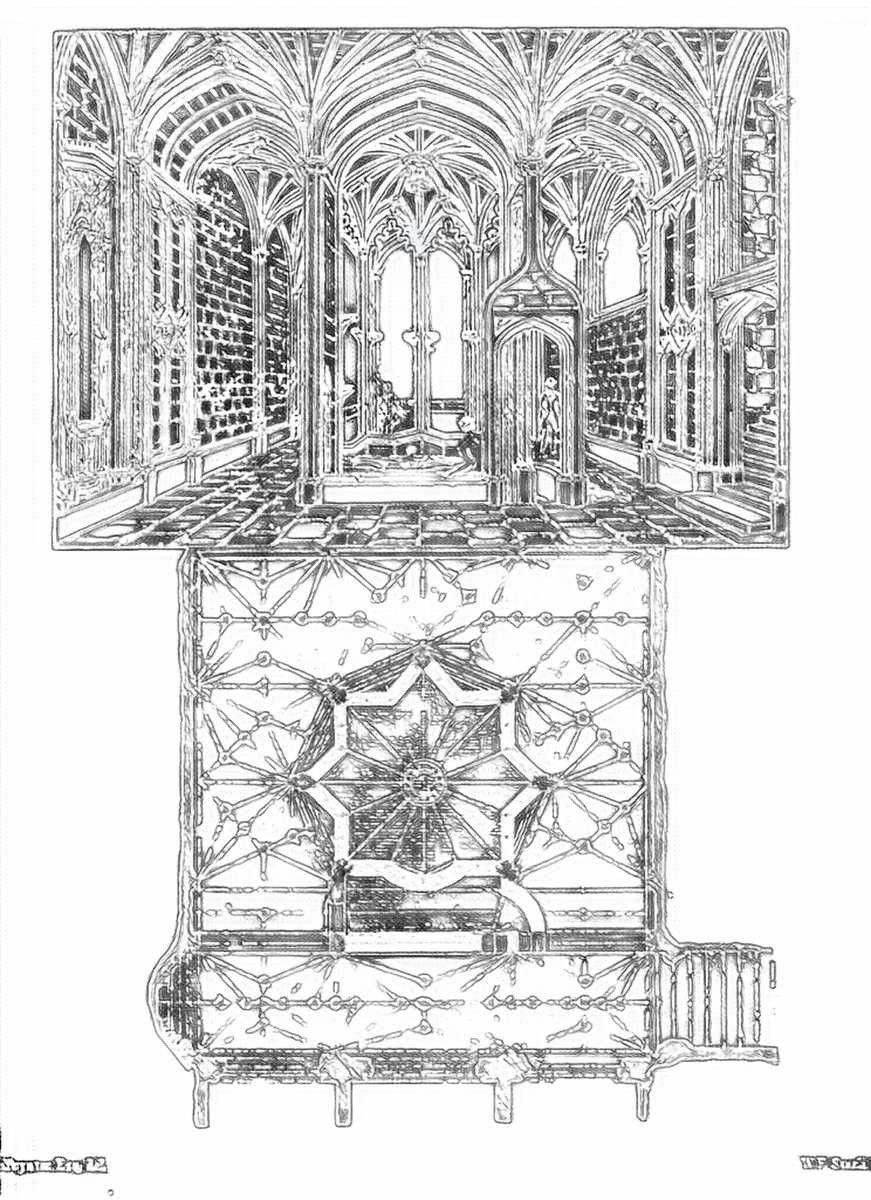
St Winefride’s Well, the Ffynnon Wenffrewi, is not a fountain placed in a square but a chapel grown over a spring at Holywell in Flintshire, Wales. The architectural intelligence here lies in section as much as plan: the hillside is cut away so that the well crypt is entered from the north, while the upper chapel above it is reached from the south. The visitor and the pilgrim therefore arrive on different terms, at different levels, to the same water.
The chapel is Perpendicular in style, its exterior walls of coursed sandstone imported from the Wirral towns of Storeton and Bebington. A low-pitched roof sits behind a crenellated parapet. The upper chapel resolves into a four-bay nave, a three-bay north aisle, and a semi-octagonal chancel, with window tracery mixing basket and ogee arches. The arch-braced roof carries foliage bosses, and the corbels are carved into animals, grotesques, and family emblems.
The crypt and its star
The crypt is the spatial heart. It centres on a star-shaped basin that encloses the spring and supports a ring of stone columns, once linked by traceried screens with basket-arched openings framing the water. Above rises a tierceron vault whose pendant boss shows six scenes from the life of St Winefride. A statue of the saint stands in a niche beneath a crocketed canopy. Tree-ring dating places the roof timbers around 1525; funding is credibly attributed to Abbot Thomas Pennant of Basingwerk.
Water, legend, and rite
The spring was once ferocious. John Taylor wrote in 1652 that it worked “like a boiling cauldron,” and observers reckoned it raised over a hundred tons a minute. In 1917 mining drained it dry; water had to be diverted from a new underground source to revive it.
Legend holds the well sprang where the martyr Winefride’s severed head struck the ground, and that red stones in the streambed bore her blood. The rite endures: bathers pass three times through the pool reciting the Rosary, kneel on St Beuno’s stone, and—by older custom—duck beneath the water to kiss it and make a wish. Pilgrimage here never broke, even through the Reformation, earning Holywell its title as “the Lourdes of Wales.”
Holywell, United Kingdom · Built: 1500