A hill that arose of itself
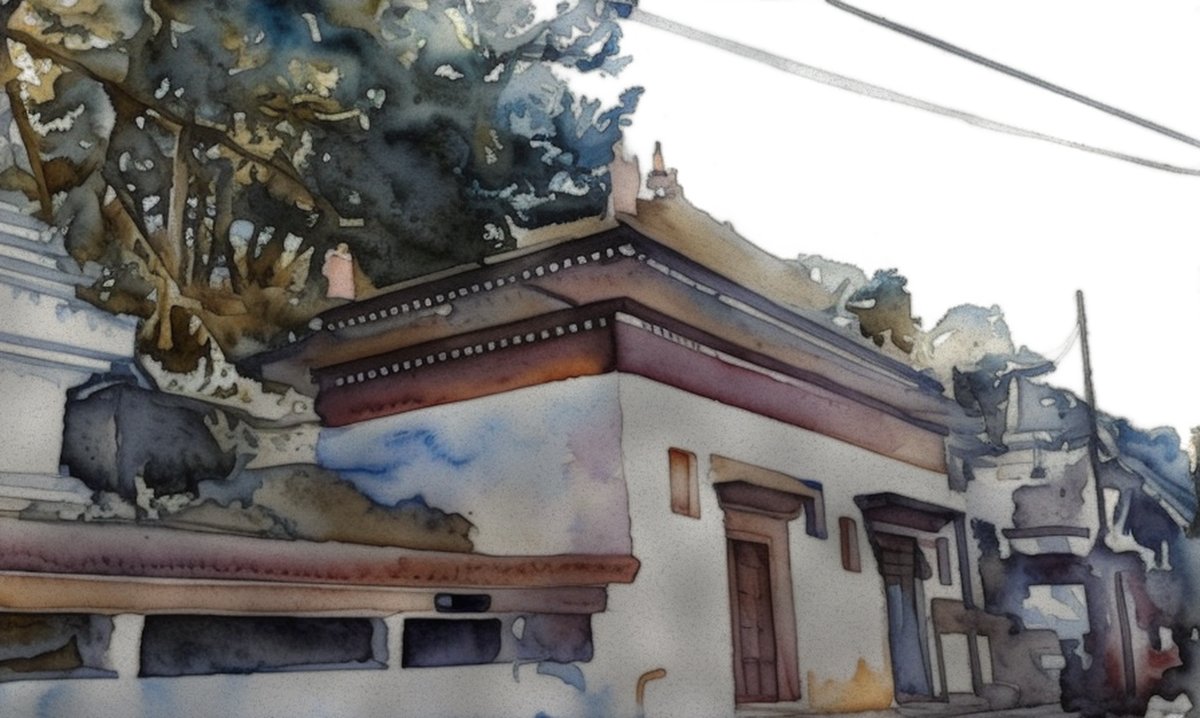
In the north we like to say a building should look as if it could not have been otherwise — as if it grew from its ground. Swayambhunath takes the idea further than any architect would dare to claim: its very name means self-arisen, self-sprung. The ancient stupa stands atop a hill west of Kathmandu, in a valley that legend remembers as a lake. A lotus is said to have bloomed at the water’s centre, bright with the flame of the primordial Adi-Buddha, until the bodhisattva Manjushri cut a gorge with his sword and let the lake run out — leaving the hill, and the light, behind. A UNESCO World Heritage Site since 1979, venerated by Buddhists and Hindus alike, it wears its religious harmony plainly. I came for the great stupa; I stayed for a small pond.
The pond on the western side
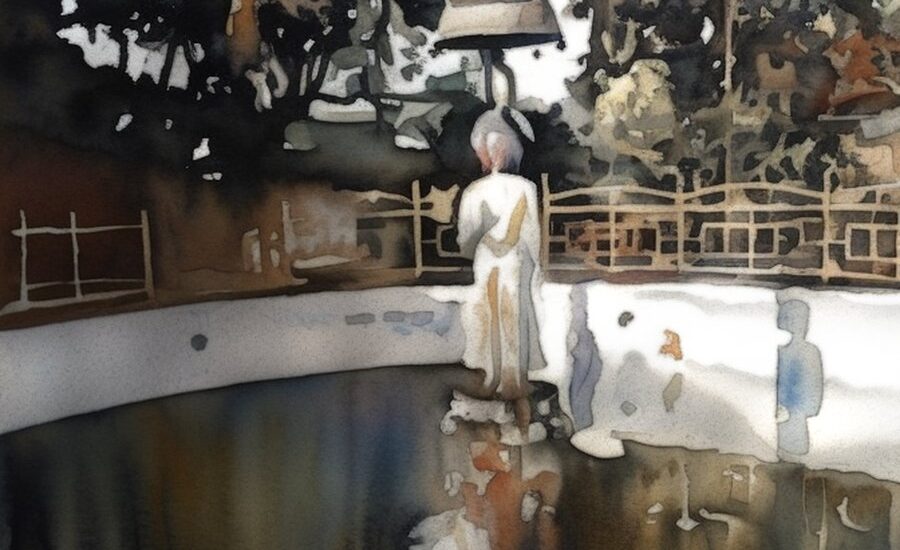
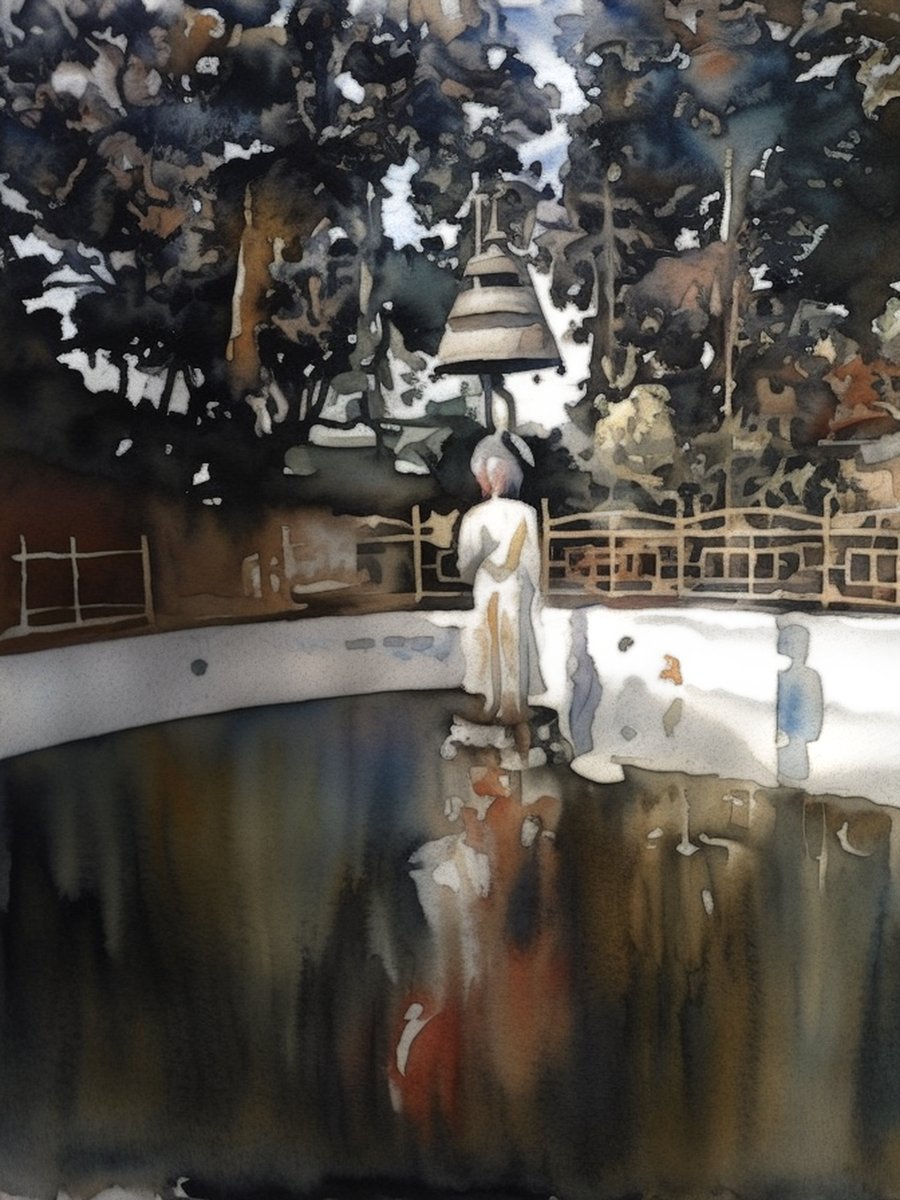
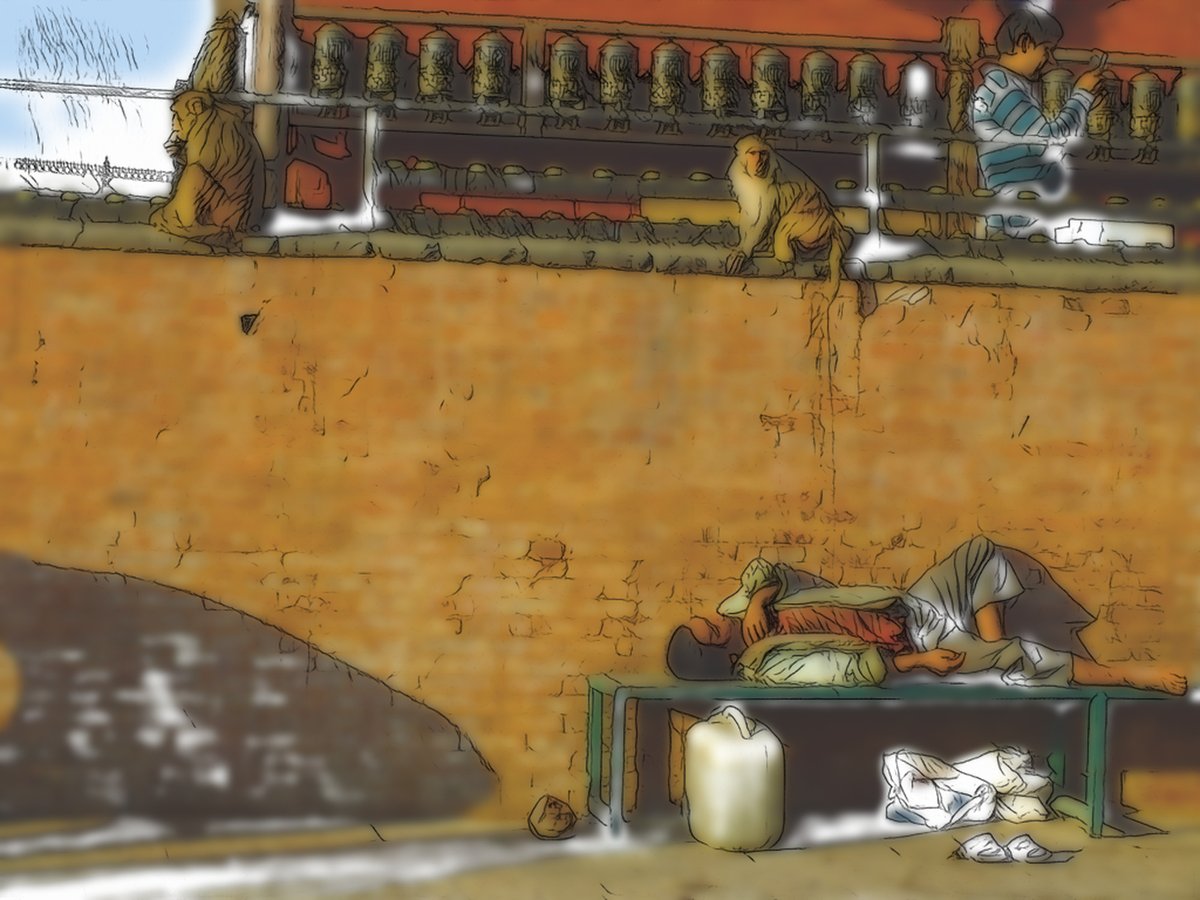
Water, set deliberately. On the complex’s western edge lies the World Peace Pond — Shanti Pukhu — and here the design instinct in me settles. A gilded Buddha rises from a lotus at the pond’s centre, standing above his own reflection, and at his feet sits a single bowl. Everything is reduced to the essentials a Nordic eye trusts: still water, one figure, one vessel, the sky doing the rest. The monkeys that give the hill its other name — the Monkey Temple — come down to drink at its rim. Where I would have left the water to mean quiet, the place asks the water to mean aim.
A coin toward the bowl
What I would file under folklore, the pilgrims treat as practice. You take a coin, you stand at the edge, and you toss it toward the bowl at the Buddha’s feet. A coin that lands inside is said to grant the wish — and to carry good luck out with you. It is the gentlest possible ritual: no priest, no gate, no fee, only the small arc of a coin over sacred water and the held breath that follows it. An architect spends a career trying to make people pause; this pond does it with a bowl and a hope. The wish is not spoken into an empty room. It is thrown, and the water keeps the score.
Kathmandu, Nepal