In the north where I learned to build, water is mostly something you keep out — a thing of grey light and held breath. Here at Prayagraj I have to unlearn that. There is almost nothing built. And yet I would call this the most complete piece of architecture I know.
The line where waters meet. At the Triveni Sangam three rivers gather: the Ganges, described as flowing white; the Yamuna, darker, blue or green; and the mythical Saraswati, said to be invisible — flowing underground, joining from below. So the structure is partly unseen. A Scandinavian eye trained on material honesty pauses here. The seam between white water and dark water is the only edge the place needs, and it is drawn by the rivers themselves, not by any hand.
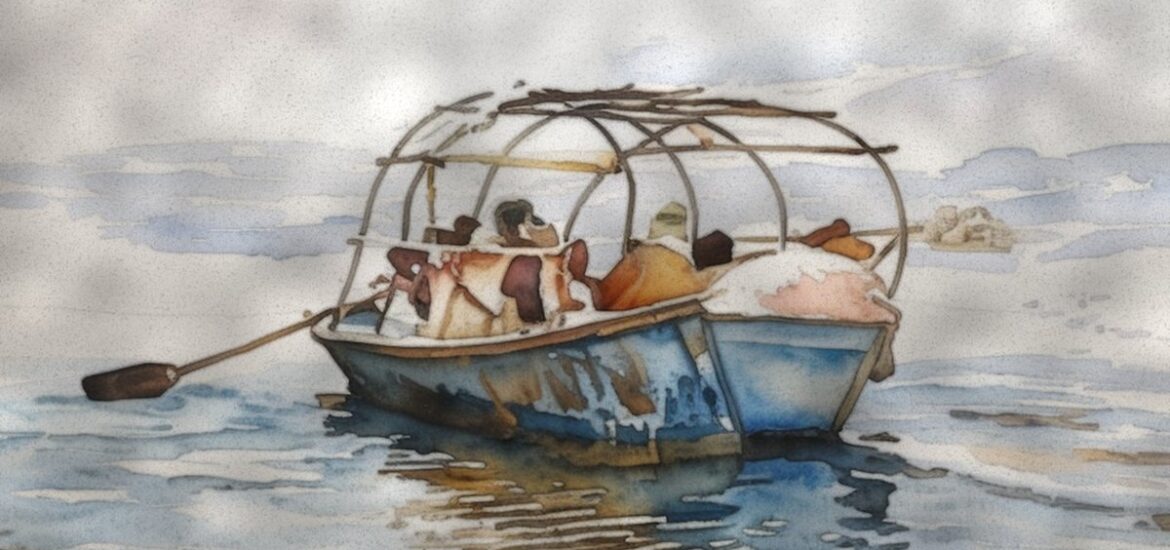
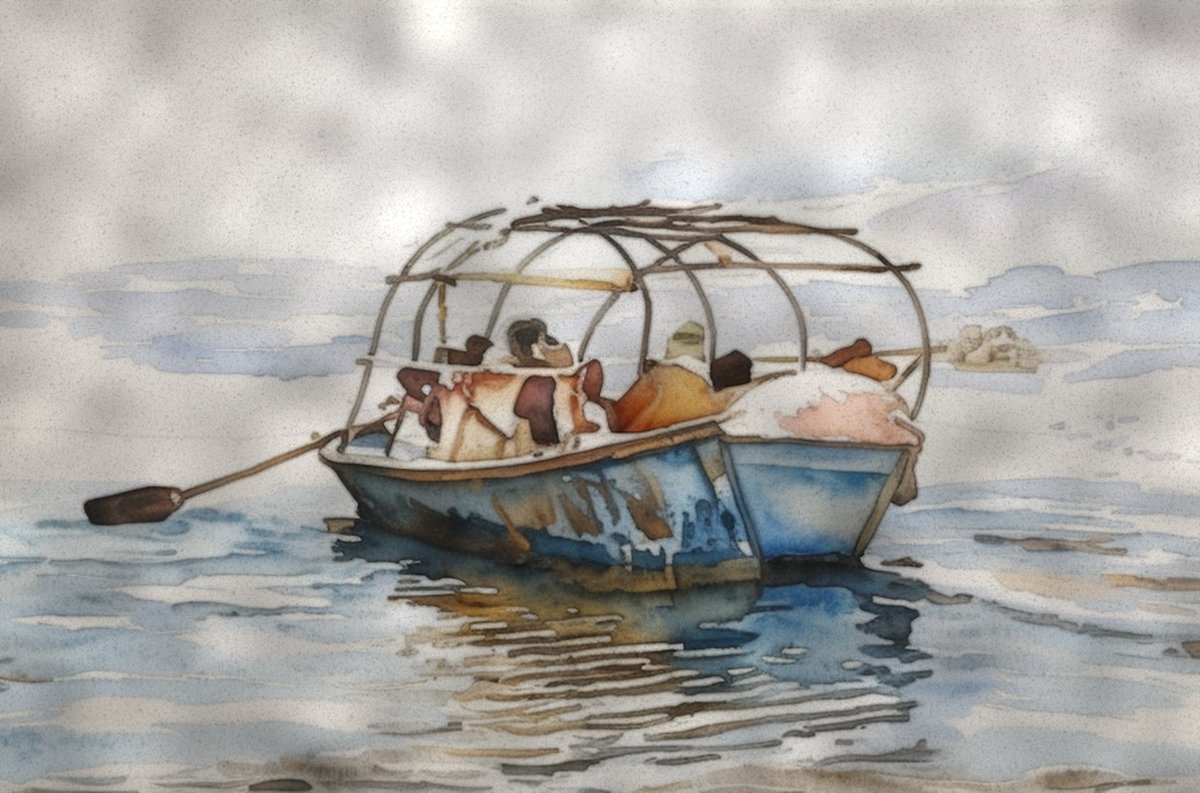
Reading the site as building. There is no façade, no roof. The plan is the meeting of the currents; the section is the river you cannot see. Boats become the only architecture of approach — a temporary, demountable threshold carrying people to the line. I think of Fehn’s instinct that a place should be entered, not merely occupied. You arrive at the confluence the way you cross a threshold: deliberately, on water.
The belief that shapes it. In Hindu tradition this confluence is a sacred place, and a bath here is said to flush away all of one’s sins and free one from the cycle of rebirth. The Rigveda already names the auspiciousness of two rivers meeting: “Those who bathe at the place where the two rivers, white and dark, flow together, rise up to heaven.” What I would build with stone, the tradition entrusts to immersion — the body lowered into the joined current.
Offering to the water. The offering here, as the source gives it, is not a coin but the self and what is most cherished. This is the site of the historic Kumbh Mela, held every twelve years, and over time it has received the immersion of ashes of national leaders — Mahatma Gandhi in 1949, Atal Bihari Vajpayee in 2018. The water receives. That is the whole gesture.
The temporary city
Around this drawn line a vast, momentary city assembles for the Mela and then dissolves. Coming from Nordic emptiness — long silences, few people — I find the immense gathering humbling rather than strange. The confluence stays; the city is pitched, used, struck. Restraint, I realise, can also mean building nothing permanent, and trusting the meeting of the waters to hold.
triveni-sangam — Triveni Sangam: The Architecture of Meeting Waters
Please do not upload an edited image here without consulting me. I would like to make corrections only at my own source to ensure that the changes improve the image and are preserved. Otherwise you may upload an edited image with a new name. Please use one of the templates derivative or extract . (CC BY-SA 4.0)